Libraries are for Everyone #libraryletters

Dear everyone,

Libraries are changing … while they’re still the wondrous places that offer a world of learning and access to knowledge that they always have been, in the 21st century they’re now also vanguards at the forefront of a new era of opportunity – the digital era.

The very special thing about public libraries is that they have always been for everyone. Throughout their history, libraries have empowered socially excluded people through offering new opportunities to meet, learn and grow, and they’ve always been a safe, truly free and universal place.

In 2016 there are 12.6 million people in the UK who don’t have basic digital skills; they are missing out on the vast amount of information, education, networks, fulfilment and support that the online world provides. Libraries can make this online world available to everyone equally, no matter their income or background.

Libraries are not simply about books anymore, and they haven’t been for a long time. Nowadays people attend libraries to learn digital skills, as well as to search for jobs, to use Government services which are rapidly moving online, or even to borrow e-books or e-newspapers and magazines. And much, much more than this as well.

Tinder Foundation works with most libraries, and with other local partners in community centres, across England, to help them support local people to be part of our digital society. We are also, specifically, working with 16 libraries, to find new and innovative ways to engage more excluded groups, particularly unemployed people, carers, people on low incomes, housebound, and people with disabilities.

In the future I think libraries will be not just in buildings but all around us, in pubs and cafes, in offices and in bus shelters, wherever the library is found in the future, the library will always be wondrous. The library will always be very everyone.

Best wishes,

Helen Milner

I made Prince Charles laugh yesterday

Yesterday, Prince Charles asked me if older people needed help to use the internet and I asked him if he was angling for a course. He laughed and said something amusing about hacking.

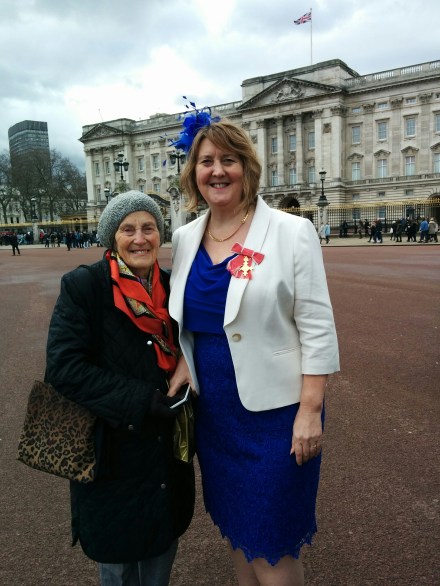
I was at Buckingham Palace to receive my OBE medal. Last June I was thrilled to be awarded an OBE in the Queen’s Birthday Honours for services to digital inclusion, and yesterday I attended my investiture ceremony at Buckingham Palace to receive the award from Prince Charles.

Screen Shot 2016-02-05 at 10.38.51

Me and my OBE!

It’s no secret that I feel very strongly about digital inclusion and about ensuring that in this 21st century world – where digital underpins everything – no one is left behind. That’s what I said to Charles too by the way. It feels great to receive such a high-profile award for something that I feel so passionately about and that I just ‘do’ as part of my day-to-day working life. They announced it out loud: “Services to digital inclusion.” I really can’t believe it.

IMG_20160204_123225.jpg

Me and my mum outside Buckingham Palace

Getting to this stage has been a long and fulfilling journey. I’ve dedicated my life to tackling digital exclusion for over thirty years. From providing online resources for children and schools in the 80s, working in online education in Australia and Japan, to helping to set up learndirect in 1999. Setting up Tinder Foundation and the continued development of the UK online centres network have certainly been career highlights for me. Since 2011 Tinder Foundation has grown from a small staff-owned social enterprise to a staff-led charity with a team of almost 50 – and we’re still growing.

I know it sounds cliched to say I couldn’t have done it without the many great people who have been on this journey with me, but it’s true. The whole team at Tinder Foundation is so passionate about digital, they are great people to work with and it is our team effort that deliver the Tinder Foundation successes. And, of course, the UK online centres network who help people every day to make their lives better with digital.

I was at a centre in Dalston just this week, on Tuesday – a million miles in life experiences from Buckingham Palace, but only 5 miles geographically. In Dalston, I was introducing partners from HMRC to local people who are struggling with digital and who are struggling with life, including Keith – 64 and still hoping to find a job. I was as happy to meet Keith on Tuesday as I was to meet Prince Charles yesterday. All part of life’s rich tapestry and I’m so lucky to see it all.

I’ve always believed that everyone is equal. Whether it’s me, my team, the learners in our network, or ministers in government. My work to-date – growing organisations and helping others – embodies this belief. Me and the Tinder Foundation team are absolutely committed to having a better world where everyone benefits through digital. If we can help people have more aspirations and understand their worth, then we’ve done our job well.

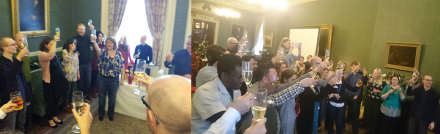
AGM

The team and the board celebrating our fourth birthday at the AGM, December 2015

I couldn’t have achieved this honour without the Tinder Foundation team, our board, our massive network of community partners across the UK, and every single person who has got online and gained digital skills since we started.

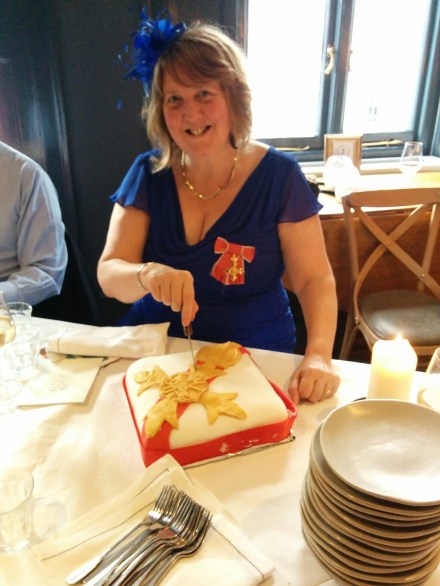
IMG_20160204_151752

My husband made me a delicious OBE Cake. It was lovely!

I wish I had a slice of cake for all of you. Thank you to everyone sending me congratulations on Twitter – I really appreciate your support. And a big thank you to everyone who has helped me over the years. This award isn’t just for me; it’s for all of you. 

Thank you.

#RebootUK – test and learn

Reboot UK is a consortium test and learn project that we’re running alongside partners Mind, Homeless Link and Family Fund, as well as a handful community partners across the UK. The project aims to test innovative new models to see how they support three groups of people – families in poverty, homeless people, and people with poor mental health – to improve their health and wellbeing through digital technology.

Led by Reboot UK’s head researcher, Laurence Piercy, we spent a significant amount of time exploring the barriers and the benefits for these groups gaining basic digital skills, as well as the approaches that may work. All of this is outlined in the Literature Review, published today.

DSC_8131

Reboot UK’s head researcher, Laurence Piercy (left), visits one of the project community partners [Image by Dora Dc Photography]

The Literature Review has provided us with some solid evidence, helping us to develop understanding and models into what we now want to deliver for Reboot UK, as well as collating findings from a huge range of external sources.

The research revealed, for example, that only once before has a home access scheme been tried on scale. Smaller ones have shown positive results, but hardly any work has been done to find out how home access schemes can be delivered on a larger scale to help those desperately in need of broadband and equipment. Learning at home or putting the skills learned in a community centre into practise in their own time is an important part of the journey for a huge number of learners. Reboot UK involves a number of community-based equipment distribution and lending schemes which will allow us to explore home access and help us to develop ideas of how a scheme can be scaled effectively.  

Another interesting finding detailed in the Literature Review is that for the groups of people we are supporting, their needs are often so complex that they require a response to learning that recognises their needs and adapts to suit them. Some people feel most comfortable learning from a friend or a neighbour, for example. Others may feel more comfortable learning in a community centre, and others may prefer to learn at home.

Once these needs have been addressed, the huge benefits of digital technology to the individual can be realised.

I want to thank Laurence for the fantastic report, and everyone else who was involved in the creation of the review, and is involved in the delivery of the project. I’m really excited about the Reboot UK project, and the impacts it will have on people that may not be reached by other initiatives, and I’m looking forward to following it’s progress. You can read the Literature Review here, and keep up-to-date with the second stage – the testing and learning – through our #RebootUK hashtag on social media.

My letter to Malcolm Turnbull, Prime Minister of Australia

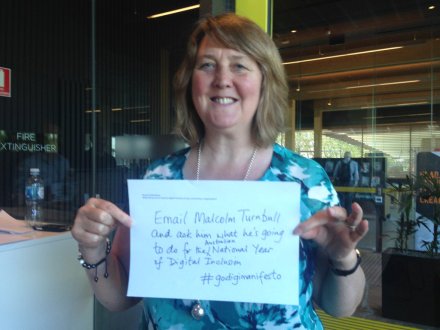
Back in December I posted a blog after my fun and informative trip to Australia. I talked about the creation of a ‘digimanifesto’ that I was involved in for Australia’s National Year of Digital Inclusion. I tweeted a pledge to go into the manifesto, which has now become a co-created plan of action – I promised to email the Australian Prime Minister, Malcolm Turnbull.

Pledge for Australian Year of Digital Inclusion #godigimanifesto #digitalinclusion

Seeing as today is Australia Day, I thought it was the perfect time to send my email to Mr Turnbull about the National Year of Digital Inclusion…

‘Today is Australia Day. I’m a little behind you in time zones as I’m writing from the UK. On Australia Day 1988 I was living in Australia to deliver a bicentennial project; I was supporting a national touring exhibition showing artefacts, art, and ideas from Australia over the 200 years since the arrival of the first fleet.

My job in 1988 was to connect children around Australia using the internet, so that they could swap stories from parents and grandparents about the past, as well as share the different experiences they faced whether in public housing in Melbourne or living on a sheep station in outback Queensland. I didn’t know then that the work we were doing back in 1988 was firmly rooted in the future, and although I had a hunch that the internet was going to be significant to the world I really didn’t understand how significant.

My career has led me to work in education and the internet ever since. In the UK I lead a national digital inclusion charity, Tinder Foundation. We support local organisations – community centres, libraries, and others – with networking, capacity development, advocacy, grants, and a dedicated online platform for the learning of basic internet skills. We help over 250,000 people each year to move from no or low digital literacy, to being confident internet users who, in the 21st century, can now use the internet to change their lives.

This is not just about age. In the UK, where the demographics are very similar to Australia, the main delimiter of people’s productive use of the internet is their socioeconomic group with working age people affected as much as older people. And that affects people as individuals, as well as people who are running small businesses.

In the UK there is infrastructure investment from our Government to ensure that everyone has access to good quality broadband, however, we have more people who don’t use the internet that is running past their doors as we have people in the not-spots without the connectivity. The urban poor don’t use the web, or the majority of them use it in a simple or shallow way, although they have the infrastructure available. The 2016 internet infrastructure is about both the cables in the ground and equipping all citizens to use the web productively.

2016 is the National Year of Digital Inclusion in Australia. I think this is an incredibly positive idea. It’s being run by Infoxchange with support from Australia Post. I had the pleasure to visit Australia in October/November for a speaking tour – in Melbourne, Canberra, Sydney and Brisbane – to help launch the National Year of Digital Inclusion (NYDI), led by Infoxchange as they kicked off a mass co-creation of a NYDI manifesto.

I pledged that I would write to you to offer my continuing support to Infoxchange, Australia Post, DTO (Digital Transformation Office), the Queensland Government, and other partners throughout this year, and to wish you a highly successful National Year of Digital Inclusion. I thought Australia Day 2016 would be a perfect time to write.

Good luck, you have so much to gain from a 100% digitally empowered nation, I’m sure the National Year of Digital Inclusion will accelerate the pace at which you achieve this.

Best wishes,

Helen Milner OBE

Chief Executive, Tinder Foundation’

I knew it! Financial and Digital Inclusion do go together

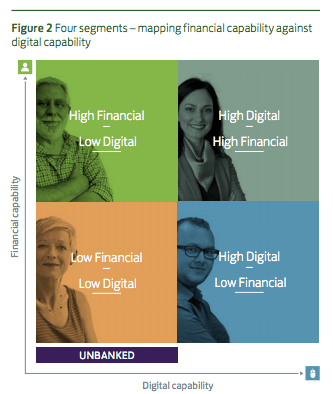
Last week I attended a sneak preview event of Lloyds Bank’s Consumer Digital Index – officially launched on Saturday – and a Lloyds/Demos roundtable event afterwards to discuss the important role of technology and digital in financial inclusion. I already knew that there was a close correlation between the two but this Digital Index backs it up, with robust figures taken from a research sample of 1 million Lloyds customers – the largest study of financial and digital capability ever conducted in the UK.

A lot people who are financially excluded are the same people who find themselves digitally excluded as well – people on a low incomes, with disabilities, and older people for example. It’s the link between digital and financial exclusion – particularly for this demographic aspect – that I’m really interested in.

Screen Shot 2016-01-25 at 12.03.55

The report maps financial capability against digital capability. Ideally, we want to reach the ‘unbanked’ [Source: Consumer Digital Index 2016, Lloyds Bank]

What’s the headline?

Tinder Foundation and our network of community partners are working towards a shared vision – to help people be capable to use the internet in a way that’s purposeful and beneficial to each of them. The majority of people who don’t use the internet are on low incomes, and financial capability is clearly essential for them. For people on low incomes, saving money by being online will help them in the long run, with consumers on the lowest income making average savings of £516 per year. We know that some people don’t use the internet because they can’t afford to buy equipment or afford broadband. People financially benefit by being online, but they lack the money to invest in getting online in the first place. It’s very much a chicken and egg scenario. I don’t know the solution (yet!) but we need to come up with something to break the cycle.

The stats

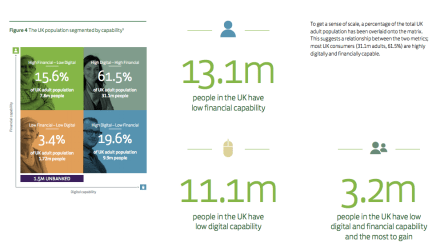
Being a big stats nerd, my favourite part of the Consumer Digital Index was the numbers. It’s encouraging to see that 31.1 million adults have high digital and high financial capability, but there’s still a disappointing 13.1 million people with low financial capability and 11.1 million with low digital capability. According to the Index, this works out as 3.2 million people in the UK today who have low digital AND financial capability. That’s 3.2 million people who are missing out on all the benefits, both financial and otherwise, that the internet can bring.

Screen Shot 2016-01-25 at 12.04.28

[Source: Consumer Digital Index 2016, Lloyds Bank]

The benefits

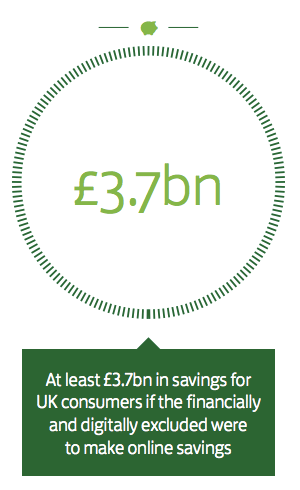
The Index says that if the financially and digitally excluded were to turn it all around and start to do more online, the benefit would be £3.7bn in savings for UK consumers. Savings are great, as are the other financial benefits that being online can bring. Being online means you can have access to debt advice and info from services like the Citizens Advice Bureau, for example.

Screen Shot 2016-01-25 at 12.03.19

[Source: Consumer Digital Index 2016, Lloyds Bank]

Choose digital

I understand that not everyone wants to do things online. Nick Williams, Consumer Digital Director of Lloyds Banking Group, said they have 24 million customers and only 11 million actually do their banking online.

One element of the Index that I found to be particularly useful was ‘The four elements of financial wellbeing’. Focussing on ‘Security’ and ‘Freedom of choice’ it looks at where consumers would be if they became financially included now and where this will lead them in the future. I have included the table below. As you can see there are both present and future benefits to choosing to be financially included and it would be unwise to ignore them.

Screen Shot 2016-01-25 at 12.03.40

[Source: Consumer Digital Index 2016, Lloyds Bank]

Behaviour change

When writing about the Index, a lot of the media have focussed on the amount of money people can save by being online. It’s definitely a motivator if even consumers on the lowest income can make average savings of £516 per year. Let’s go back to the ‘poverty conundrum’; the intractable challenge for people on low incomes. We need to make sure that they can afford the internet in order to make those savings. What we need to do is create a behaviour change, where people have the ability to get online and be in control of their finances now and be prepared for what they might need in the future; where people have the financial freedom now to enjoy life and be on track to meet their financial goals in the future.

This is the 21st century. Today, digital underpins almost everything. Here’s the punchline. We’re determined to reduce the number of people without basic digital skills as much as possible; that’s the day-job. We’ve got a goal to help more than one million people between now and 2020. What the sectors should be doing is working together as much as possible to help both fronts – financial and digital. Of course, you can create better financial capability without digital, but why would you? There are so many benefits for consumers when we make sure they go hand-in-hand.


Government digital strategy by me: An ambitious goal, a taskforce, and a 4-point plan

At our Digital Evolution conference in November, Ed Vaizey, Minister of State for Culture and the Digital Economy, said that since 2010 the Government has invested about £30m to help people get the basic digital skills they need to function as part of our increasingly digital society. This was the same day that Chancellor George Osborne delivered the Autumn Statement and Spending Review, giving the Government Digital Service a cash injection of £450 million. Ed talked about the people that Government investment to date has helped, and how important it is to do more – and he also told us that the Government sees digital participation as a continuingly important issue.

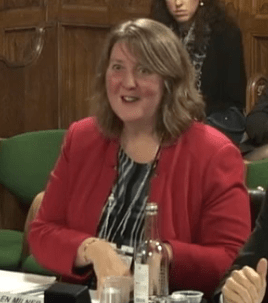
Naturally, I jumped at the chance to put my views across in person this week at the Science and Technology Select Committee in Parliament, examining the digital skills gap for the Government’s Digital Strategy Review.

Screen Shot 2016-01-15 at 14.33.29

Me giving evidence at the Select Committee. Image courtesy of parliamentlive.tv

There are still 12.6 million people in the UK who lack basic digital skills and of these, 49% are disabled, 63% are over 75 and 60% have no formal qualifications. But the punchline is that it’s the poorest in our society – those who are already being left behind – who aren’t benefiting from digital.

We’re in the same boat

I sat on a panel with Nick Williams, Consumer Digital Director of Lloyds Banking Group, and Margaret Sambell, Director of Strategy at the Tech Partnership. We were followed by another panel with Dr Ellen Helsper, Director of Graduate Studies and Associate Professor at the London School of Economics, Charlotte Holloway, Head of Policy and Associate Director at TechUK, and Steven Roberts, Strategic Transformation Director at Barclays PLC. Although the panel sessions were based around different topics, it seemed to me like we all feel the same way – we’re doing well but the government needs to take charge and work with many others to accelerate the digital agenda.

My four-point plan

You can watch the full meeting below, courtesy of Parliament Live TV, but one of the main things that I put across for consideration in the review was my four-point plan – something which I think is very important for the government to consider:

      • Leadership: The UK lacks clarity on what we want to achieve. We need a goal. I recommend that the Government sets a goal, for example 98% of the UK population with basic digital skills, and then provides the leadership and coordination to make sure we get on with it and succeed. Government is uniquely placed to convene and encourage key organisations to get this sorted.
      • Behavioural change: With so many people who have never used the internet saying it’s because they don’t see the relevance of the web to their lives, we don’t just need to help with skills – we need to get people interested in the first place. I think the private sector could lead this, as they’re already so good at persuading us to buy all sorts of things!
      • Skills, informal, and local: Our network is great, and all of the research shows why it works so well, as people want support to get basic digital skills by someone like them, which also means someone local to them too. Adults need learning to be informal, not to feel like school, and to be as personalised as possible. Tinder Foundation and our hyperlocal partners help about a quarter of a million people a year. We could double that delivery, but if you do the maths, us working along means we’d reach the 12.6 million at a much slower pace than we would if we worked together. What else can be done? Can the Government incentivise employers of low-skilled people to help them to digitally upskill their workforce for example?
      • Make digital more affordable: As the digital divide deepens, the cost of devices and broadband is a big issue for some who are still offline. People are finding things tough, and that means even the best deals are out of their reach. Government needs to work with tech companies and broadband providers to make digital more affordable. I don’t know the answer but I’m sure the Government using its convening power can bring relevant companies together and make the internet affordable for everyone, and especially to those in the lowest socio-economic groups.

Watch the video here. 

Speaking from experience

I listened with great interest to committee member Carol Monaghan MP, a member of the Scottish National Party. Carol seemed very clued up on digital inclusion and the importance of it, as she told us about her 80-year-old father who regularly tinkers with his iPad and makes mistakes, which his family then need to fix for him. She also said, however, that she was glad he at least tries to use it. This reminded me of the man that I met during my visit to Nottingham Libraries last week, whose family do all of his online transactions for him but don’t have time to teach him to do it himself.

In my final comments, I told the committee that I think the Government Digital Strategy should articulate a clear aim, and that I would like to see 98% of the population with basic digital skills by 2020. Norway is there already – it’s not an over-ambitious goal. I know 100% is a scary thought.

A goal that’s both ambitious and achievable, Government leadership through a taskforce or a cross-sector Council, and a four-point plan – that’s what we need. Then, together, we can achieve a better, stronger, more productive, digital nation, helping those most in need to become fully functioning members of our digital society.

To quote Dr Ellen Helsper, “Digital is 70% of my job, but 100% of my life” – let’s make it 100% of everyone’s.

The important role of libraries in a digital world

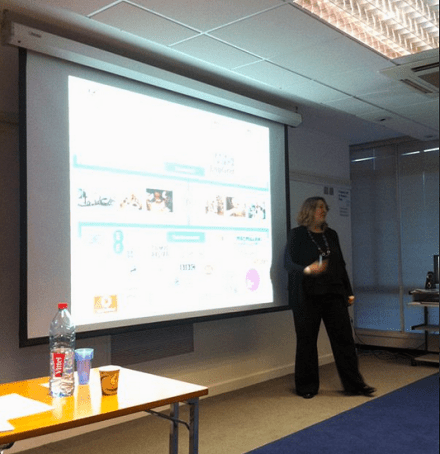
At the end of last week, I was lucky enough to find myself with not one, but three meetings about one of my favourite things – libraries. I attended the CILIP (Chartered Institute of Library and Information Professionals) MMIT AGM on Thursday to give a presentation about the role of libraries in digital citizenship, and then on Friday I visited Nottingham Libraries where I caught a glimpse of the digital inclusion work they’re delivering, as well as attended a meeting at the Arts Council. All of these visits further cemented something I’ve been talking about for quite a while – just how important the role of libraries is to communities, as well as in the digital world.

The CILIP MMIT Group (part of CILIP – the Chartered Institute of Library Professionals) are embarking on a year where they will really be focussing on digital inclusion, so I thought I’d share what my main recommendations for libraries are, following my discussions with them:  

  • Use existing resources: Become a UK online centre, explore Learn My Way – there’s no need to reinvent the wheel when we’ve already done lots of the hard work.
  • Work with partners: Invite local partners to come into the library to support users, or go out to partners to deliver – other UK online centres, health professionals, or other local groups and clubs are all people to think about.
  • Design around local needs: Think about the hooks that work for your audience group. Health always has broad appeal, but things like family history may work well for older people, or employability for young people. Take a look at the resources on Learn My Way for some tips.
  • Talk to each other: Use our Digital Libraries Hub Ning to talk to other libraries who can share some great ideas with you.
  • Read the Doing Digital Inclusion: Libraries Handbook for more inspiration.
Helen at CILIP AGM

Delivering my speech at the CILIP MMIT AGM

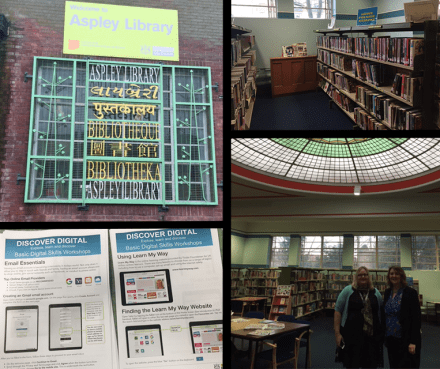
One real highlight of last week’s trip was my visit to Nottingham Libraries where I was kindly hosted by Sarah Coulson, Commercial Library Lead for Nottingham Libraries. We headed over to Aspley Library to see their first ever Discover Digital workshop. It’s a Basic Digital Skills course, which is one of 30 being delivered as part of the funding Nottingham Libraries received from our Libraries Digital Inclusion Fund project.

Collage

Visiting Aspley Library


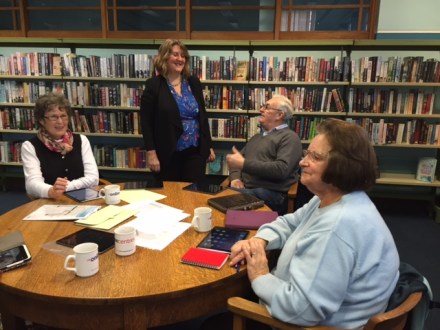
As always, the best part of the visit was talking to the learners. There were ten in all, and they were all very keen to learn about how to use a tablet to access the internet. It was interesting to see how some of them found the touchscreen difficult to use, although it feels very intuitive to a frequent web user like me. I met one man who benefits from the internet already, but only through children and grandchildren, who weren’t patient enough to support him to learn but were happy to do his internet transactions for him. He’s now on the path to learning to do it himself.

IMG_1373

Chatting to the learners and hearing about their experiences was lovely

We then made our way to Nottingham Central Library for a quick look around and to see the digital inclusion work they’re doing on a day-to-day basis, and it was interesting to see their co-location with the benefits team.

It’s not only about lending books

Both of these visits made me think a lot about libraries and their role in today’s society. Towards the end of last year I read on the BBC website that the number of libraries in the UK had fallen by 2.6% in 2014-2015, which means that 105 have closed down (or become community run) in just a year. This really struck a chord with me, as I feel very passionate about libraries and their role in communities. They’re not just places to borrow books, but are social hubs – somewhere you can take your children, a place where you can use a computer if you don’t have access to one at home, and a place where you can learn. It’s really important to me personally that Tinder Foundation do the most we possibly can for libraries to support them in their evolving role in the digital world we now live in.

What we’ve done already

We’ve already done a lot to support this – recently creating an online community for libraries to meet, network and share information in the form of our Digital Libraries Hub, which I have mentioned above and which has really taken off since it’s launch at the end of November. A lot of the original members who joined were part of our Libraries Digital Inclusion Fund Project but we’re now at almost 100 members with people joining from as far afield as Australia! It’s clear that it’s more than just Britain’s libraries who are keen to jump on board the digital inclusion rollercoaster.

Embracing digital

Almost all public libraries in England will have free public WiFi by the end of March, and many have new technology and state-of-the-art facilities, including Fab Labs and 3D printers. It’s clear that embracing digital inclusion is the way forward for modern-day libraries – and lots are already doing so. My visit to Nottingham is hopefully the first of many library visits for me in 2016 and I’m making it my goal for Tinder Foundation to work even more closely with libraries over the next year, and to help further accelerate their digital journey.

Alive and Kicking

It’s a new year; a time when fresh and fun ideas begin to take shape, and what better way to get things started than by joining the masses and going on a health kick? Exercise, smoothies, healthy eating, I’m doing it all and here at Tinder Foundation we’re beating the new year blues with a new Wellbeing Programme.

Why are we doing it?

The only thing better than a happy team is a team that’s both happy and healthy, and we’re making sure that all my colleagues are well-looked after both in body and in mind.

We’re doing so many things. Here are just a few:

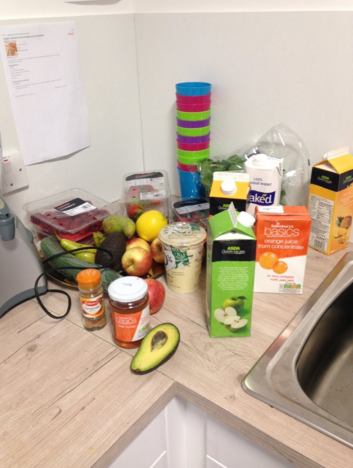
  • We’re providing ample fruit every working day until the end of February, both to eat fresh or to conjure up a smoothie. How do you like those apples?
Screen Shot 2016-01-06 at 15.50.52

Smoothie time

  • I’m sure you’ve heard of Mindfulness, a subject which is being talked about more and more recently. It’s all about focussing your mind and making sure your attention remains where it’s supposed to be when it begins to wander. We’ve been lucky enough to set up some sessions on this with a professional, Kevin Tobin. And, by happenstance my son bought me a colouring book for Christmas, which is now all the rage for busy adults.
  • Kevin will also be teaching us about Stress Management and Resilience to help the team remain calm, relaxed and ready for any challenge that’s thrown our way.
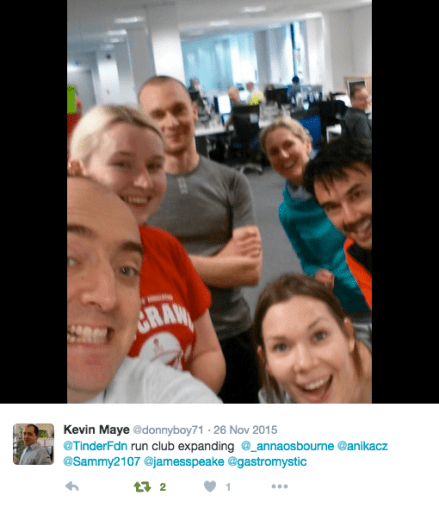
  • On top of this we’ll be having Tai Chi lessons and we’ll be continuing our lunchtime run club (you may have seen this on Twitter at the end of last year) with the addition of a lunchtime walking club around Sheffield City Centre too. Pretty soon we’ll be a group of Tai Chi-practising runners who know the sights of Sheffield like the back of our hand.

Screen Shot 2016-01-06 at 15.47.09

There’s a lot going on here at Tinder Foundation. I’m sure the team will agree that it’s a really great place to work and it’s even better with the addition of this new programme. It’s the ideal way to start 2016 and to make sure that the whole team feel motivated, inspired and positive about the year ahead.

I spent the Christmas period with a self-imposed ban on work emails, and having a relaxed and clear mind I then allowed myself some time to think about the next few years and how we can be as impactful as possible up to 2020. More on that in another blog!

Happy New Year.

Hey Australia: It’s time for an (Australian) national year of digital inclusion

My first born has grown up and flown the nest, quite literally flying to Australia two years ago to work and live in Sydney. At the end of October/early November I spent some time in Australia, importantly spending time with my son, but also working.

Earlier this year I saw a tweet that said that Infoxchange was working with Australia Post and other partners and had designated 2016 as the National (Australian) Year of Digital Inclusion. I thought that sounded like a great idea and tweeted them. A few Skype calls later and a plan had been born – I would support Infoxchange to launch the Australian Year of Digital Inclusion with some public lectures, workshops and events. (Isn’t Twitter great?)

It was a good trip on both a professional and a personal level. As with anything that’s eventful and interesting it keeps permeating in your consciousness and you keep thinking about it. So that’s my excuse for why this blog is so late.
2016NYDI

I spoke in 4 cities – Melbourne, Canberra, Sydney and Brisbane; six speeches, over five days, with one message: Leave Nobody Behind.

Australia has long been a trailblazer for distance learning, with children learning through computers and a fledgling internet as far back as the 1980s, but for adults today digital inclusion is in its early stages. People were so keen to learn from our experiences at Tinder Foundation and were very complimentary about everything weve been able to achieve in the UK with partners both local and national. The Workshops were to start the creation of a ‘digimanifesto’ for the National Year of Digital Inclusion with the brave amongst us tweeting our pledge to go into the manifesto that is now a co-created plan of action. I promised to email the Australian Prime Minister, Malcolm Turnbull.
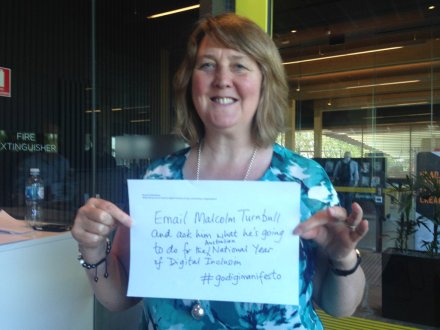
Pledge for Australian Year of Digital Inclusion #godigimanifesto #digitalinclusion

My pledge was to email Malcolm Turnbull, the Australian Prime Minister

Infoxchange has a great site – Go Digi – to help promote digital inclusion and digital inclusion guides (volunteers or Digital Champions in UK speak). They are supported by Australia Post and another corporate Telstra (the biggest telco) also funds activities, such as Swinburne University creating a Digital Inclusion Index and a range of delivery mostly targeted at older people. So there is already support from the commercial sector.

Canberra is the Government capital of Australia but is very different to London or even Washington DC. One person said to me that Canberra is like “a Government building theme park” – all nicely laid out with well manicured lawns, but lacking a heart. At my public lecture at the National Australian Library in Canberra, rather than people from Government asking questions the audience were mostly practitioners asking questions about setting up internet access computers in homeless hostels, for example. You can listen to my public lecture in Canberra HERE.

I actually met the Federal Government people in Sydney. Meeting with Paul Shetler who’s moved from GDS (in the UK) to DTO (Digital Transformation Office in Australia), to establish a single website for Government (gov.au) and user-centred transactional services. The population in Australia is almost 24m and they have a Federal Government (national) as well as State Governments; this makes decision making more localised, but it also means that big States such as New South Wales, Victoria, and Queensland are also developing their own digital services and digital teams. Compared to the UK, doing things with Government/s feels more fragmented and more complicated to achieve the kinds of economies of scale we’ve achieved in the UK with Tinder Foundation and partners helping over 1.7m people in five years.
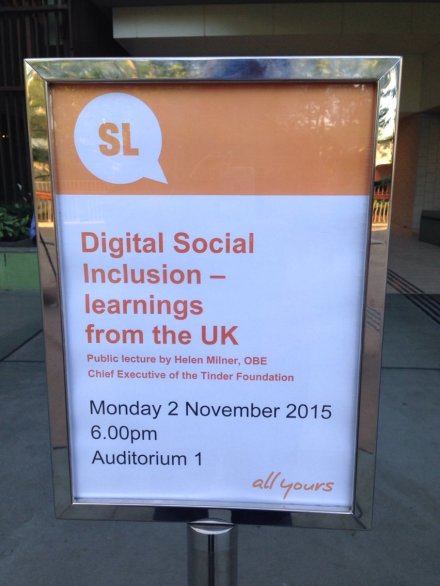
Looking forward to tonight ... ! #digitalinclusion in Australia @godigiaustralia

In Queensland the State Government seemed very organised. At my public lecture – Learnings from the UK – I was introduced by the Minister for Digital, Leeanne Enoch, who spoke passionately about the difference digital can make to people leading complex and difficult lives. She tweeted:
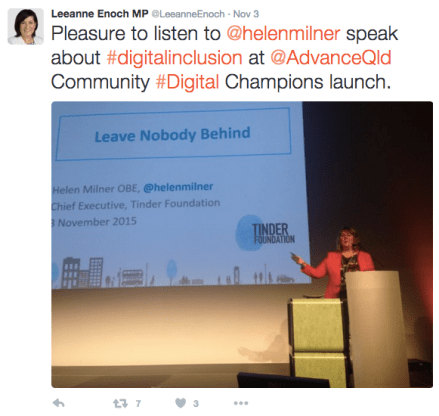
Screen Shot 2015-12-15 at 18.09.01

I also gave a keynote at the Queensland Governments launch of their Digital Champion programme – note that Digital Champion means people who champion and share digital, including a school girl – Brynlea Gibson – who won the national coding prize, to an outback photographer sharing her story online, to Jenny Ostini researching the impact of the internet on everyday lives. The Minister was there again – we were becoming a lovely double act!
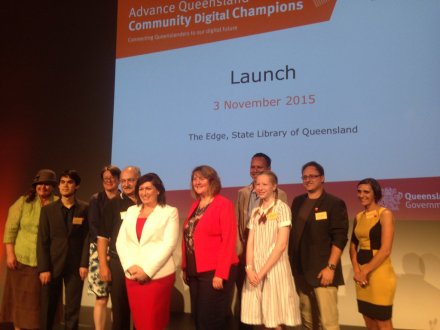
Amazing to meet the fab @LeeanneEnoch and the Qld Digital Champions #digitalinclusion

The people in Australia are doing so much right, and for such a nascent sector there is a lot to applaud. And Australia is different to the UK – its huge geographically for starters, and there are clearly remote and rural people who live thousands (not tens or hundreds) of miles away from the nearest town.
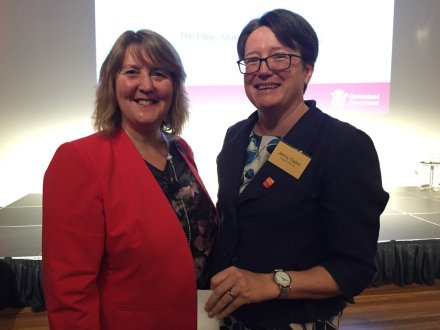
Helen and Jenny Ostini

It was a pleasure to meet Jenny Ostini and the other Digital Champions


What do I think our Australian partners should do next?

Over the years weve learned that success comes from doing depth at scale. This means focus on local communities and on socially excluded people, support for people where they are and support to improve their lives. Local, but coordinated and organised.

And digitally enabled. Using everything digital has to offer. Of course great online learning content  – Learn My Way for example – but also collect data to evidence the numbers reached and the impact achieved. And promote services to online people via a map to find local partners and social media to help friends and family find you.

Leaving almost 4m Australians excluded from the benefits of the web isnt just a bad idea, it just doesn’t add up. The cost to the Government and to society of leaving them behind is far more than the cost of supporting them to gain the skills and interest they require. Weve done the business case for the UK, we know the maths.

Its not just the economic case that shows a clear pathway to doing more so that more people can benefit from digital, there is a clear moral case too.

Ill be writing to the Australian Prime Minister before Christmas, to tell him that Tinder Foundation supports the Australian National Year of Digital Inclusion. Hes a man with a history in digital so Im sure hell understand what needs to be done.

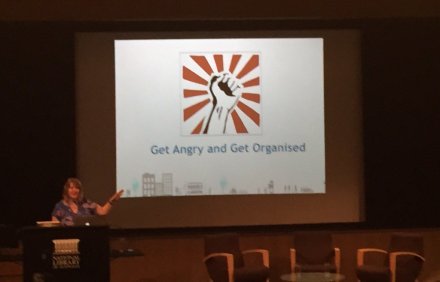
And for the other Australians I think its time to get angry and get organised.

Get angry and Get Organised

Let me know how we can help.

My slide deck for my Australian talks – brought into one slide deck – is HERE.
Another wonderful year

Last week was our fourth birthday. Can you believe it? Tinder Foundation is now four years old. It seems like just yesterday we were starting out – a small team with big dreams and only one government contract to our name. We’ve come so far since then and our strategy has grown and developed from a little spark into a fully blown bonfire. We now have a 50-strong team and our passion to help those most in need to develop their digital skills and improve their lives is stronger than ever.

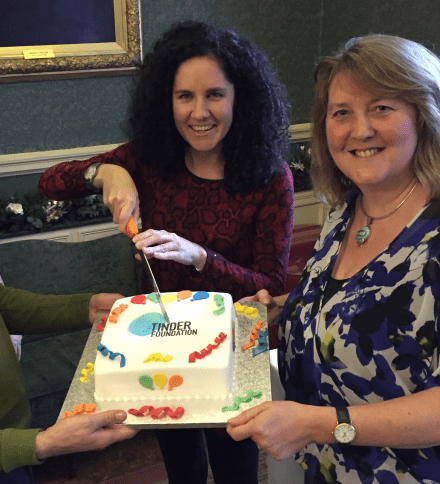
Cakey

It was Emily’s (our Research and Specialist Insight Manager) birthday too, so she did us the honours of cutting the cake.

There’s one group of people that we really couldn’t do it without and that’s our network of more than 5000 community partners. You really do make good things happen with digital technology and I couldn’t be more proud of the work you do. Thank you so much to everyone who works with us and helps us too. I’m looking forward to continuing our work with you over the next year and beyond.

As well as our birthday last week we had our annual board meeting and AGM. If you’re not familiar with our board you can take a look at them on the Tinder Foundation website. They really are a very lovely bunch of people and they’re so knowledgeable. They all come from different backgrounds and do very different jobs but they all have one thing in common: they all believe in Tinder Foundation and the work that we do. I’d like to thank the board as well for the experience and the confidence they bring to our organisation year after year.

There’s a lot of really exciting stuff in the pipeline for Tinder Foundation in 2016, including our work to improve the already wonderful Learn My Way. Our team are working really hard to develop the next generation best possible learning platform for our users and I really can’t wait to see the finished product. We played a game in the workshop section of our AGM which involved coming up with an idea to explain the internet to an alien race. The new Learn My Way is going to be so great that if we sent it up into outer space in a rocket, it would definitely be able to teach aliens about computers, the internet and all the wonderful benefits they can bring.

Rocket

Again a big thank you to our network, our board and to the Tinder Foundation team for just being awesome. Keep doing what you do, because you are truly brilliant at it. Here’s to another year of fun!