Digital by default doesn’t mean exclusion by default

Back from my holidays I’ve picked up criticism from the Treasury Committee for HMRC, in particular for its efforts to make services digital by default.  I applaud the Treasury Committee for taking the side of potentially vulnerable service users, but I don’t agree with the assumption that digital by default means exclusion by default. My glass is always half full, so I’m more inclined to see digital by default as inclusion by default.

Let’s face facts.  Putting public services online saves serious money.  It can also drive service improvements and quality improvements.  Keeping face to face or telephone channels going for the 18% of offline citizens may be admirable, but it isn’t practical – or necessarily desirable. 

Shying away from the online shift isn’t going to make it go away.  You (and indeed I) could choose to see that rejecting digital by default is actively ‘excluding’ customers, excluding them from the many general benefits of online life. 

What we should be doing is enabling and encouraging more people to use our online services more effectively.  That way we don’t leave people behind, and we don’t leave our services behind the times.  And yes, we can do both. 

I’d like to see all government departments promoting the broader benefits of being online, and actively advocating the use of their online services at a grassroots level.  There’s even a network of 3,800 UK online centres in place ready and waiting to help.

The UK online centres network has helped more than 500,000 people get to grips with the internet.  80% of UK online centres users go on to use online public services.  33% of our learners say they have a disability, and over the last 16 months we have helped 150,000 people with a disability to get online.  We see again and again the difference being online makes to older people too – helping them stay in their homes longer, providing access to online shopping, prescriptions, support services and family and friends.  Not only does this prove to me that ‘vulnerable’ people can use the internet, but also that there’s a real need to help them do so. 

If we choose to, we can use digital by default as the solution that will truly close the digital divide once and for all.  And I’ve seen how it can work in action.  We began working with the Department for Work and Pensions three years ago when they recognised the need to provide online skills to their unemployed customers, and since then our dedicated referral relationship has developed to the point that 20% of our 500,000 new learners in the last 16 months came to us from Jobcentre Plus.

Digital by default may seem a scary prospect to those who are worried about excluding older and more vulnerable people, but for me it’s an opportunity to ensure we can really include them.  Maybe the top 2% of vulnerable people will always need face to face or telephone channels. But maybe, just maybe, digital by default is an opportunity for us to make online services work for 98% of real people in real places whenever they need them. 
 

Smartphones are not the silver bullet

For years “people at conferences” have been pushing me to develop a major strategy based around mobile phones as the way to help the last 9m offline people to use the internet. Although I’ve been resisting it for years, wanting to see some evidence that mobiles are actually making a difference to new internet users, I have actually been heard to say that we’re getting to a tipping point where maybe smartphones could be the silver bullet. Maybe I’ve been persuaded by my own use of a smartphone – I got it at Christmas and it’s much more of an internet device for me than a phone. I love my smartphone. So I’ve released my inner stats nerd once again and gone in search of evidence to support the hypothesis that smartphones are THE way to help the offline enjoy the benefits of the web.

Ofcom says that the use of internet on a mobile phone has gone up slightly in the last year (from 29% to 31% of all adults) this jumps dramatically when asked if they visit websites on a smartphone (77% of smartphone users do).

Three Mobile’s data (thanks @Tomps_of_London) shows that comparing the uptake of smartphones, in January 2010 42% of people on contracts had a smartphone and in December 2010 that jumped to a staggering 92%; and for PAYG phones there is also a big jump – January 2010 8% of PAYG customers had a smartphone and in December 2010 that jumped to 50%. Ofcom shows 30% of all adults have a smartphone, but much higher for some: 52% of 16-24 yr olds and 43% of people in AB socio-economic group.

So almost a third of adults have smartphones and they’re using the internet on their phones. However, the Ofcom data shows that 36% of adults use the internet just on a pc/laptop which is slightly more than the 34% that use more than one device (eg on a PC/laptop plus an alternative device). So the majority of people are not tweeting on their phone while watching BBC Question Time on their laptops.

The statistic that really jumps out for me is that a tiny 2% of all adults use the internet only on an alternative device and not on a pc/laptop – so only 2% of people use only a phone or a tablet (or other device) and never touch a desktop or laptop computer. This is the same in 2010 as it was in 2009 – it hasn’t even changed. And, although there is a difference based on age it’s not that big a difference: 5% of 16-24 yr olds only use an alternative to a pc/laptop, 3% of the 25 – 34 yr olds, and less than 1% of the 65+. Socio-economic group too makes a very small difference: 3% of DE, 2% of C1/C2, and less than 1% of AB (with 46% of ABs preferring to use more than one device).

I went in search for evidence to prove that the smartphone or a tablet is the silver bullet to help people to get online. There’s no evidence yet. With the rise in the uptake of smartphones, the very small differences in usage by younger people and people in lower socio-economic groups might be a glimmer of a tipping point. Unfortunately just because I like to tweet on my smartphone it doesn’t mean it’s the basis for a whole new strategy. Well, not yet at least.

(Note: The Ofcom UK Adults Media Literacy Audit research took place between April and October 2010. Three Mobile data came from @Tomps_of_London, latest data being from December 2010.)


A Tale of Two Issues – People & Pipes

I was very excited yesterday when I saw that Ofcom had published a great interactive map showing (among other things) availability of broadband in the UK. It meant that I could have a go at seeing what the relationship is between broadband availability and internet use.

A couple of weeks ago I published a slideshare presentation with the most up-to-date stats on internet use from ONS and Ofcom, and in here (slide 13) is the regional breakdown of internet use – that’s people who say they have ever used the internet. Internet use is about people using the internet as is broadband take-up which is people buying broadband going into their houses. Broadband availability is showing if there are any pipes going past their doors.

The benefit of the Ofcom map is that it is now at local administration level – with the exception of London which remains as a big blob at regional level.

So the highest regions for internet use (people) are London and the South East at 85.6% according to ONS. This is supported by the Ofcom broadband take-up data with Brighton and Hove having the highest take-up with 80% of people connected. Just look at the map (chose the radio button for broadband take-up) and you can see that London, the South East, and most of Southern “middle England” are all above average on broadband take-up.


However the punchline is that this data shows that the real story is that internet use is a much more complex issue than broadband availability. It’s a tale of two different issues: People AND Pipes.


Firstly, areas with “poor” broadband availability (less pipes) are still in mid to high table for internet use: Shetland Islands has 0% superfast broadband and 19.9% of the households have less than 2 Mbits/sec however they have a 71% take-up; Rutland has 0% superfast broadband availability and 22.1% at <2Mbits/sec but a high 74% take-up making it in the top 10% of areas for take-up in the UK. This story is about pipes, for these areas investment in infrastructure could make a difference to take-up, and almost certainly a high impact on the quality of the surfing experience.


Secondly, however, we have areas of the country such as the North East of England where ONS shows that only 77.3% of the people have ever used the internet and this story is now about people, non-use of the internet in these areas has little to do with infrastructure. For example, Middlesbrough has 91% availability of superfast broadband, only 9.6% of houses get <2Mbits/sec and yet only 58% of houses have taken-up broadband putting it in the lowest 10% in terms of take-up. This is very clearly seen in large parts of the bottom third of places regarding broadband take-up, lots of places with “good” broadband availability have the lowest take-up: Sandwell 55% of people use broadband, South Tyneside 57%, Stoke-on-Trent 58%, Barnsley 59%, Liverpool 59%. Here it’s not the infrastructure that is making the difference, this story is about people, persuading people of the benefits of the internet and supporting them to get the skills and confidence they need to use it.


So, it’s a tale of two very different issues: Cumbria has less pipes yet more people online, Hartlepool has more pipes and less people online. It’s clear that investment needs to continue to be in both building infrastructure and supporting people if we’re to have a truly connected nation.


Social Housing & Digital by Default

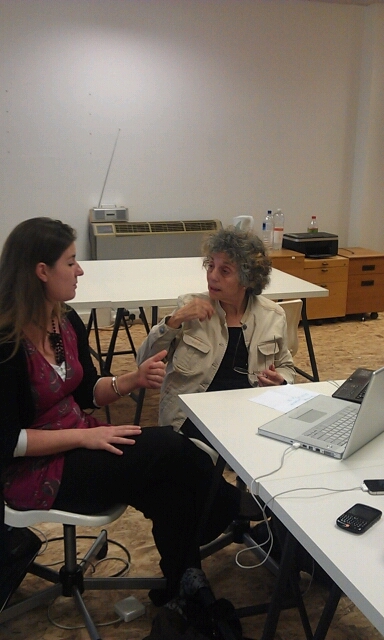
Great meeting today chairing the Social Housing & Digital Inclusion Group. We scoped our ambitions for digital by default and plotted our progress using old fashioned flipchart paper and pens. Feel it’s time for this sector to really take off.

Tapping into my inner stats nerd: Internet Users 2011

Back in 2007 Freshminds drew a graphic for one of our joint reports that showed that as more people got online the deeper the barriers were for those who remained left out. At the time we were having a go at predicting the future, and the latest stats from the ONS shows that this hypothesis has now come true.

I’ve done another slide deck – Internet Use in the UK: The Evidence June 2011 – which I’ve put on slideshare so you can see all the stats; you can download and use this if you want to. It brings you stats from the ONS’s new Internet Access Quarterly Update now embedded as part of the Labour Force Survey, and Ofcom’s latest bi-annual UK Adults’ Media Literacy Report for 2011.

The UK really can become a digital nation.

  • 40.8m people in the UK use the internet everyday.
  • Over 93% of everyone under the age of 45 is online
  • and more than 85% of people who live in London and the South East.
  • 85% of all men are online.

However the people who are being left behind is similarly stark. 8.7m have never used the internet. Only 17% of women aged over 75 are online; so now I know that Mum’s special in yet another way. 1 in 3 of all people who are disabled have never used the internet – that’s 4.2m people. And almost a third of the people in Northern Ireland have never been online.

The people who are offline and need targeting are: older people, people in the DE socio-economic group, people with disabilities, and women.

I’m the kind of person who would love to get my hands on the data behind the published stats so I could see the overlaps – especially based on disability and age. Maybe a future project.

Interestingly only a half (54%) of all adults in the UK have ever used a government or local authority website or other online service (eg email). This shows that there’s still a lot of persuasion to do with the online as well as the offline population where online government is concerned.

The best thing about these stats is that it really does feel as if it’s within our grasp to fulfill the vision of a truly networked nation. With a targeted approach we can make sure no-one is left behind.


Children dream of electronic communications

On Monday I read this tweet from @nyreescott: “overwhelmed. Given 20+ handwritten thank u letters from school kids after Skype session with teachers +St Lucia”. I remembered that Nyree had told me last week that she had a session with a class of Year 6 children in the Cambridgeshire fens to show them (and especially the teachers) how to use Skype. Just to make it especially interesting she make contact with a friend in St Lucia to show the very real power of the internet.

So 98.6% of under 25s are on the internet, we hear talk of Digital Natives, but – just as I did in the 1980s – we often under estimate the pure WOW factor of this tool we access everyday on our multiple devices.

Back in 1984 I worked on the Microelectronic Pilot Project at the National Assocation of Citizens Advice Bureaux as part of a small team whose job was to try to persuade 50 CABx that a computer was a good thing. In 1985 I left there to join TTNS – a News International venture on the back of the Microelectronics Education Programme; I was the National Database Manager (basically in charge of making web pages).

In 1985 I watched as children were thrilled with emailing eachother across a room, in 2011 I am thrilled at seeing a 50 year old woman sending an email for the first time. In 1986 I helped children to link up with other online children on the other side of the globe via the Computer Pals Across the World programme*. By early 1987 I had dismissed this computer pen pal thing as being a bit limited; after all I had devised and delivered an Online Schools Election with the BBC (with John Craven’s Newsround) and I was about to launch a WorldTour taking school children around the world using bulletin boards (a bit like social media in black and white).

Nyree reminded me that I was wrong in 1987. Children and adults love to learn about other cultures, other places, the more remote and different the better, and if it’s just an email then that’s fine. This wonderful tool we have which links people together through a phone line or something similar is just amazing. Nyree had a 20+ letters from delighted children, one of them said: ” I enjoyed the day you came so much I actually had a dream about it. I wish you come again and help. Thank you.”

110607_tech_4_good_awards_nyree

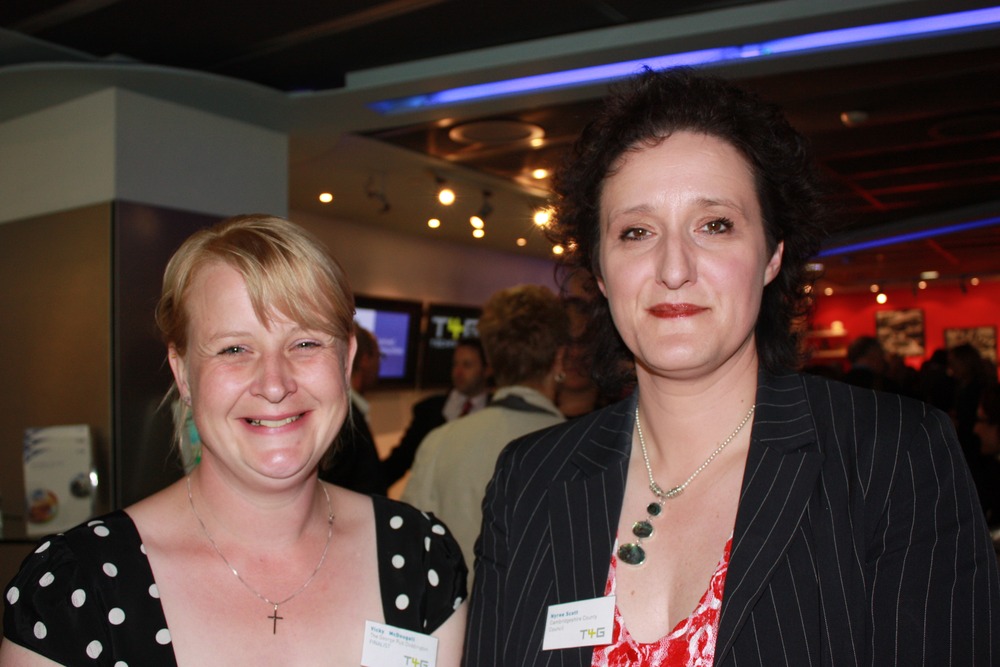
This is a picture of Nyree with Vicky (who went from terrified to award winning evangelical volunteer).


Fish and chips can make communities healthier

Okay, this is a slightly misleading title, but I’ve had the pleasure of meeting some incredible community organisations yesterday at the Technology 4 Good awards organised by AbilityNet.

One of them was Taylors Fish and Chip shop in Woodley, Stockport, who won the prize for Community Impact. All the finalists were excellent and are having an enornmous impact on their community. It’s fair to say though that I am completely in awe of what Taylors have achieved. Anne Wallace took over running the family Fish and Chip shop when her father died, as the recession hit, more and more of the shops on the precinct closed down, Anne and her husband considered early retirement but instead they supported training for their small team. Then they opened a coffee shop called Starting Point (Anne says “and I don’t even like coffee”) which has became the heart of the community. When the young people wouldn’t come into the cafe they then put computers in, and it’s grown from there. Now young and old learn together and help eachother out on eBay or emails or whatever they need.

Anne Wallace says that it was a selfish act as “for the Fish and Chip Shop to survive then the precinct had to survive”, but I think Anne is a great example of a brilliant community leader – she saw the community needed help urgently and she stepped up to the challenge and made sure the community got their community spirit back.

Seed funding for these local partnerships is vital, and delivers an economic return which far outweighs the initial investment. In this case, the partnership began with some funding from Edge and the project’s now being supported to grow and develop through funding from the UK online centres’ £2m Community Capacity Builders Programme.

Nicola Dean from Starting Point wrote in her application: “If ever a project proved that a small amount of investment from a few organisations who understood our dream, this is it. There is now a waiting list of businesses wanting to invest here at the precint. This is becoming a great place to live and do business.”

Persuading businesses to invest time in their local communities can be challenging, as I know from my own experiences of trying to set up a skills exchange in a disused shop near to where I live in Sheffield. (I’m still trying by the way!)

Examples like Taylors Starting Point show that economic, as well as social returns, are possible.


Does anyone have a game changing idea?

The government’s Giving White Paper published last week highlighted to me one of the key issues I’ve been wrestling with for some time in the context of the government’s Big Society plans: the tension between the devolution of power and money to local communities and the economies of scale and impact which can be achieved by central co-ordination.

It’s good to see the White Paper gives a framework to some of the rather nebulous ideas that have been floating around for the last year. The package of measures outlined, including a new Social Action Fund, investment in the Do-it website, and a planned Giving Summit in the autumn, help organisations like UK online centres to get a clear understanding of how our activities align with wider priorities.

Another reason I liked it is that it allays one of my earlier fears: that with the renewed focus on localism and self-organisation, national frameworks would become a thing of the past. Since my day job is as the Managing Director of a national organisation supporting 3,800 community partners you might expect me to advocate for national co-ordination, but my concerns go much wider than my own self-interest.

Take volunteering, for example. Without Do-it, the national volunteering database, each local area would have to create its own volunteering database, leading to duplication of effort and wasted expenditure.

In the early days of UK online centres, local centres would run their own local awareness raising campaigns, with patchy success and frustrations with inadequate local marketing expertise. We now have a highly successful national Get online week, which in partnership with Race Online 2012, the BBC, the Post Office and other major national partners, saw the monthly number of new people going to UK online centres double last October.

National co-ordination has got a bad press in recent months with stories of over-inflated quangos and pointless targets. But delivered in a light-touch way, in collaboration with community partners, it can achieve scale, impact and efficiencies which are simply not possible if everything is devolved to the local level.

The direction of travel signalled in the Giving White Paper seems to me to be the right one. With a national framework which sets out clear and practical initiatives but stops short of setting targets, organisations at all levels have the freedom to decide whether this is something they want to be part of.

And the Social Action Fund asks if there’s something truly game changing and scalable. Well I think I may have an idea …..