September/October – party time!

The end of September/beginning of October was officially party time for me – party conferences that is!

Okay, so it may not be everyone’s idea of fun, but I very much enjoyed myself and left very impressed with both Labour and Conservative thinking on all matters digital.

Much of my time in both Brighton and Manchester was spent, unsurprisingly, at fringe sessions which talked about digital strategies and priorities.  It was great to hear so many people discussing digital inclusion, and recognising the lack of basic digital skills as an issue which affects multiple policy areas.  That’s a massive step forwards from just a few years ago, when my party conference experience was spent fighting digital inclusion’s corner!

Welfare reform was obviously a huge area of discussion that affects many of our hyperlocal partners and their users.  And, due to our recent NHS contract, I also found myself listening to many conversations about the potential of technology to help NHS staff and patients.

I was particularly impressed with Stella Creasy MP (@stellacreasy) at the Brighton conference. She spoke eloquently about the use of digital for preventative care in the health service.  She argued that we need more imagination about the potential for technology to drive better services, and used an example from her own constituency.

In one hospital in Creasy’s constituency there are 56 people in hospital – not because they’re ill – but because their care at home isn’t sorted out.  Each person in hospital, costs the NHS £264 per day, so for these 56 people that’s costing the NHS £15,000.  It’s not about the money though, it’s about the person and making sure they get the care they need and in a place that most convenient for them; technology can help us to put people first.  Creasy said she wanted to see more done to reconfigure public services with the individual at the centre, driving up the quality of information and support, underpinned by digital – saving time and money as a by-product.  “How can everyone be part of our future, and then how can technology help us?” said Creasey.

I attended a similar debate at the Conservative conference in Manchester a week later where Chris Skidmore MP called for “a personal revolution not a public service revolution”.

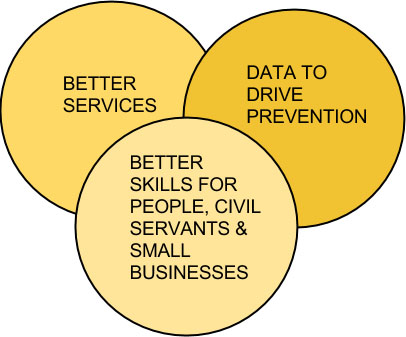
All of this debate and deep thinking made me wonder if the real beauty of use of digital in public service is how it can bring solutions together to focus on the needs of the person, and I sketched this picture in my pad as I listened:
shz1zDj4ayefE_S25-3ooHA copy

With our new NHS England contract in mind, it became very clear to me that digital really can put the control back into the hands of citizens and patients. For the most vulnerable and those with the most health inequalities, that’s highly valuable.  The potential for the general population is also enormous.

In fact, if we can design a future where we use data to see what our health issues may be down the line, we can use digital to find out what lifestyle changes we should make, and manage our own health much more effectively.  The results in terms of illness prevention – and in reducing health service intervention – could be a real game-changer.

And surely that’s a good enough reason for anyone to party.
Latest stats news – 5% increase in internet use in last two years

This is a very big day for data nerds like me who love evidence that helps us make great decisions!  Two big digi-inc reports have been published, telling us loads more about who’s online, how, what they’re doing and why.

Yesterday BBC/Ipsos MediaCT released new data that shows 11m people in the UK don’t have basic digital skills – meaning they either have never been online or can’t do four basic digital things (such as send an email or do a simple search). The 11m is broken down as 61% (6.71m) have never been online and 39% (4.29m) have been online but in a very basic way. (Media Literacy: Understanding Digital Capabilities.)

Today the OxIS Report 2013: Cultures of the Internet has been published. This report is published every two years so it’s a great source to identify trends in internet use and non-use.

My top take-out headlines:

  • Non-use of the internet has declined substantially during the past two years – 18% in 2013 compared to 23% in 2011.  That’s an increase of 5% in just two years.

  • Of the 2,083 internet users in the OxIS 2013 sample, only 34 own a tablet but not a PC showing how tablets are complementing rather than replacing computers.

  • Increase in internet use in Britain occurred across all age groups, life stages, and educational categories.

  • The most positive change was among the lowest income groups. This accounts for most of the increase in internet use between 2011 to 2013.

  • There was also 11% increase in use by the disabled.

  • Increased up-take by those without an educational qualification, and individuals who have retired, are also positive steps toward closing digital divides.

  • The use of social networking has plateaued at 61% of internet users (about half of the overall population).

The OxIS report looks at the breadth and depth of use across a number of new ‘user’ categories, with those who use the web the most recognising the greatest benefits.

I’m sure I’ll be blogging more about all of this as there is some great analysis coming out to read and reflect on!  Well done to Grant Blank, William Dutton, and the team at OxIS for their fantastic work.

Announcing a digital health information network

It’s always lovely to be able to share good news, so after a lot of planning (and a bit of waiting too), we can now announce that we’re working with NHS England on a really exciting new programme – Widening Digital Participation and a digital health information network. (Those of you who commented on the photo of a blue celebration cake I posted on Twitter you now know what it was for.)

The premise of the programme is very simple. The overlap in demographics between people who are digitally excluded and those who suffer from health inequalities is huge. For example, half of all people who are offline have a disability, and among the over 65s (who account for half of NHS spending) 36% have never been online before. I’m pretty sure there is something we can do to both empower people to take charge of their own health, and to realise some cost savings.

Over the course of the programme we’ll be engaging with 100,000 people, and doing this working with the breadth and scale of our hyperlocal partners in the UK online centres network. These fantastic centres have such good reach into their local communities and they can support people (like Norah, who I won’t go on about again, but whose story you should definitely read) to improve their digital skills and go on to improve their health.  We’ll be developing new online content to ensure we can reach even further, and doing this with existing as well as new partners, I’m delighted that includes working even more closely with the Society for Chief Librarians.

Working with NHS England we can show that we care about breadth (helping lots of people) and that we also care about depth (targeting those most at need). We’ll be working with 16 flagship partners who will work with us to test some deep-dive intervention, supporting some of the very hardest to reach groups (including homeless people, migrant workers, and sex workers). Working with people who face the biggest barriers to digital inclusion and good health I hope we can have a real impact and learn what we (and others) can do more of, or do better, in the future.

Flagships include:

  • Bromley-by-Bow Living Health Centre & UK online centre

  • Southampton Libraries working with Macmillan Cancer Support

  • and, St Mungo’s Wellbeing Centres working with homeless people in Lambeth, Kensington and Chelsea, Hackney and Camden.

As Tim Kelsey says in his blog: “Not everybody has easy access to the internet so we are launching a programme that will support 100,000 of the most disadvantaged in our society to learn how to access health information online, in partnership with the Tinder Foundation. This is one of the most significant initiatives to target inequality ever launched in the NHS.”

Online Basics qualification – creating a baseline for growth

According to research undertaken by the College Lecturers Union back in February this year, one in nine adults have no formal qualifications. If that isn’t shocking enough, in some of the most deprived parts of the UK this number is as high as one in three.  

Meanwhile, OxIS figures from 2011 also show that just 31% of people with no educational qualifications use the internet – compared with 91% of people with a university degree.  With 25% of all jobs advertised solely online, and 72% employers saying they wouldn’t even talk to someone without basic IT skills, it’s clear that those without IT skills OR qualifications are doubly disadvantaged in the jobs market.  

Here at Tinder Foundation, our own stats from the UK online centres network back up that story. Some 33% of our referrals now come from Jobcentre Plus. These people often need our help across the board – learning how to search for jobs online, apply for jobs online, build electronic CVs, and simultaneously gain the IT skills to feature on them.  

We felt very strongly there was a need and a demand for a solution – a baseline IT qualification to boost skills, confidence, and CVs at entry level.  

The result – in partnership with City & Guilds, is the Online Basics Award (ITQ). It’s an entry level three qualification which gives learners one credit on the QCF (Qualifications and Credit Framework). Based on our popular Online Basics course, it’s a one hour assessment covering three work-critical skills – communicating with email, searching the internet and using the internet safely.

It’s often the first qualification many of our learners have ever completed. Centres report that it gives people a sense of achievement and the confidence to tackle more formal learning and qualifications. It’s the first, easy-to-reach step on a ladder that can lead them anywhere. It also looks great on CVs – helping to plug the gaps long term unemployment can leave, and assuring employers of essential computer capability.  

Of course the assessment is done online. The quick, instant result for learners is easy for UK online centres and assessment centres to manage and moderate, and it has drastically cut down on the administration they have to do on other qualifications.  What’s more, some of our hyperlocal partners have even gone on to secure local grants to help unemployed people in their communities to do the course and accredit the award.  

So far, we have 100 centres delivering the qualification. In the last four months they’ve helped more than 600 people achieve their Online Basics award. That’s a pretty good result.  But as always, I want MORE!  We’re looking to expand the assessment network so even more centres and learners can take advantage of the qualification.

If you want to consider offering this qualification then it’s open to any organisation. The first step is to become a UK online centres partner, and you can find out more about that here – we’d love to have you on board.   

In the meantime, I’d very much like to hear what you think about the qualification – do comment here or email me at hello@tinderfoundation.org

What’s in a name?

That’s an easy one – and the answer is quite a bit actually.

And yes, I can also confirm that a rose by any other name can smell as sweet – if not sweeter. Just ask any marketeer or branding agency.  Names matter.

Names – whether personal or business – mean something to people.  They can resonate with who we are and what we stand for and can create images and feelings in the people that know us. That’s pretty powerful stuff, and in a nutshell it’s why Online Centres Foundation became Tinder Foundation last month.

The fact is that OCF itself meant nothing. It’s as inanimate as UPVC, and possibly as devoid of character. Online Centres Foundation wasn’t much better. While the wonderful UK ‘online centres’ we work with are still our major USP and inspiration, online centres is not who we are or the sum of what we do. It’s not really who THEY are. When it comes down to it, we’re about people, and what we do together is to kindle change, hope and skills.

We want to do even more of that in the future, and we wanted that ambition – that essence – to be at our core.  In short, we needed a brand new name for a bright new future. Cue the very hardworking team in Sheffield…

I think everyone thinks a rebrand has to cost the earth – we proved it doesn’t. Most of the work was done in-house, in discussion with the Tinder team, UK online centres and some of our fabulous partners. We started to think about who we are, what we do, and most of all who we wanted to be. The word ‘Tinder’ came from the concept of sparking new ideas and innovation, igniting change at a local level and helping it to grow and scale up nationally. The word captured our imaginations, and as a staff owned mutual we voted in favour of the new name at our first AGM earlier this year.

To polish Tinder up a bit, we then went out to get a bit of help from a great communications agency called Neo.  They’re a company with a difference as they only work with people who are doing something good in the world. You can find out more about them here – www.weareneo.com. They came up with the fingerprint idea – and before you ask, no, it’s not mine! What we liked about it was that it stood for people, individuals, and individuality – representing the millions of people we’ve already helped and the different paths and routes they’ve taken as a result.

In answer to the original question, I think we’re already ‘sweeter’ under our new name, and that it’s already helped shape our thinking about the future.  In fact you can see our plans to make Tinder our practise as well as our name in our new three year strategy here.

So far Tinder has a positive reception from our partners and peers, but I’d love to hear what you think about it – do comment here or email me at hello@tinderfoundation.org.

In the meantime, you can find out more about the name change in my presentation here, and more about Tinder Foundation on our website – www.tinderfoundation.org.

The real deal

Today sees the announcement of the Digital Deal finalists – 12 brand-spanking-new landlord projects which will provide internet services and training to social housing tenants. (See the official announcement PR here).

Obviously every man and their dog in the digital world will be ‘welcoming’ this news and ‘looking forward’ to seeing the projects develop, and while I don’t ever like to be obvious (and would never dare speak on behalf of my Weimaraner) I’m afraid I can only echo both sentiments!    

I was actually one of a group of people – including Housing CEOs and National Housing Federation reps – who attended the birth of the Digital Deal. A good while ago we were all at a round table meeting hosted by Grant Shapps MP (then Housing Minister) and Martha Lane Fox (as Digital Champion), discussing ways in which people who live in social housing could be encouraged, supported or even wired-up to be able to become digital citizens.

The focus was on those people who don’t have the basic digital skills most of us take for granted but were lucky enough to have a landlord with a social conscience looking out for them. We talked about the need to kick-start action, about galvanising innovation, and about the merits of match funding.  And lo, the Digital Deal came to life – a Challenge Fund designed to stimulate Social Housing Providers to think deeply about how to help their tenants to get online, encouraging the development of digital practice through bidding for funding and planning for action.   

We at Tinder Foundation (our new name) were asked to run the assessment process and project oversight.  We’ve been astounded at the response from social landlords, the appetite for change, the creativity, and the enthusiasm for meeting the challenge laid out before them.  

Since that first Digital Deal meeting, digital exclusion has become even more important to both social housing providers and tenants, moving up To Do lists as Welfare Reform changes come into effect.  Universal Credit – as a ‘digital first’ service – will have a huge impact on social housing providers, radically reshaping the way in which they get paid their social rents. Digital awareness, digital systems and digital skills for tenants are no longer nice-to-haves. Social housing providers are getting ready, and the Digital Deal Challenge Fund is one thing on the crest of that tidal wave of action.   

Out of the 130+ housing providers who applied for grant money from the Digital Deal Challenge Fund, there are 12 whose ideas will now get that extra momentum that some pump-priming money will inevitably bring.  Of course we all wish it could be more, and I can safely say that the judging process was a long and difficult one. What we’ve ended up with, however, are 12 very diverse projects. They include plans to use community volunteer support and expert mentors, tap into residents groups and embed digital in everyday contact, plus technological solutions ranging from mobile internet wi-fi clouds to converting TVs into internet devices, buses, and recycling IT equipment.  

The plan is to take the ideas and lessons from their development and share them instantly with other social landlords via the Digital Housing Hub #digihousing – so that others can use the Digital Deal projects as catalysts for their own work.

At such a critical time for social housing tenants and providers, one thing’s for sure – any help and hints on how to inspire, support and link up tenants in our digital world will be very much in the spotlight.  

I hope that those bids which weren’t successful are not consigned to the bin, or even to the bottom of housing provider agendas. It would be great to see bidders push on to deliver their proposed plans with their proposed internal budgets – if on a smaller scale – and show us what’s working for them. It would be a shame to lose the thinking and the work which has gone into each proposal – because each one is part of the Digital Deal legacy, and can contribute not just to the success of the individual business but to the knowledge and sustainability of the entire sector.

In the end, that will also contribute to the well-being of tenants, some of the most vulnerable people in Britain.  And that, my friends, is the real Deal.

The wheels on the bus…

In the last couple of weeks I’ve seen more than one story about people using buses to deliver digital inclusion activities in their communities. You don’t see one for ages then three come along at once! (Sorry, I couldn’t resist).

You used to see internet-buses all the time – they were hailed as the ultimate solution to digital exclusion some ten years ago – but seem to have run out of steam (or petrol) since.

In Finland, the Netti-Nyse (literally ‘internet bus’) has been helping older residents of the town of Tampere for more than ten years, and I was particularly inspired by this tale of Estella Pyfrom, 76, from Palm Beach in Florida. She spent her savings buying and kitting out Estella’s Brilliant Bus with computers when she saw how many children from poorer families had little or no access to the internet and were being left behind as a result.

There’s been plenty of this kind of activity over the years in this country too – lots of it within the UK online centres network.

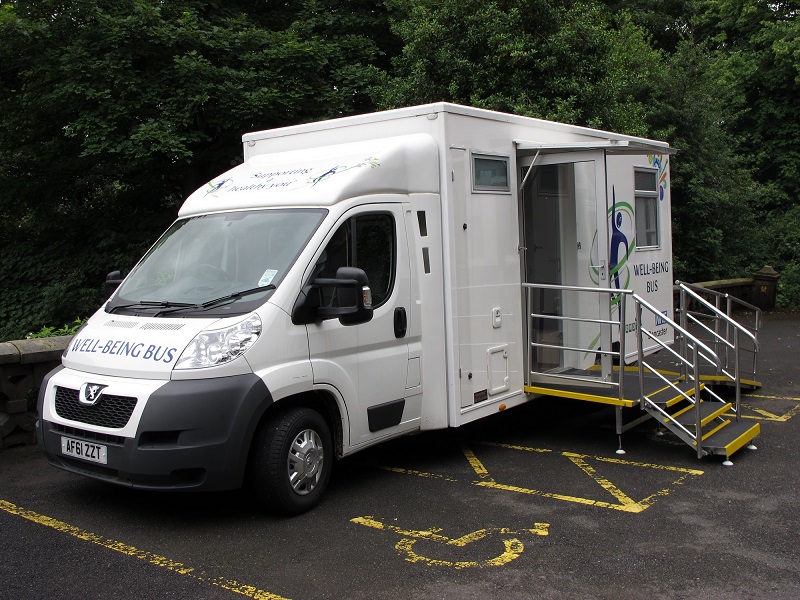
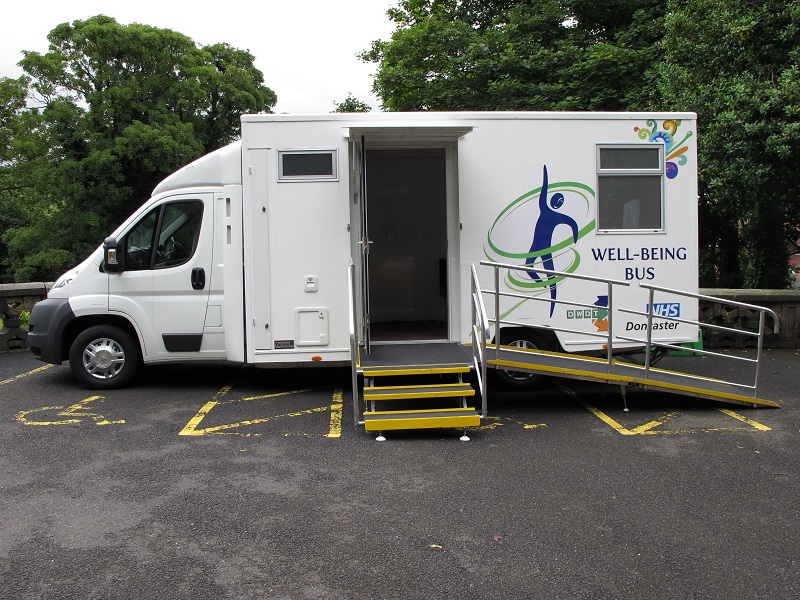
Doncaster West Development Trust’s ‘Well-being Bus’ travels to public events throughout the city encouraging members of the public to try Learn my way to get new digital skills. The bus even helps to pay for itself as the Trust rents it out to the local primary care trust which uses it to get out into communities and encourage healthier lifestyles and regular health checks.

Bus 2 Bus 1
Doncaster West Development Trust’s Well-being Bus

Meanwhile, the MK Dons ‘Dons on Tour’ bus delivers both digital inclusion and health and wellbeing courses to schools and rural communities throughout Milton Keynes.  Finally, in North Warwickshire, for many years the Branching Out Bus (or BOB for short!) provided 1-1 IT tuition and financial, housing and employment advice to residents of rural communities.

Unfortunately the buses don’t come without their share of problems. I know many others have been taken out of service due to costs like fuel, insurance, garaging and finding a qualified tutor/driver. At a time when most local authorities and library services have been forced to make cuts, it can be a very expensive way of getting out to the people who need support.

Over time, the feeling grew that buses were too expensive and putting some laptops and mobile dongles in the boot of a car was cheaper and gave more flexibility about where the internet sessions could take place. Although this option is much less visible to the community you ‘park’ in and loses much of the novelty value of a bus.

The pockets of success in the UK however, plus the resurgence of internet-buses elsewhere in the world, makes me think this might be something we need to look at again. The internet is more mobile now than ever before – with wifi, MiFi, dongles, smart phones and tablets on the move. No more expensive satellite dishes on the bus roof. If you don’t have the skills to use modern mobile internet, maybe mobile internet still needs to come to you – on wheels.

My view is pretty much 50/50 – for each internet bus that is a success there’s one languishing in a car park somewhere, so it’s not a silver bullet and I recommend doing the sums carefully.

But buses can be, in essence, the ultimate in ‘outreach’ – one of the things the UK online centres network does best. In order to reach the most disengaged and disadvantaged people, you have to go to them. In places where there is less infrastructure – for instance rural areas – buses might well be a viable solution.

I’d like to find out more about the challenges these services face, the cost-benefit ratios, and in a time when there is just less money around it would be good to hear how we might be able to support Brilliant Buses like Estella’s in more UK communities. Let me know your thoughts and do share your bus success stories or horror stories.

Looking back: A year of great people, new products, and good performance

We’ve been doing a lot of talking about the future recently – especially with the launch of the our new name and our new strategy. But sometimes it’s good to sit back and reflect on what we’ve achieved – which is great timing as today we launch our brand new annual review, and there are certainly lots of things in it that we can be really proud of.

The review covers all of our top achievement for 2012 – 2013, starting off at what seems like a very long time ago in April 2012 as we launched our specialist network, and the Community Hub programme. We achieved some really fantastic things during the year, in July 2012 reaching a momentous milestone of one million learners supported since April 2010, which we celebrated with a great event at Facebook HQ. With great support from Nominet Trust we launched the Community How To website, which has grown to become a key area of work for us, supporting thousands of people working in community organisations to do more with digital technology. We held our first national conference – Digital evolution, local action – and ran the hugely successful eReading Rooms pilot … amongst many other things.

We have a tendency to hurtle from year to year – and from one project to the next – so it’s really nice to sit down and take time to look back on what we and all of our partners have achieved. And most importantly the things that stick in my mind from any year are the people who have got off their bums and made a massive difference to their lives by embracing technology –  you can read about them, and see how their lives have been changed in this annual review too.

Thank you to the many, many people who have supported us on the great journey we’ve been on over the past year – we’re already looking forward to many great times ahead!


A bright future for Tinder Foundation

The sun is shining, the world is full of amazing talented and committed people, and I am very positive about the future. I had a fantastic afternoon today meeting centre managers, learners, community leaders and some of our great partners at what was a very special day for us – the launch of our three year strategy, and the reveal of our new name – Tinder Foundation.

Our new strategy is an ambitious one. Last week I heard Dame Stephanie “Steve” Shirley give a speech about her journey as a woman working in the technology sector and her inspiring philanthropy to grow the Technology For Good movement. Dame Steve said: “Technology does not drive change, it enables change.” And I was reminded of this today when talking about the impact we’re having, helping people to help others to use technology to make a positive change to their lives.

The four elements of our strategy starts, with a passion to continue to evolve and improve our digital inclusion work, together with our 5000+ hyper-local partners, and with a vision that everyone in the UK can benefit from what digital technology offers. The UK online centres network is absolutely vital to us and meeting some inspiring centre representatives today reminded me again of the important work that is happening daily in local communities.

Having started out helping people to learn digital skills we will extend that to learning other things, be it English and Maths, or baking and gardening. This is new work for us, building on our findings from the eReading Rooms pilot (our final report is published today – here). For those people who don’t think learning is for them, we will help them to find out what interests them, and access that learning on the internet. We will work with thousands of local partners who will offer a friendly guide, on hand and an informal and local place in which to learn. We want to inspire people to not just learn about digital but to use digital to open up their interests and passions and to learn everything and anything via the web.

Why stop with individuals? Our third strand is to extend our community impact work, building on what we’ve achieved with our Community Hubs, and the Community How To website, to support organisations to benefit from digital technology relevant to what they do locally. So that they can do more and achieve more, and more quickly.

And lastly (but not least) we will work with government, and other organisations such as social housing providers, to help them to design digital strategies. Helping citizens and customers to use these fantastic services, which ties neatly into our digital inclusion work as well!

We will always be open in what we do and how we do it, and seek out partners so that together we can achieve much more than we could do alone.

To match this ambitious new strategy, we felt we needed a new name that would reflect our exciting future. And so from today, Online Centres Foundation has regenerated, just like Dr Who, into Tinder Foundation. The new name was a result of a vote by the Members of our Mutual. The name reflects how we help to spark activity at a local level, which then grows to something far greater than we could achieve on our own. Don’t worry about the product/service names that you love – UK online centres, Community How To, and Learn my way – they remain and we intend to nurture and evolve each one.

As Tinder Foundation we can now grow, diversify and become a sustainable organisation. We will always keep to our core aim – to make good things happen with digital technology.

So with our new name, and our new strategy, and lots of partners wanting to help, the future really does look bright!

If you’re eager to know more about Tinder Foundation, our new website is here.

New digital inclusion team announced today, and my thoughts from ND13

I’m delighted that the Information Economy Industrial Strategy (IEIS) announced today by David Cameron includes the news that the government is setting up a new cross-sector digital inclusion team that will sit within Government Digital Service. Not only will the team co-ordinate work across government departments, but it will work with partners across the sectors to ensure the biggest impact possible in giving individuals and organisations the digital skills they need – something you all know I’m passionate about. With digital by default now a policy mainstay, I don’t think this commitment could have come quickly enough, and I’m very much looking forward to working closely with the new team.

One of the things that most impressed me in the blog from GDS that announces the new team is the commitment to doing things, rather than just talking about them. This is really interesting coming on the back on ND13, which left me really frustrated at the pace of change in the digital inclusion arena. The conference was full of committed people who wanted to achieve more, which leaves me wondering why we aren’t?

I said on Tuesday that to finally close the gap, what we needed was the 3P’s, but having thought about it further, maybe there are actually 5.

People – it’s all about the people who we need to help and targeted them effectively is key. It’s also about the people who are volunteers and who are paid to help other local people – they need the support, tools and leadership to achieve more in their local communities

Partnership – it’s all about working together, on a big scale. Like the 5,000 hyperlocal partners in the UK online centres network, or the scale Go ON UK works on, pulling in big employers with big customer bases, as well as each person in each local community doing their bit working with each other or local agencies. I hope the new digital inclusion team recognises the importance of these large scale partnerships, and commits to sustaining them – and supporting new ones.

Passion – We have got to believe we can achieve digital inclusion, and persuade others that it’s important. I’m sure the digital inclusion team will be passionate advocates amongst government departments and other organisations, and I think here they can have a huge impact.

Persistence – We know it’s not an easy job, or we would already have done it. We need to keep going.

Fish, Peas, and Family Trees. It’s important to keep it fun and relevant, just like one of our great centres (Starting Point in Stockport) does, running family history sessions in their fish and chip shop.

Someone tweeted me on Tuesday to say we also needed an F for Funding, and it’s true that people need some cash to make all this happen. We know this is harder to come by now, and while we need to push for a big effort, we also shouldn’t flinch away from the fact that some of this will need money to make it happen. I hope GDS’s new digital team will also recognise this need. I’m very much looking forward to seeing the impact that they – and us as their committed partners – can have.