My visits to the party conferences – mixed weather but positive messages

When I arrived at the Labour Conference in Brighton the sun was shining and I immediately saw Jeremy Corbyn being chased by a small number of people wearing “I love Jez” t-shirts and running after him shouting “I love you Jeremy”. Overall the conference felt very upbeat, the small number of MPs and Shadow Ministers I heard speak were full of a renewed energy, and new ideas.

When I arrived at the Conservative Conference in Manchester it was raining and cold, and the demonstrators were loud and hurled abuse at everyone in the vicinity of the conference secure zone with the hope that some of the people were Conservatives with some power. Inside however, and in the Fringe events, MPs and Ministers were confident and bold. And, of course, their ideas are becoming policy.

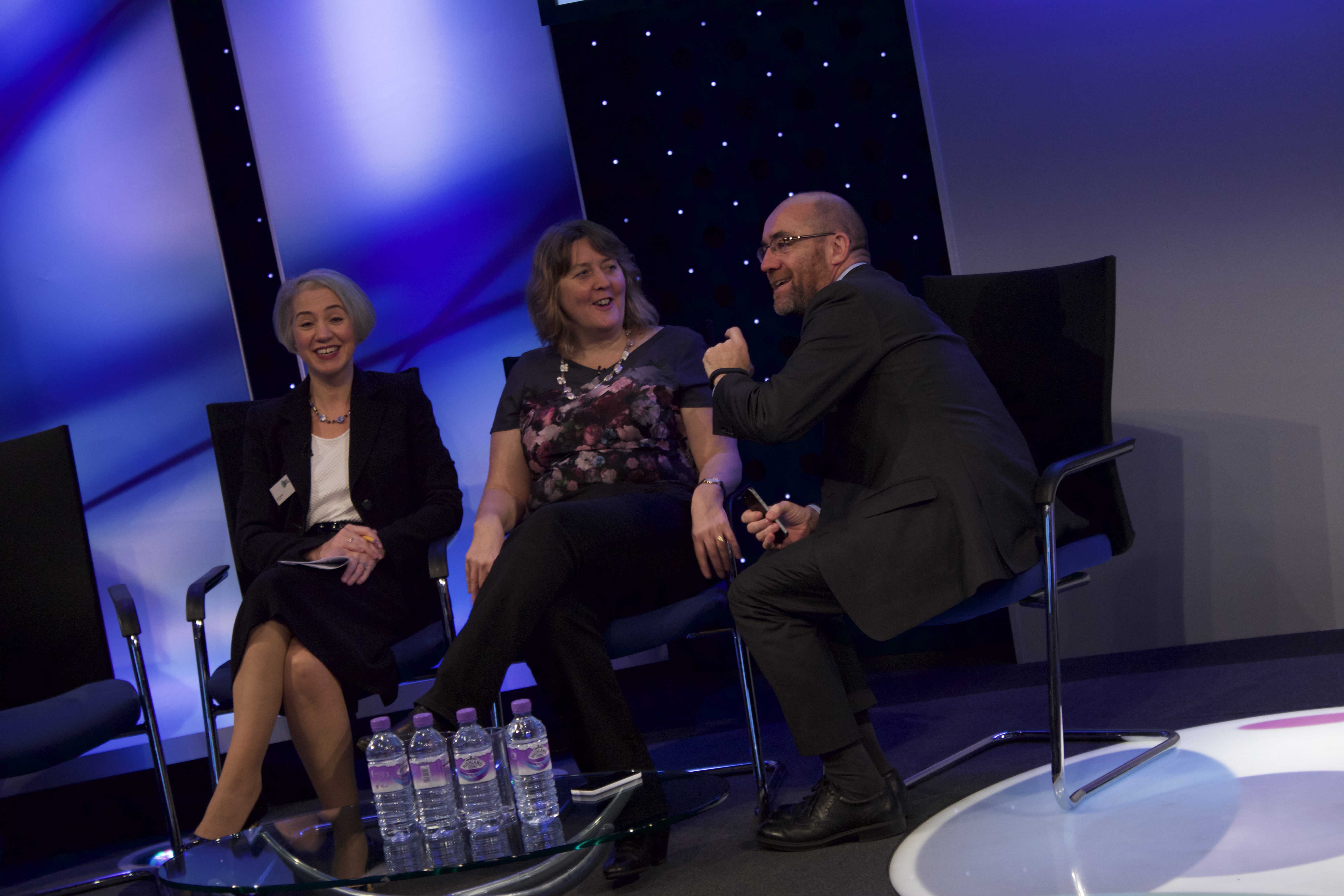
Helen's Blog

Two themes that emerged from both conferences were digital and poverty

Tinder Foundation doesn’t just work to close the digital divide – we’re working to close the opportunity divide as well. We work with local partners deep in communities to ensure that people aren’t excluded from jobs, skills, health care, human contact, savings, social mobility and other opportunities due to their lack of internet knowledge and confidence. In 2015, in the UK, not being able to use the internet deepens exclusions that already exist, and the people most affected are poor or elderly and often isolated.

I went to a Fringe session on Child Poverty at the Labour conference and on the Working Poor at the Conservative conference. A common message from both is about facing up to the reality of poverty in our communities. And of the importance of joining up across departments, across sectors and across local (and hyperlocal) organisations – which is easier said than done!

In fact “joining up” was a big message from (now Lord) Francis Maude, who appeared to me like a man proud of what he’s achieved in the past five years with GDS (Government Digital Services) and a bit more open now it’s not his ministerial post.

Myth-busting

Rachel Neaman from Go ON UK was also speaking, and usefully exploded some myths about digital exclusion. Many young people can’t fill in forms online or complete a CV, so we do have a problem with some young people – they’re not all digital natives. And almost half of those lacking basic digital skills are of working age – either stuck in low paid jobs or stuck with no job and no digital skills to apply for them. Rachel also said it’s not acceptable that people suffer from poor bandwidth, and that real affordable solutions for the people who can’t afford a connection need to be addressed and fast. We can’t accept the stereotype that people’s grandparents are the only people who remain unconnected and under skilled. It’s a much bigger problem than that. It’s a 10 million people sized problem.

Both Parties were clear that jobs are the way out of poverty, but they have to be jobs that pay a decent wage

People who are in low paid work in their 30s and 40s are likely to stay in those jobs for at least 10 years. I’d like Tinder Foundation, and our excellent community partners, to continue to work to build people’s resilience and to more explicitly show how basic digital skills can be a platform to many important pathways out of poverty. Yes, it’s about building skills to help people get work and to get a better job, and it’s about linking people to the partner organisations who can help them with the complexity of their lives.

The good news is that Matthew Hancock (now Minister for the Cabinet Office and in charge of GDS) in his closing remarks in a Policy Exchange fringe event about ‘digital opportunities and threats’ said that digital inclusion was extremely important, he said he was committed to the “massive liberation new technology is bringing …. services must remain universal, and available to everyone”. Well, you know I agree with that.

The Government is clearly committed to increasing the number of great quality online public services available and to increase the number of people using them. Everyone who can now, or could with support, should also see the value, convenience and quality of these services. This will help save money, but also the experience is usually better than other channels. Digital inclusion can save the Government money, and improve information and transactional services for everyone.

Going back to the opportunity divide

For those on the wrong side of the opportunity divide there’s a danger that if we don’t keep working as hard as we can and in as targeted a way as possible, the digital divide will exacerbate the exclusions that already exist in our society.

Although their drivers may be different to mine, the great news is that both the Labour Party and the Conservative Party seem to agree that digital inclusion is important to our economy and our society. So, we’ll keep working hard, with partners, to help provide a solution to close that digital divide – and opportunity divide – as fast as we can. It’s good to know we’ve got the politicians behind us.
People with disabilities excluded from web opportunities

Yesterday an interesting report was published by Ofcom (“Disabled consumers’ use of communications services”) looking at the take-up and use of the internet by disabled adults. It provides much needed insight into the similarities – and the differences – between those who are offline and have a disability, and those who don’t.

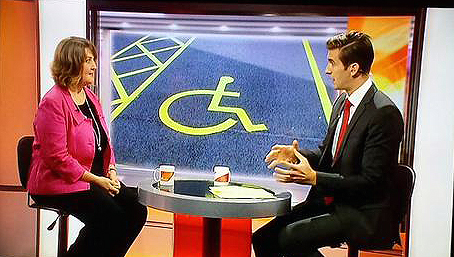
Late yesterday I got a phone call asking me to appear on this morning’s edition (Friday 2 October) of BBC Breakfast, to talk about the barriers that disabled people face when getting online and to highlight the consequential exclusion to savings, discounts, and the convenience of internet services.

Helen on BBC

The report suggests that demographic differences offer only a partial explanation for differing levels of communication device and service take-up. Other factors, perhaps related to the disability itself, may affect ownership and use of key communication services such as the internet.

Over three million people with disability do not use the internet, and only 55% of disabled people have internet access compared to 83% of non-disabled people.

Some of the barriers that disabled people face are the same as those of non-disabled, such as lack of skills or affordability. We also know that some disabilities occur due to ageing, and older people are more likely to lack basic digital skills than younger people. People on low income are also more likely to be non-users of the internet, and disabled people are more likely to be unemployed than non-disabled people. This all makes it hard to discover which demographics are the causal link to being offline. However, the report does show that when all other demographics are removed, there is still a higher probability for a disabled person to lack basic digital skills. Accessibility is a barrier for some, and the report also highlights that people with disabilities are more likely to live alone and that also leads to less shared internet access.

Tinder Foundation’s network of community partners are working hard to make sure everyone has an equal chance to get online, and we’ve created a range of resources and support to help our local partners do more to help disabled people – and to make sure we can really make an impact on these figures.

Lian Pate and the team at Banbury SWITCH in Accrington are one of the centres doing just this, and they were kind enough to step up at the last minute and let the BBC Breakfast crew film at their centre. It was great to see their story on prime-time morning TV, which really helped illustrate the real impact that the internet can have on making disabled people’s lives easier – so I’d like to say a big thank you to them for all their help last night, and to all of our local partners for the fantastic work they do every day.

And it was nice to be on the telly to talk about the urgency to create a more equal nation, even though I had to get up super early.

Clicking with the Philippines

This week I visited the Philippines to attend the Digital Strategies for Development Summit (DSDS 2015). I chatted about our online learning platform, Learn My Way, and learned so much about the great work going on in the Philippines to support people to gain basic digital skills. We talked about partnership and how Learn My Way can be useful for them.

Learn My Way logo

It was great to gain some insight from another country about how we can be useful and help people working on digital inclusion in countries around the world. I learned a lot, and it was all very ‘dipping our toes in the water’ but I feel like we’re already on our way to making some progress.

I can’t wait to share everything that I have seen, heard and thought, so keep an eye out for another blog very soon. In the meantime, you can listen to me talking on Radio 4’s BBC Click earlier this week, prior to setting off from the UK. Scroll ahead to 13:30 to hear me discuss the Philippines (before I went), Learn My Way, and the importance of digital inclusion.

Smartphones and Digital Inclusion: It’s Complicated

One of the main findings from Ofcom’s latest Communications Market report is that the UK is now a “smartphone society”. It was an interesting read but I’m completely fed up of people going on about how the digital inclusion issue is going to be “sorted” by smartphones.

I’m fed up, because the data doesn’t tell that story. Ofcom’s other recent report – Adults’ media use and attitudes – states that 6% of people ONLY use smartphones and tablets as their only internet device. 6%! And this isn’t increasing very fast. It started at 2% in 2009, increasing to 4% and now it’s 6%.

In the world I live in lots of people are on their smartphones, checking social media or looking at the news. It might seem like everyone’s doing it, but in reality only 69% of the population go online outside their homes. That means that 3 in 10 people don’t access the internet on the move which is a big number.

When you dig below the surface, this smartphone malarky is even more complicated

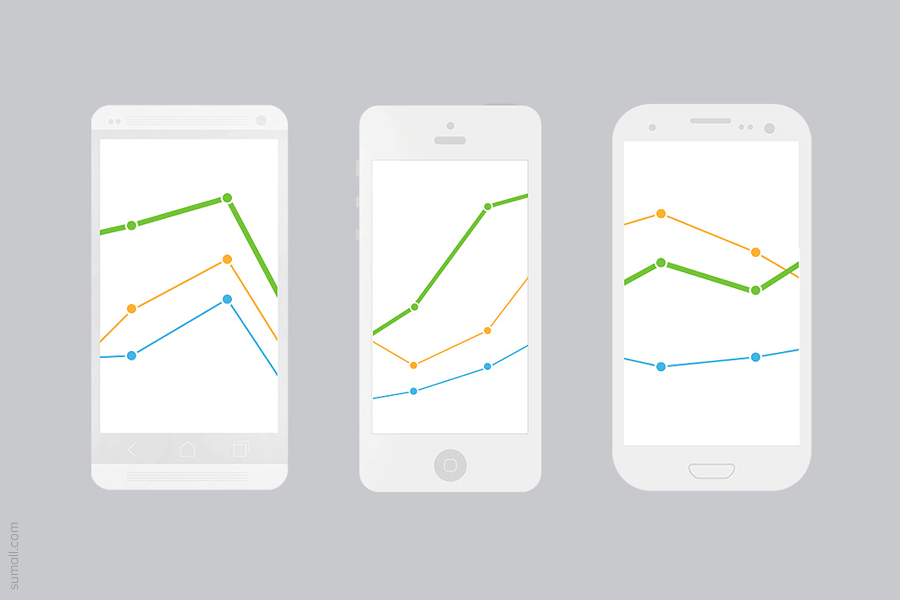
sumall_mobile_data_big_trendlines

If you take a deeper look into this report the figures show that young people and the people in the lowest socio-economic groups are more likely to use an alternative device to go online.

People use the internet for different things and figures show that the device they use depends on the task they wish to complete. People like to use Gov services, for example, on a computer, but tend to use social media on a smartphone.

So the smartphone is loved for certain things, with a third of all internet users saying it’s their most frequently used device.

Tablet vs Desktop

Tablet use isn’t huge with only 13% of internet users accessing the internet through them. This figure is much lower than desktop computers, and although I’ve not seen a desktop computer for years (except in the UK online centres I’ve visited of course!) there’s about 25% of the population who like to use desktop computers for many activities.

The smartphone is PART of the solution, not THE solution

I think smartphones are an important tool in our box and offer the potential to give many more people access to the internet, especially when it comes to affordability (32% of people who don’t use the internet say that cost is keeping them offline).

And we know that although the vast majority of internet users are using multiple devices touchscreens work particularly well for people who are unfamiliar with the internet, especially for activities like watching TV online and using social media.

Learn My Way is, of course, mobile optimised, but I do sometimes wonder if people (myself included) choose to do some things on a smartphone and other things on a laptop, will the internet ever be so well designed that people can do everything easily on a phone?

But please, please, please don’t get giddy all the time and say there’s evidence that the smartphone is the silver bullet for digital inclusion that so many people seem to think is out there. Look at the evidence. There’s no substitute for old fashioned hard work, local support and making the internet relevant and personal (and affordable too!).

Women in tech: Sledgehammers not pinkification

Recently I met a group of friends for dinner. We all work in tech, and we’re all women. Throughout the evening we all seemed to come back to the topic of gender balance – or imbalance – in the tech industry.

I find it really frustrating that the tech sector is relatively new, but new instances of sexism against women are coming to light all the time (and they’re just the ones being reported).

A survey of Guardian readers into sexism in the tech sector found that 73% of men and women who responded think the tech industry is sexist. One 39-year-old male worker at an information security firm said: “I find women in my industry to be leaders of new ideas and equals in every way to men. I’m ashamed of being male sometimes for the way women are treated.”

Why is a new sector being built to exclude women and girls?

We seem to be building a new sector on the fault lines of the old ones

Sexism is an issue common to many other industries, but as you know my bread and butter is in digital. So, if we have a new way of living our lives (and a new industry creating it), and it’s mostly being built by men, where does that leave society?

I like men, I’m a mother to two boys, and I know several men who have stood on a chair and shouted “I’m a feminist”. I don’t want a world where the dial swings the other way and we exclude the men. But I’d really like us to try and get a better gender balance. Without it sounding like a complete compromise, I think the answer has to include men, as well as acknowledge that the current status quo is a problem and we need to actively encourage and support women explicitly into the sector.

Take a look at Emma Mulqueeny’s great blog, ‘How to put girls off programming and tech – the easy way’, as an example of trying to include more girls in tech with the best of intentions, but in reality doing the opposite.

Pinkification

When I was little, my mum modified the TV so that me and my siblings couldn’t watch ITV (to avoid the adverts). My brother would even say he was going to his friend’s house to watch TV so that he could work out what he wanted for Christmas. Now I understand what my mum was up to. Instead of letting the toy companies or cosmetic companies tell me what a girl was and what I should be, she was trying to let me decide that for myself. You only have to Google ‘Girls Toys’ to see the pinkification of our world. And I’m afraid it’s only got worse since I was a child.

Toy shop

I like pink, but just as one colour in the paintbox.

And what about me? I’m not exempt from sexism. Of course I experience sexism. Sometimes I know if I was a man I’d immediately have status. But I’ve spent my life trying to ignore gender and just getting on with it so I can do what I think needs doing. You might have noticed this is my motto for most things.

Dame Shirley is an amazing role-model, a pioneer and one of the most successful tech entrepreneurs ever. She says she “just got on with it” but in order to become successful she had to go by the name ‘Steve’ and her husband had to help her open her first bank account. She did so much for women to work flexibly in technology, as well as other important issues such as equal pay. Watch her brilliant TED Talk – ‘Why do ambitious women have flat heads?to find out more. Please do take the time to watch – you’ll even have a laugh!

Unfortunately after all of the groundbreaking by Dame Shirley and others, we don’t really seem to have gone much further. In fact has it got worse?

The answer has to lie in both men and women creating the right working environments that are fair and equal.

I won’t pretend to have the answers to these questions because it’s clearly not that simple. Does banging on about it even help?

Martha Lane Fox has set up Dot Everyone, with one of her early priorities a focus on Women in Digital; their website says: “Our objective is that 50% of the people that design and make Britain’s networked world will be women. Our initial focus will be on: mapping and assessing activity of women in digital; building an evidence base of the challenges faced by girls and women; and creating a funding vehicle that invests in sustainable social enterprises helping girls and women in digital.” Don’t just watch this space, but go over to her website and see if you can help.

I’ll be meeting up with my dinner friends in the not too distant future to talk about how we get the balance back, how we can help the women and girls following behind us, and what we can actually do that will make a difference.

The optimist in me likes to think things are getting better, slowly; more men are talking about this as an issue. But I’d rather make progress more quickly; let’s tackle this with a sledge hammer not a toothpick. We deserve to have a digital world where men and women are respected and have equal opportunities; where women also build the digital society. After all, we live and work in it too.

Tweet me at @helenmilner and let’s discuss.

Digital exclusion will damage your health

What were you doing in July 2013? I’ll tell you what I was doing; I was anticipating the start of something great for Tinder Foundation as we embarked on a partnership with NHS England.

Long before we launched the now award winning Widening Digital Participation programme in the summer of 2013, we’d been talking internally about the correlation between health issues and digital exclusion. You can’t ignore facts, and the facts were showing a huge synergy between the two.

Two years into the three-year project, and the facts once again speak for themselves. I’m so glad we’re on this journey with NHS England at a time when the shift towards digital by default services has become even more widespread throughout health services in the UK, and the danger for people suffering health inequalities to be left behind becomes even greater.

Since the project began we have:

  • Made 235,465 people aware of online health resources
  • Trained 158,171 people to improve their digital health literacy – that means showing them how to access and use health resources, such as NHS Choices, to manage their health
  • We’ve also trained over 4,000 volunteers to support other people to improve their health by using digital
  • Provided grants to support over 200 community partners (each year of the project) to deliver digital health literacy training and support to people wanting to learn more.

The numbers are growing all the time, our partnerships – both local and national – are working. Great things are happening through digital.

But, there’s so much more we can do. We’re well underway with year three of the programme and we’re looking ahead to what happens when we finish in March 2016. But, I don’t think of it as the end because the last three years we have laid the (strong!) foundations – it’s just the start.

Read our new report, it identifies four key things we intend to do to extend the life of our work:

  • Create capacity for our hyperlocal community partners so that they can continue doing what they do best
  • Continue shouting about the work our partners are doing, and the benefits digital health literacy have
  • Work with more GPs, make sure they understand the value of digital health literacy
  • Focus on joined-up policy responses that promote local support for digital health training

If we can do this, then we can help so many more people, like the wonderful Amy, who’s story you can hear in this video:

Maggie and Digital Evolution are coming!

If you’ve been reading my blog for a while, you’ll know that Tinder Foundation’s Digital Evolution Conference, which takes place every November, is without doubt one of the highlights of my year.

IMG_5456

And yes, you might think it’s a bit soon to be talking about an event taking place in November as we’re only just in August, but I can’t help but get excited by how this year’s conference is already shaping up.

I won’t give too much away at this stage, but I do want to say how pleased I am to have an incredibly talented individual joining us on the day.

Maggie Philbin

If you’ve ever met Maggie, or had the pleasure of hearing her speak, then you’ll know why I’m so excited to announce that she will be chairing this year’s conference.

Maggie is one of my heroes – she knows loads about technology, she shares my beliefs of having a society where everyone has the opportunity to benefit from digital, and she’s a great person too.

She is the perfect person to host.

Have a watch of Maggie speaking below.


I can’t wait to reveal more of what we’ve got planned, but in the meantime you can find out more about the Digital Evolution: Building a digital nation conference (Wednesday 25 November at the BT Centre, London) here.

Tickets are now on sale with a special introductory offer available until Monday 7 September.

Community Transformers

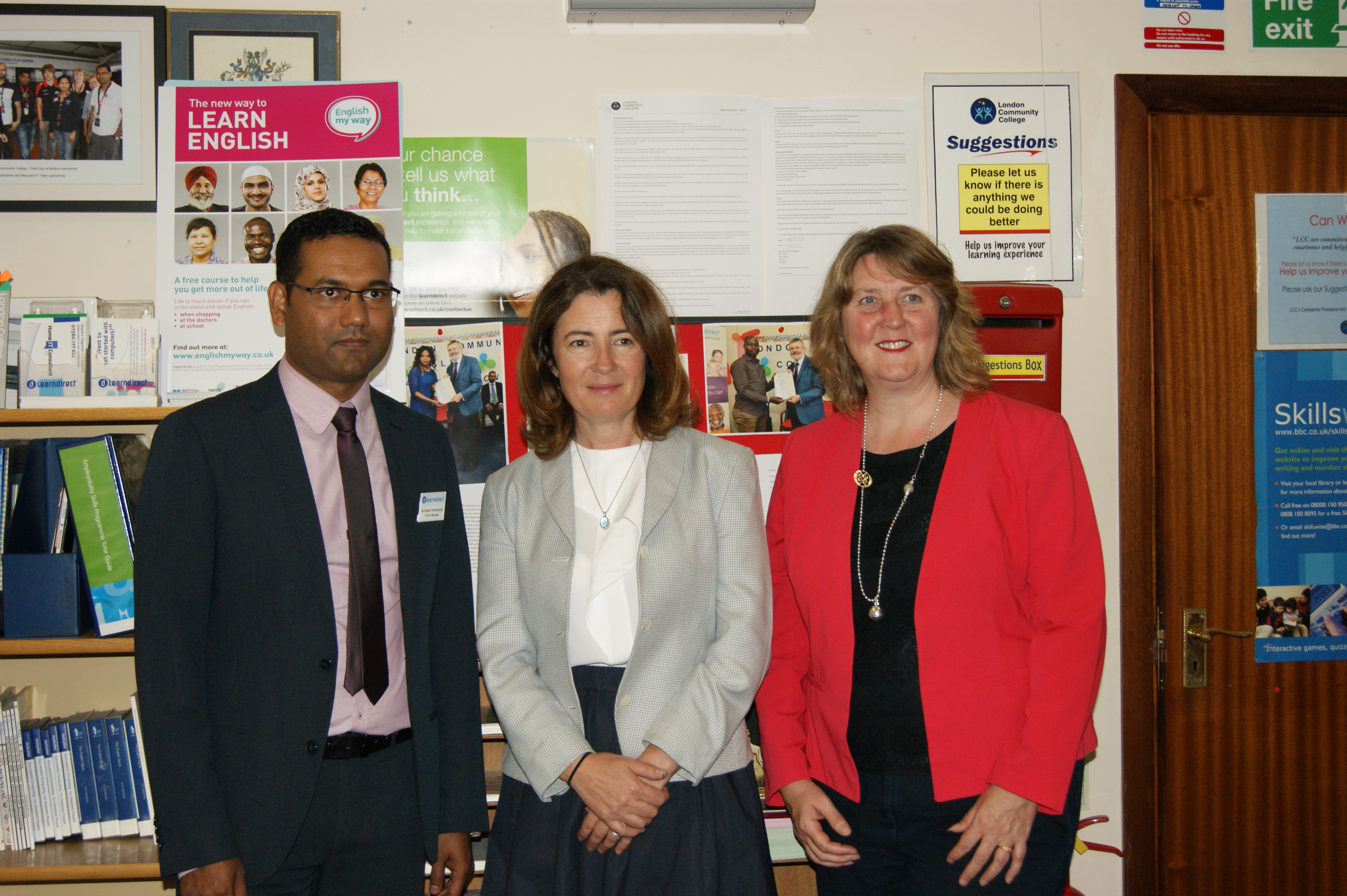
On Tuesday I visited London Community College, a new community partner in Tinder Foundation’s UK online centres network. I was there with representatives from the Department for Communities and Local Government (DCLG) and Baroness Williams, the Parliamentary Under Secretary of State for Communities and Local Government.

Visiting London Community College July 2015

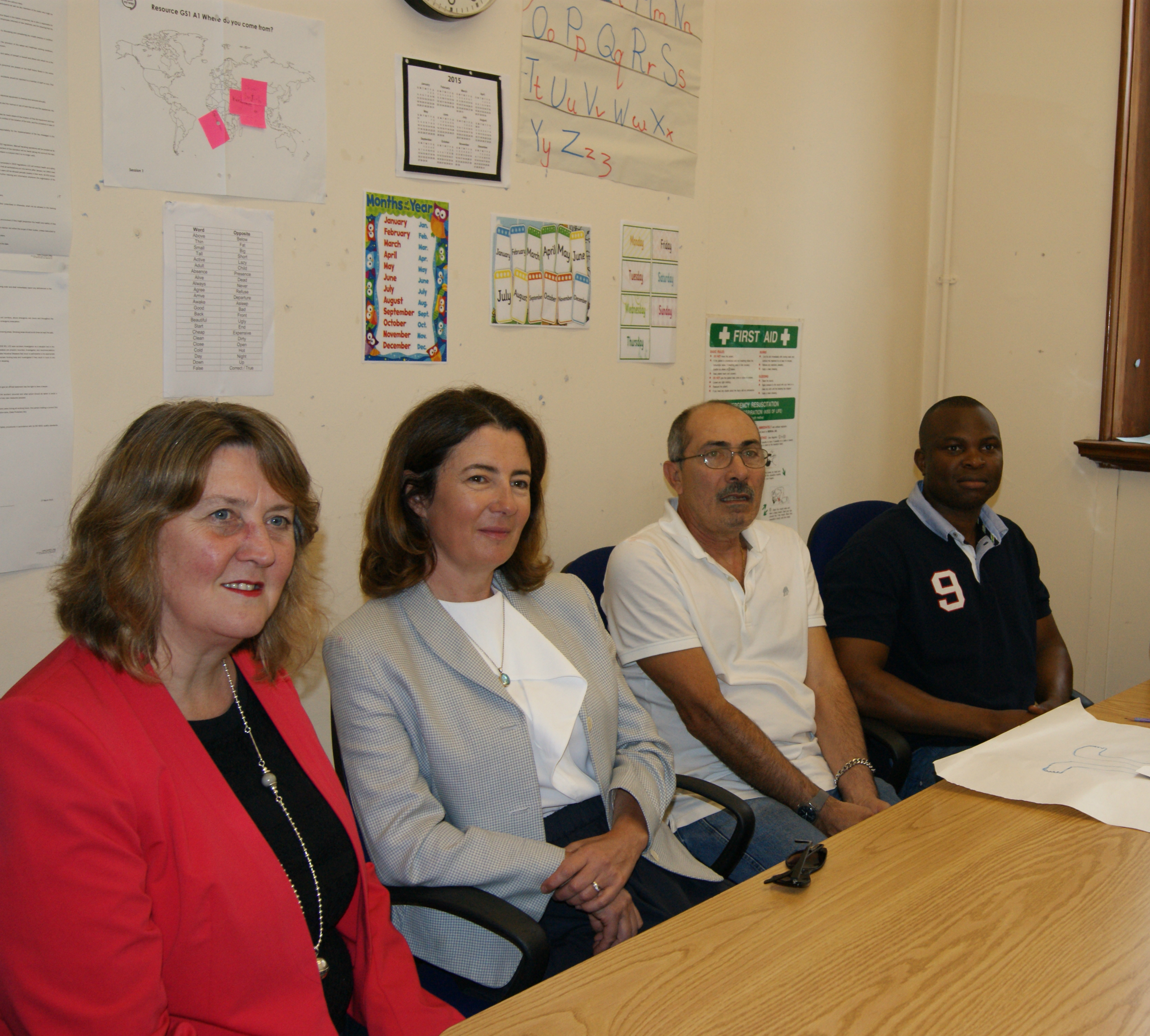
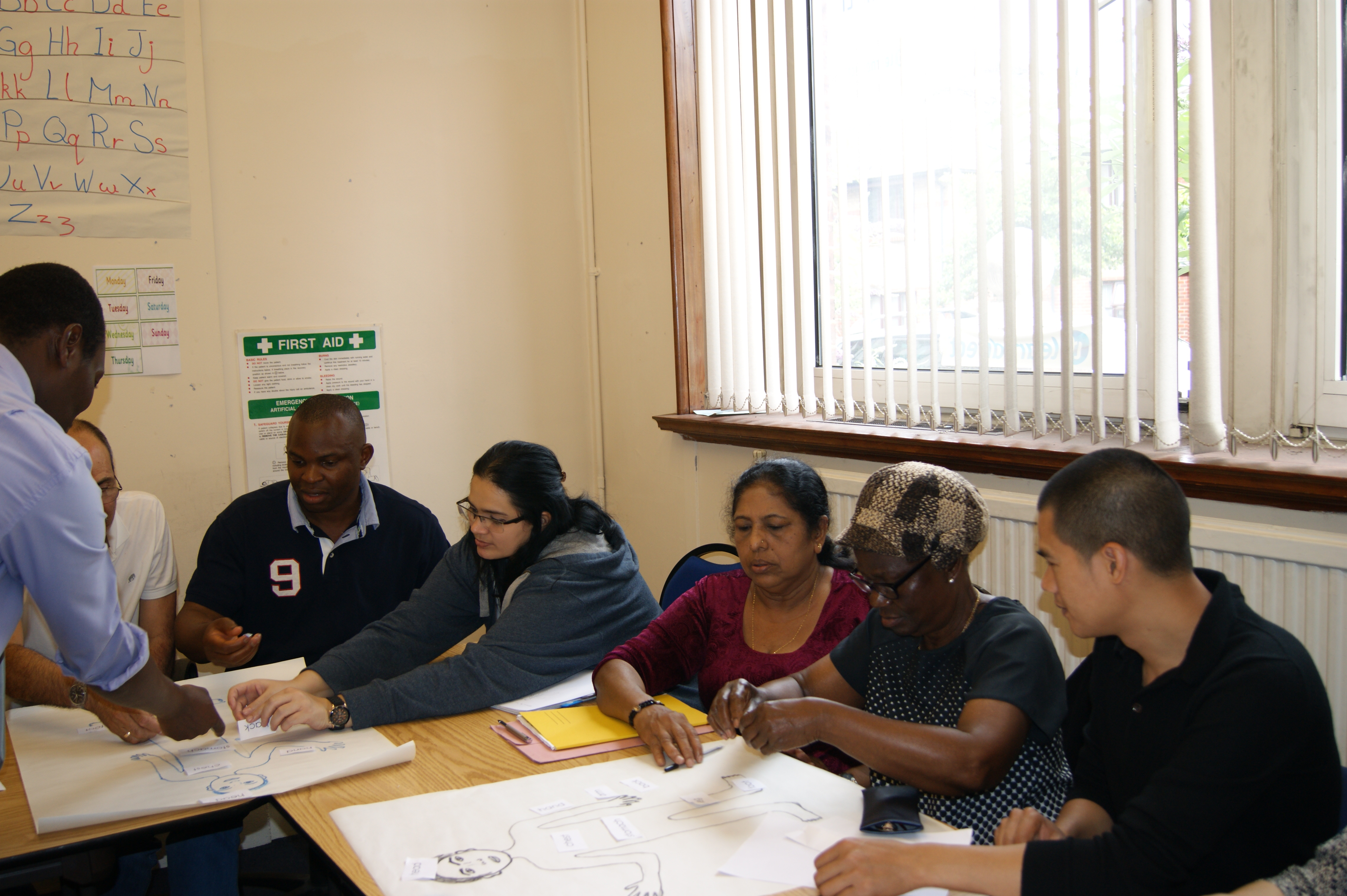
We met people learning English at the centre and found out about how the English My Way programme is helping them to feel more connected to their community. Our English My Way project, funded by DCLG, is now in its second year and is a classroom based learning programme aimed at people who have very, very little English language.

It was also good to see how the curriculum – led by the British Council – was working alongside the Tinder Foundation hyperlocal partner network. The BBC are also a national partner, developing great resources and running learning circles.

Meeting learners at London Community College

London Community College is a wonderful place and it was a pleasure to be visiting for the first time. I loved seeing their English My Way lesson plan (printed off from the national site) and how it’s been embedded into their wider learning programme. It was great chatting to Centre Manager Avinash Panchoory who said he thinks Learn My Way is the best progression route from English My Way, which was music to my ears!

Witnessing English My Way in action at London Community College

   Images courtesy of London Community College

He also said: “We have a very diverse group of learners who represent the local community and who require our support to help them integrate through English My Way. London Community College is proud to promote integration within the community and eliminate barriers to communication through English My Way.”

Places like London Community College are encouraging their learners to share their knowledge with their own communities. Imagine the difference it would make to a mother, for example, who has learnt about English My Way and now has the confidence to go to her son’s parents evening and speak to the teacher. Or a woman I met at a previous event who has the confidence now to say hello to her neighbour as they have share a common language.

I always feel privileged to visit organisations like London Community College that are really embedded in the heart of the most deprived communities. It’s places like this my entire team work so hard to support on a daily basis, and it’s places like this where people lives are getting transformed.

English My Way is a free website packed full of resources, lesson plans, and a learning platform: www.englishmyway.co.uk

Why I believe libraries can thrive in a digital world

I was delighted to recently be asked to write a guest blog for the Society of Chief Librarians (SCL), which leads and manages public libraries in England, Wales and Northern Ireland because I adore libraries.

Libraries are a regular topic on my blog, and anyone that knows me will know I could happily talk for hours about them! I’m passionate about what they stand for and their potential to play an even more prominent role in their communities.

I’ve spoken a lot about this in the past, and I’m particularly keen to see libraries evolve and excel in the 21st century, which is why I’m so pleased to be working with SCL to strengthen the Universal Offers of public library services. And it’s with great excitement that Tinder Foundation will be making an exciting announcement next week about a new project that aims to support libraries, and their digital offering in particular, over the next few years.

To continue reading my thoughts on why libraries are essential to our society visit the SCL blog

Is Facebook the gateway to the internet?


I’m always talking to my team about finding new ways to reach people, whether that’s people that aren’t online and don’t have digital skills, or the people that do have some sort of access but still don’t know how to use it, or simply aren’t motivated to use it.

One thing we know is that to reach new people we have to go where they are and not expect them to come to us. Here’s a fact for you: 70% of our community partners do outreach work, physically going out and finding the people that need their help the most. At Tinder Foundation, it’s just as important for us to be looking for these people in the online world too, which is where Learn My Way’s new Facebook course comes in.

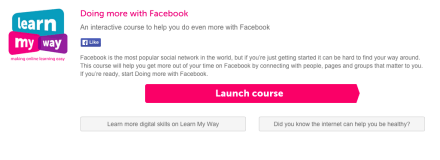
Learn My Way - Doing More with Facebook

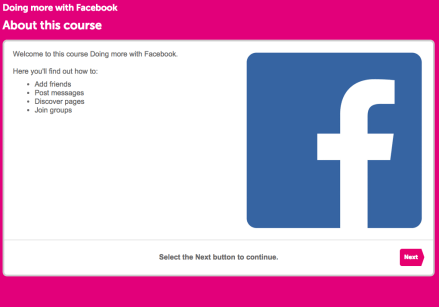
Designed to help people that have already signed up for a Facebook account but either don’t know how to use it or lack the confidence to use it (the digitally excluded come in all shapes and sizes), Doing More With Facebook shows people how to make the most of social media, do more with Facebook, and gives them a taste of Learn My Way in the hope that they’ll want to continue learning. It will even post to your wall so you can encourage friends to use the course app too.

Learn My Way - Doing More with Facebook


The team behind Learn My Way work closely with stakeholders to develop new learning content and they started to think about creating something for social media after a lot of community partners found the young people they were working with in particular had access to Facebook on their phones, but weren’t using the internet for other things like applying for jobs, looking for housing, or even emailing their granddad.

This also ties in with Ofcom’s Adults’ Media Use and Attitudes Report 2015, which found 40% of internet users only visit between 5-10 websites a week, with 50% of newer internet users visiting between 1-4 websites on average a week. I think we can assume Facebook features somewhere in that list.

So, the idea is we’re breaking down barriers by reaching people in a place where they’re comfortable and introducing them to Learn My Way and tonnes of free learning in the process.