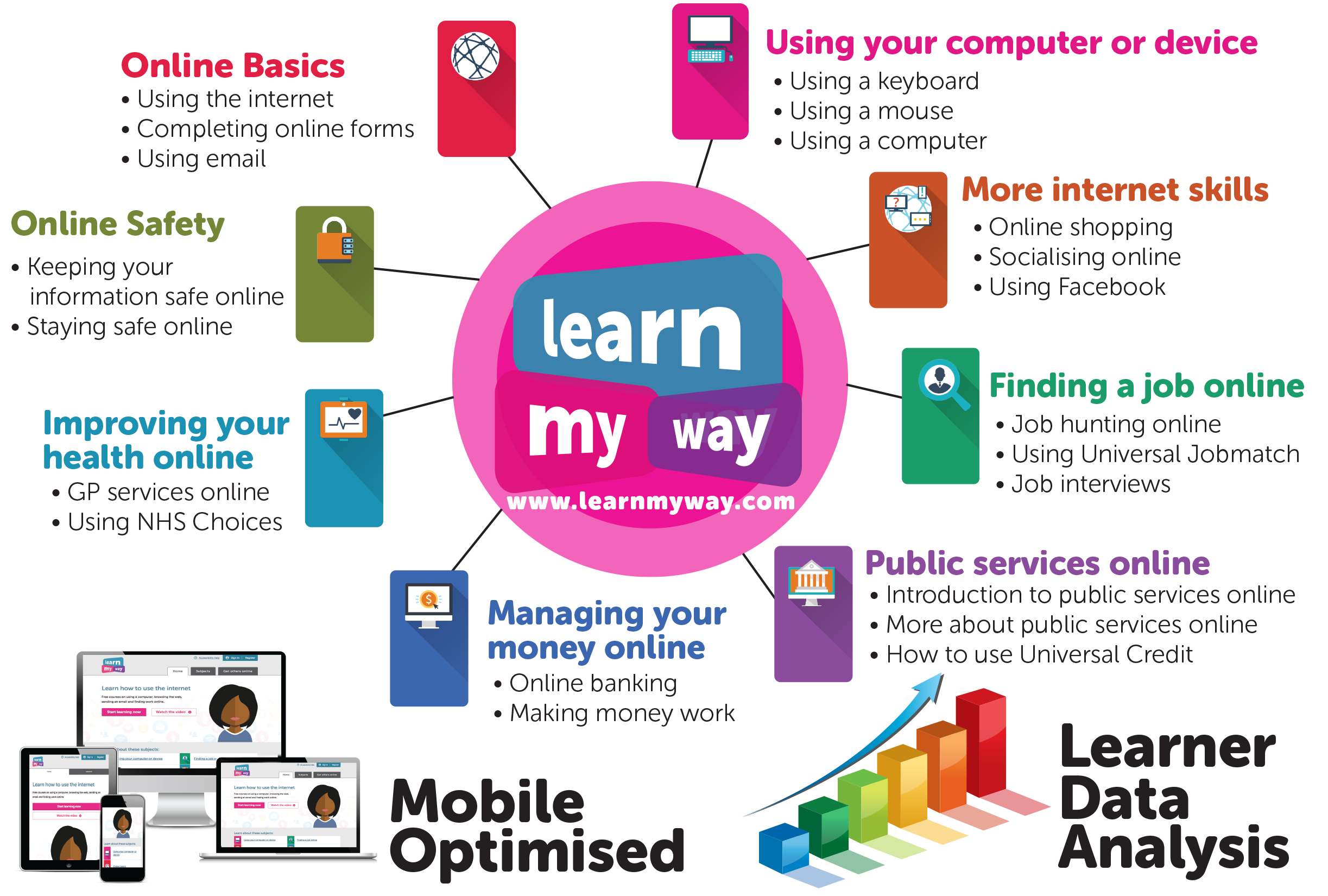
Simpler, prettier, and even more fabulous! Can you tell I’m excited? After a lot of time, hard work, and lots of time spent with users, today sees the launch of our new-look Learn My Way – and it’s the biggest (and best) update to our online learning platform in over five years.
Throughout this deployment we’ve kept two things in mind: simplicity and the user experience.
We’ve long known that many people in the UK have low levels of literacy and numeracy skills, as well as basic digital skills. In fact I recently read some stats which said the 43% of adults aged 16-65 lack the literacy skills that are expected of a 16-year-old, and, 15% of adults are at or below the literacy skills that are expected of an 11-year-old. With these kind of stats in mind, we wanted to make sure that Learn My Way was as simple as possible, so people with low literacy skills – who are most likely to also be the people with low digital skills – weren’t scared off by words and buttons they didn’t understand.
There are 12.6 million people in the UK who lack basic digital skills – with almost 6 million people having never been online – so something that is visually appealing and easy-to-use to me (and people like me), could be the most difficult and frightening thing in the world to those 12.6 million people.
I personally always thought Learn My Way was a simple online platform. Looking at the new website I can see the improvements. It’s now easier and more user-friendly than ever before and the range of courses ensure that we’re able to help everyone who needs it – from jobseekers, and people concerned about their health, to those looking to follow hobbies online.
At our event for libraries and digital inclusion yesterday, one Library Manager said to me “staff can’t say to me they don’t have time to support digitally excluded people, and then spend time making lesson plans! They can just use Learn My Way – not only is it quick and easy to get started, but it also builds independence as the people learning are in control of what they do, and how fast or slow they want to learn.”
Learn My Way is user-focused, and the courses are all mapped to the basic digital skills framework led by Go ON UK with the London School of Economics, Oxford Internet Institute, Tinder Foundation and others. We want people to learn what they want, or need, to learn when they want, or need, to learn it. But at the same time, we don’t want to stop there if we can provide progression from the very, very basics up to job seeking, money skills, and health literacy. Doing it in a simple and pretty way is difficult, but exciting too.
And it’s not just about the learners
I’d describe the new Learn My Way as a bit like a swan. On the outside it’s shiny, simple, and beautiful, but under the water line – away from the eye – it’s working very hard. The learning platform produces sophisticated data to not only track the progress of the learners but to demonstrate the impact that they’re having on people’s lives to Trustees, funders and more. This data is available for anyone in the UK online centres network using Learn My Way.
If you work in your community, and are not part of the UK online centres network already, it is free and simple for any organisation small or large to get involved, please do get in touch to find out more about how we can help you.
Take a look for yourself
I’m so proud of our new-look Learn My Way and I hope that everyone who starts/continues using it will love it just as much as I do. Well done to everyone involved in the process, from the Tinder Foundation team members to the people in communities who were kind enough to help us with requirements and testing.
If you haven’t done so already, take a look at the new website on www.learnmyway.com – I promise you won’t be disappointed.
At Tinder Foundation, it’s our job to make good things happen through digital technology – and to make them happen for the hardest to reach, most isolated and excluded audiences. That includes the 850,000 or so people in the UK with dementia – and their carers.
Godfrey, 68, was knocked sideways by his Alzhiemer’s diagnosis.He describes the disease as like ‘living life in slow motion’. He stopped socialising, and shut himself away. One day, one of our UK online centre research partners (Age UK South Tyneside) visited his care home, and were showing some YouTube videos of old music performances – including Frank Sinatra. He went over to see what was happening.
Gradually Godfrey learned how to use a tablet. He needed a lot of help – a few simple icons to press for each activity he wanted to do – and different smells to help him recall the processes for each one.
Now Godfrey can Skype his son or daughter with just a touch of a button. He can look up his favourite musicians, and find new music. He’s become a fan of Seasick Steve, and his Grandson in Australia thinks he’s ‘cool’. He’s ordering his prescriptions online now, and he’s found out more about Alzheimer’s disease – so he feels more in control. He’s also joined some specialist groups so he’s getting out and about more.
In Godfrey’s own words, “You don’t realise what you can do until you try it out and it has really helped me stop feeling sorry for myself, snap out of my depression and start looking forward to things again.”
I believe digital skills really can help everyone and anyone live better, more fulfilling lives. And at Tinder Foundation we’ve had a look in greater depth at the role of digital skills and community-based support in improving the health and wellbeing of families affected by dementia.
Today, we’re launching a new research report – Dementia and Digital: Using technology to improve health and wellbeing, that begins to track the impact of technology on both people like Godfrey who have dementia, and their carers. It also scopes out the challenges and barriers to engagement and delivery, and what really works to make technology work well for these audiences.
It is important to note that carers deserve as much of our time and support as the people they love and care for, and have equal prominence in our report. With so much on their plates already, they were often reluctant to add digital skills to their to-do lists, or to facilitate the learning of those they cared for. Once engaged, though, carers have found digital technology a lifeline. It is a way to create space in their lives for themselves, accessing support, saving time on everyday tasks, and helping the people they care for find both coping strategies and memories.
Ken Brown looks after wife Val, who has vascular dementia.As her appetite has faded, he’s been able to use the internet to research if this was part of her illness, find reassurance and new recipes and tactics to help her start eating more. For Ken, the internet has just made life that bit easier. “It means I’ve got somewhere to go, rather than sitting and thinking ‘what do I do now?’”
Digital doesn’t solve any problems all by itself. But it can help us do things differently, and in doing so make a difference to health, wellbeing and quality of life. We’re looking forward to continuing to work with the NHS, with frontline health and care professionals, and with organisations that support people with memory loss and their carers, to ensure these benefits can be realised as widely as possible.
The full Dementia and Digital report can be found on our website. I do hope you enjoy reading it. If you can help us expand our work and take these findings forwards, please do get in touch – hello@tinderfoundation.org.
At the end of August I spied the Australian Digital Inclusion Index – a new report highlighting the extent of the digital skills gap in Australia and setting down a benchmark to measure future action. I found it particularly interesting as we’ve just started working with an Australian organisation called Leep – and their CEO, Cecily Michaels, is coming to speak at our conference in November.
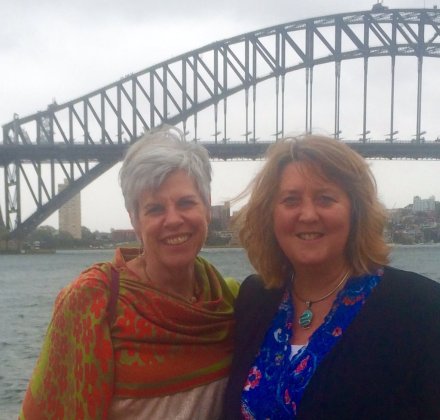
Me and Cecily at Harbour Bridge, Sydney
As I read the Index, although we’re about 9,500 miles apart, I couldn’t help but feel like there are a lot of similarities between our two countries when it comes to digital exclusion – and here’s why.
In the UK there are 12.6 million people who lack basic digital skills; in Australia the key barrier for some people to getting online and maximising the benefits that doing so can bring is digital ability. It’s clear to me that there is a digital divide in both of our countries and it’s important for organisations – like us and like Leep – to make sure we’re bringing digital skills to those who need it most.
The UK online centres network supports several different groups, from jobseekers to homeless people to older people, and one group that we focus on in particular is disabled people. There are 5.9 million people in the UK who have never used the internet before, and of those 3.3 million are disabled. In Australia the stats are similar: the report states: “People with disability have a low level of digital inclusion (44.4, or 10.1 points below the national average). However, nationally, their inclusion has improved steadily (by 2.6 points since 2014), outpacing the national average increase (1.8 points).”
Leep and Tinder Foundation are now working on a project together in Western Sydney, called the “Leep in Network” – a movement for digital inclusion and people with disability. The aim is to support people with disabilities to develop the basic digital skills needed to participate in society and experience all the benefits that being online can bring. Anyone can join the network: organisations, businesses and councils who are offering services to increase digital inclusion for people with disability, such as learning opportunities, access to free WiFi or computers.
Partners will feature on the network’s free online searchable database – created by us here in the UK – so that people with a disability in Western Sydney can find an opportunity that suits them to develop their basic digital skills. We’ll also be keeping partners up-to-date with newsletters and resources to support them with their digital inclusion programmes.
We will be sharing and tweeting the new tools very soon, so watch out for those, especially if you’re working in or interested in Western Sydney.
It’s all about teamwork
I couldn’t be happier that we’re working with Leep to deliver this project, and hopefully this is just the beginning of working together. We may be 9,500 miles apart but we’re working very closely together.
As an organisation, Tinder Foundation wants a world where everyone can benefit from digital – not just people in the UK. We want to take the digital inclusion message far and wide and we want to reach out to those who need our help.
I really can’t wait for Cecily to share our partnership journey at the conference later this year – make sure you don’t miss out on that one. And in the meantime, please do take a look at the Australian Digital Inclusion Index. It’s a very interesting read and proves that digital exclusion isn’t a nationwide problem, it’s worldwide – and there’s work to be done.
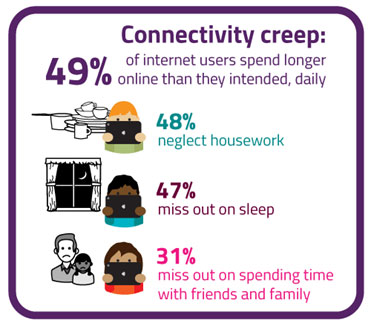
I returned to work this week after being on holiday for a fortnight. I felt relaxed and ready to get back into the swing of things. I sat down to catch up on all the digital inclusion news that I may have missed while I was abroad and I couldn’t believe my eyes when I saw the key finding from Ofcom’s annual Communications Market Report. The headline: “Fifteen million UK internet users have undertaken a ‘digital detox’ in a bid to strike a healthier balance between technology and life beyond the screen.”
I thought it was a joke.
After chatting to my colleagues I realised that it was all true. On one side of the spectrum, in the UK there are 12.6 million people who lack the very basic internet skills; on the other side there are 15m who are so sick of technology that they’re purposefully spending time away from it. The question I have is: why would anyone want to do this?
The Ofcom research says: “The [research] reveals how our reliance on the internet is affecting people’s personal and working lives, leading many to seek time away from the web to spend time with friends and family.”
Image courtesy of Ofcom
I don’t think this is the reason. I think the reason that so many people have decided to spend time away from the web is because it’s the ‘fashionable’ thing to do. There may be some people who genuinely believe their addiction to tech is affecting their lives, but to me, the problem is with the person, not with technology.
It’s all about balance. All of the digitally included population can choose how much (or how little) digital channels they engage with.
Many people spend more time than they should online because they have a deep-rooted ‘fear of missing out’. Addiction is human nature and technology simply presents new options for this.
The internet makes things easier
Thinking about when I was on holiday for the past two weeks, the idea of going through it without the internet just seems absurd. Technology has been developed over time to help make our lives easier, and I genuinely think that it does. I was able to do my check-in online before reaching the airport, I had all of my travel documentation stored on my phone instead of printing out masses of paper, and even when I reached my holiday destination I was able to do things like look up a TripAdvisor review of a restaurant we thought looked nice to see if it would be a good place to eat. Another thing that I did with my Kindle was download an audiobook before a long train journey, so I could listen to it whilst still being able to take in the gorgeous scenery outside the window.
I didn’t spend my whole holiday stuck to my tablet/phone though – hence why I managed to miss the launch of Ofcom’s report – because I know that it’s OK to not be on Twitter replying to tweets, and I know it’s OK to not reply to an email immediately as soon as it comes through. If something is that important and needs an immediate response, the person will call me.
Smart-snubbing
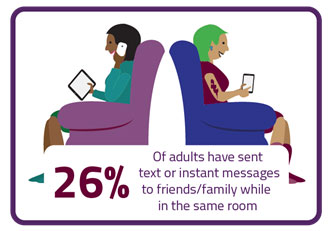
One aspect of the report that I found particularly interesting (and also quite entertaining) is that 26% of adults have sent texts or instant messages to friends/family while in the same room. Can you believe it?
Image courtesy of Ofcom
And 40% of adults (that’s four in every 10 people) felt they’d been ‘smart-snubbed’ at least once a week, with 17% saying it happens to them on a daily basis. Up until now I had no idea what smart-snubbing is – it means to ignore someone because you’re too engrossed in your smartphone or tablet. This is a prime example of obsession.
To all the ‘digital detoxers’ out there I say, if you want to visit or talk to your friends and family more, just do it! If it’s not possible because they’re in another country, like my son for example, technology isn’t a hindrance, it becomes an enabler. It means I can use services like instant messaging to get in touch with him and make calls through data and WiFi without the big phone bill that used to come with international family contact. I’d never dream of going on a ‘digital detox’ because it would mean not being able to do things I need to and want to do.
Tuesday poll
Yesterday we put a poll on the Tinder Foundation Twitter account asking whether our followers make an effort to spend time away from their phone and the internet. 42% of respondents said that they do, whilst 58% said that they do not. I’d be interested to chat to those who said they do, to find out exactly why they think that they need to.
The internet makes our lives easier in so many ways and to me, giving that up intentionally seems absurd. Maybe my earlier hypothesis was right; maybe the ‘detoxers’ really are just doing it because giving technology up is the ‘in’ thing to do. If that is the case, I can’t wait to see what fad comes next.
At the beginning of July, I attended an event at BFI Southbank in London to view three films, marking the end of the Open Cinema portion of our Reboot UK project. It was a combined event with the Pathways to your Future programme – a Cisco-funded tech internship programme.
It was an inspiring two hours and a great way to spend a Monday afternoon seeing how the Reboot UK programme has benefitted people, and hearing from some of the partners involved, including Homeless Link and Evolve Housing, really brought home the huge impacts the programme has been having.
I’m very proud of Reboot UK, which aims to help families in poverty, homeless people and people with poor mental health to improve their wellbeing through digital. You’ve heard me say it before, and I’m about to say it again: there are 12.6 million people in the UK who lack basic digital skills and the groups who are being supported through Reboot are far more likely to make up a portion of this number. They are at greater risk of social exclusion and have the most to gain from improved digital skills and access to online resources.
You can find out more about Reboot UK on the Tinder Foundation website, but the real reason I wanted to blog about this afternoon at BFI is because I want to share the videos. They were created in conjunction with three Reboot UK delivery partners: Leeds Mind, Evolve Housing + Support and Abington Centre of Education and they really demonstrate the impact that the project has had and show how it will continue to support those most in need.
Today I’ll be at the House of Lords, launching our final report on the NHS Widening Digital Participation in Health programme.
Over the last three years of the programme, our aim has been to help people improve their digital skills, learn more about digital health, and improve their own health and wellbeing as a result. We have targeted those with least digital experience and most health needs in the heart of their communities.
With all of the challenges we currently face as a society, and with all of the pressures on the NHS, giving people digital health skills may seem like it’s not that much of a priority.
I’ll try and explain why it is.
There are 12.6 million people in the UK who don’t have basic digital skills and these people are those who are most likely to be suffering from poor health. They are also those most likely to be further disadvantaged by age, education, income, disability, or unemployment.
The fact is that there is a huge crossover between those who are digitally excluded, those who are socially excluded, and those at risk of poor health. The Widening Digital Participation programme aimed to see how action on one front could influence the others.
Ron Dale from Inspire Communities
Ron first went into Inspire Communities – a UK online centre in Hull and one of our pathfinder centres for this programme – because he was about to be sanctioned by Jobcentre Plus for not meeting his job search commitments. Ron was homeless, had a gambling habit, as well as serious mental health issues, including anxiety and depression. He was living in a tent on the motorway, on the occasional Pot Noodle and coffee. He was often hungry and cold, and his physical and mental health were going downhill.
Part of the problem was that Ron’s relationship with his GP surgery had deteriorated, and he refused to go. With the help of Inspire Communities, he was able to look at NHS Choices for advice on managing his symptoms, and to find a new GP. He was able to register and make an appointment online without having to run the gauntlet of travel, receptionists, and other patients.
Plugging him back into the healthcare system was key in helping to connect him to the wider support he needed – and digital was key in doing this. Now he’s found new housing, taking an active role in his own healthcare, meeting his Jobcentre Plus obligations and dealing with his gambling addiction.
Digital matters. Digital health matters.
And Ron’s story isn’t just a one off. Throughout the programme, we’ve found that giving people the digital health skills they need means they’re empowered to take control of their health, improving the ongoing management of chronic health conditions, and helping them to interact better with health and social care services.
We’ve also seen how digital inclusion can improve the social determinants of health – with better digital skills improving prospects for employment, income generation, educational achievement, and social connections. 52% of participants said they felt less lonely or isolated, and 62% stated that they felt happier as a result of more social contact. More than half said they have since have gone on to use the internet to improve their mental health and wellbeing.
On top of this, the programme has also shown that improving digital health skills has the power to reduce the pressure on frontline NHS services. By helping people to move non-urgent medical queries from face-to-face and emergency channels to online ones, we found we could potentially save the NHS an estimated £6 million a year, representing a £6 return on investment for every £1 spent on the programme over the last three years.
In summary, The Widening Digital Participation programme – and the local partnerships between UK online centres and local health and care providers that it has nurtured – has been proven to drive up the quality of care and drive down both health inequalities and health costs, ultimately improving society as a whole. And that’s definitely a result worth celebrating.
Back in October 2015 we launched a six-month project called the Library Digital Inclusion Fund in consultation with the Leadership for Libraries Taskforce, funding 16 library services in our network of community partners to run innovative schemes with the aim of increasing their digital inclusion activities, thus increasing their potential and cementing their place in society. Yesterday we launched our research findings from that project, proving that libraries’ community roots and partnerships can address social and digital exclusion – but that more needs to be done.
The library sector seems to be suffering an existential crisis. They are facing tough times. This new project has established that libraries can, with help, reach those most in need (the 12.6 million people in the UK lacking basic digital skills), helping to connect them to digital information and skills. They work from the ground up and often have the resources – free-to-use WiFi and technology, such as laptops and tablets – that learners need. This makes them an integral part of communities everywhere and to lose any one of them is a great loss. Libraries need to live up to their enormous potential before time runs out. But what can we do?
England’s libraries need a solid digital inclusion strategy
The library sector needs to look ahead and develop a plan for the future. A key element is securing investment to make sure they have the most up-to-date equipment and services. During this year’s Be Online campaign I visited Leeds Libraries and went with them on an outreach session to visit a lovely lady called Molly. It was Molly’s first day with the project – she was learning about the internet through the Libraries@Home service and borrowing an iPad with a SIM card (which was developed as part of the Libraries Digital Inclusion Fund project). Without the proper investment, services such as this will no longer exist, and those already suffering social exclusion will be worse off as a result.
We also need to think about how libraries can plug into other services to help communities and individuals to thrive. For example libraries could work together with local social housing providers to bring their outreach services to tenants who are otherwise unable to access technology and the online world. This kind of partnership would benefit libraries in so many ways, not least by helping them to prove their worth to local authorities, funders and the wider world, in terms of social impact and economic, digital-by-default support.
Now here comes the stats bit (you knew it would be in here somewhere). We’ve done a few calculations to work out the potential savings to local and national government in the areas where the library services participating in the project are based. Based on what we know about the way our learners shift from using face-to-face and telephone services to online channels, we would expect potential cost savings of more than £800,000 per year just through the project beneficiaries alone. If similar low-scale activities to those which took place throughout the project were implemented across all 151 library services in England, a potential £7.5 million per year of cost savings could be achieved.
Utilising technology and making plans to advance their digital work shows that libraries aren’t just about books any more – it shows that they’re moving with the times and planning for the future. I believe that libraries are not out-dated and not a thing of the past; I believe that libraries are an essential part of communities all across the UK and that they all have the potential to mould themselves and adapt to the developing technological world.
Our project supported more than 1,600 people to improve their digital skills at over 200 branch libraries. Target audiences included elderly people, families in poverty, disabled people and the long term unemployed, with activities ranging from job search skills to keeping in touch; connecting with essential government services to managing long term health conditions; understanding benefits to following hobbies.
Libraries may be an old concept but they are by no means obsolete. At Tinder Foundation we believe that we can help libraries with investment and strategy and this research very much shows that. The time to start planning for the future is now – let’s do it together.
On Monday I was called as a witness to give oral evidence at an inquiry by the Work and Pensions Select Committee into the future of Jobcentre Plus (JCP).
It was an interesting and lively session, chaired by John Glen MP, with cross party members who were clearly passionate about making job centres a better place for jobseekers.
I was there alongside Kathy Corocan from the Cardinal Hume Centre – part of the Caritas Social Action Network and one of our UK online centres – and Tom Hadley from the Recruitment and Employment Confederation. We talked about our experiences of working with job centres on the ground – and the feedback I brought from the UK online centres network was invaluable.
Together we drew a picture for the Committee of what is an inconsistent service – a postcode lottery for job seeking support.
Significant investment from DWP in digital skills, providing funding to support jobseekers to improve their digital skills and move into employment.
At Tinder Foundation, we know very well that in some places JCPs really get it, and there’s brilliant relationships with community partners like UK online centres to help support people to meet their job seeking commitments.
In other places those external relationships don’t exist, and there can be a real breakdown in the relationship between claimants and advisors.
For me, one of the key concerns is how commonly our network sees advisors who simply underestimate how difficult it is to use the internet if you don’t know how to.
I told the committee about an experience I had sat with a lady in a homeless hostel in London. Her JCP advisor had set her up with an email address and logged her onto Universal Jobmatch. She didn’t even know what the internet was, let alone what an email was, or what to do next. The assumption was she’d just ‘get it’. But in order to get there she had many other steps to go through – steps the JCP hadn’t counted and weren’t a part of her plan. That put her on the back foot from the get go, and she was struggling to keep ahead of sanctions.
It’s a story we’ve seen a lot of across the 5,000-strong UK online centres network – people are being sanctioned because they don’t have digital skills. We don’t know how many people, but it’s not a one-off comment from the network.
The good news is that 65,000 people were referred to the network from the JCP last year. Over that year, we actually supported 89,000 unemployed people looking for work to improve their digital skills. When Universal Jobmatch first came in, we identified the huge impact that had on our network with people flooding in to learn digital skills, and we’d worked with centres and claimants to build our online Universal Jobmatch guide within five weeks. Within two weeks, it had been used more than 5,000 times.
JCP has big changes planned. This should change the incentives local JCP staff work to. The expectations is the new Work Coach role will bring a culture change. Currently, the goals advisors set people are about getting onto Universal Jobmatch, making x number of searches or applying for x number of jobs in x time period. There’s sometimes a limited understanding of whether or not someone is job ready, what their digital skills are to start with, and a misunderstanding of whether or not someone having access to the internet actually means they can use it effectively.
Having Facebook on your phone doesn’t mean you can automatically job search, by yourself, confidently, every day of every week. We need to change how we diagnose those skills needs – and wider needs – and what checks and milestones we can put in place to track someone’s progress.
Here’s the thing. If someone has been unemployed and digitally excluded for a long time it’s unlikely they’re going to just magically get online and get a job. There’s something else going on, there are other factors there that need exploring. We need to look at the whole person, the routes of their issues and what their barriers are.
That’s not something I expect JCP advisors to do on their own. There are places out there that exist to fill in those gaps (some of them are UK online centres). It’s great many JCPs already refer successfully and we would like more to work with us on those referrals – to us and other support agencies – to help identify someone’s issues more effectively, and set their goals accordingly.
Fundamentally, DWP is planning a change in culture, a fresh approach. And that culture change at JCP needs to come from the top. I believe there needs to be a better understanding of the impact of digital exclusion. Job centres now have equipment, and they now have WiFi, but neither of those solves the very real digital skills gap that’s causing some very real pain on the ground.
As witnesses, we all agreed that new work coaches and new diagnostic tools aren’t enough by themselves – we need a universal commitment to addressing digital skills, and addressing each person as an individual.
We went on to talk about the physical job centre space, and how they could become more welcoming.
We were also challenged to go away and come up with six key questions to ask people to assess their skills levels and wider needs – something much deeper than Are you online? Tick or Do you have an email address? Tick.
Finally, I made the point that all the work UK online centres currently do is 80% funded by government – and mostly by the Department for Business Innovation and Skills, for whom we move people across the digital divide for around £15 a head. While we report to the Department for Work and Pensions through this programme each quarter, we don’t have an official nor funded relationship with them. We do value the informal relationships we have with committed and intelligent people who see the changes needed much more clearly than I do.
There is huge potential for us to take the models of good practice and seed them across the rest of the country. I’m looking forward to seeing how the Committee’s recommendations are developed, and how we can continue to help that process along. Hopefully, we’ll see the results on the frontline very soon.
#1 Leg of my tour: Hello Australia and fun in sunny Brisbane
I arrived in sunny Brisbane late on Sunday evening and bounced out of bed the next morning ready for the first official day of my Queensland visit as International Thought Leader for the National Year of Digital Inclusion, as a guest of the Queensland Government. Those who know me, know my passion for digital inclusion and how essential it is not just to support people to be part of the digital society, but also to tackle social challenges. During this first week I was delighted to be able to share that passion with others as well as hearing about their work.
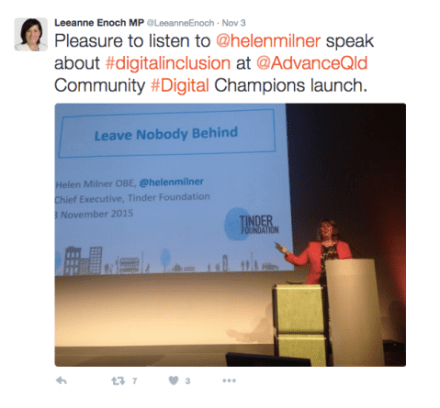
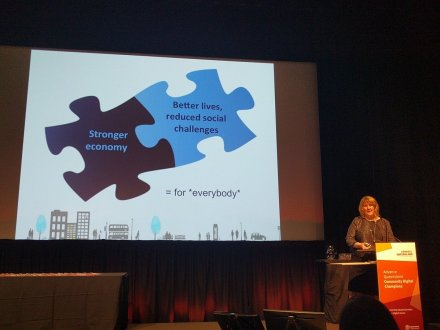
On the Monday I was lucky to meet the Advance Queensland Community Digital Champions, and representatives from business, industry, community government, regional and libraries to chat to them all about building digital literacy and inclusion in Queensland. I’m so impressed with the Digital Minister here, Leeanne Enoch MP (Minister for Science and Innovation and Minister for Small Business) who gave a great speech and awarded each Champion with a special pin (badge). I met Leanne when I visited Australia late last year and it was great to see her again. Last time we met I was over the moon when she tweeted about me:
Leeanne Enoch’s tweet about my speech last year
In Queensland a Digital Champion is someone who shares their love of digital and their passion for change through digital – be it in industry, about coding, supporting a small business, photography, training, etc. In England “digital champion” means a digital mentor or volunteer – more specifically someone who helps others to learn about how to use the basics of the internet.
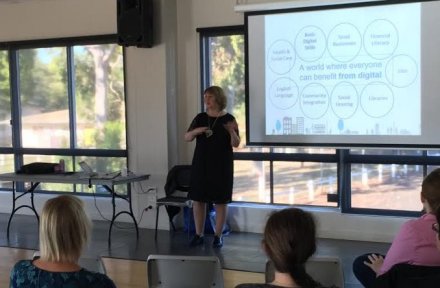
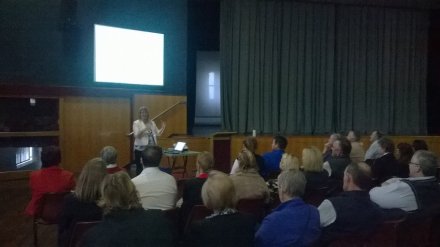
Presenting at the Community Digital Champions event
I gave a few speeches in my first week about the work of Tinder Foundation and the UK online centres network in the UK, and I was able to show our ‘Social Challenges, Digital Solutions’ video, which you can watch below. I think this video demonstrates so clearly those individual stories from people who have learned new skills and are now part of the digital world, but more importantly feel better about themselves as well as the society they live in. I love this film and I was so proud to be able to show it to the people here in Queensland:
I learned that there are differences in Queensland about the challenges for a 100% digital empowered nation, mainly the vast geography and problems that presents for getting great broadband to people living in remote, rural, and regional areas.
I’ve also learned a tiny bit about the culture and context of indigenous people. But there are more similarities than differences in digital inclusion in our two countries:
We believe that no-one should be excluded from a society that is now digital in so many important ways.
The people who are excluded are either older or poorer. The demographics are the same.
We know that supporting people to gain basic digital skills brings so much more than just new skills, it builds resilience, confidence and self esteem as well. Digital inclusion leads to social inclusion.
There are many people doing many great things; there already is expertise to build on. I’ve been so impressed with the passion and commitment I’ve seen.
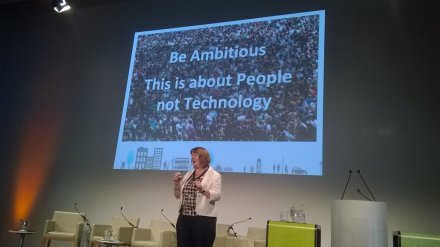
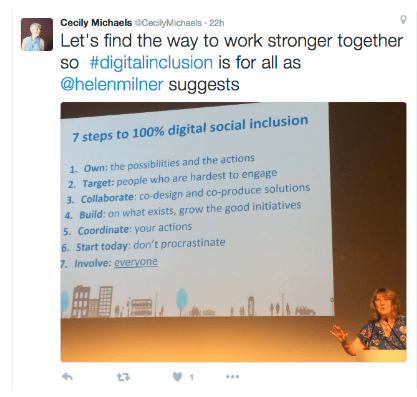
As an outsider it’s sometimes easier to give advice. So I shared my seven point plan for successful digital inclusion, and luckily it seemed as pertinent at the end of the week as at the start. Here’s a tweet of me and my seven point plan:
Thank you for tweeting about me Cecily Michaels
#2 Leg of my tour: Emerald, Cairns, Longreach, and some reflections
In Queensland we talked a lot about the Tinder Foundation digital inclusion model and its relevance to work in Australia. In the UK our approach is LOCAL + DIGITAL …. providing places to go with committed, patient people who provide face-to-face support in the heart of communities where people live (= local), and using technology to do the heavy lifting, such as using Learn My Way (our online learning platform), to provide the consistent learning content and data collation (= digital). It works really well – so well that we’ve helped more than 1.8 million people with this model since 2010.
The second leg of my Digital Inclusion trip around Queensland took me to Emerald, Cairns and Longreach. It was great to get out of Brisbane and to meet people in other places who were all committed to closing the digital divide.
In Emerald, I met with a very interested group of people coming from schools, special education, a kindergarten, an alternative learning centre, the council and the science centre. They all had first hand experience of knowing people who struggled with using the internet. A woman from a local kindergarten was helping one of the mums with using Skype for her telehealth appointments with a consultant in Brisbane. This is exactly the kind of thing I hear in the UK, where a local partner steps in to provide essential digital support for people who don’t have the access nor the skills they need to carry out something they need to live a better life.
After I left the session, the Emerald group stayed on to discuss how they could use some of the approaches and materials I presented in their own town and in their own situations – an extremely positive outcome!
Presenting in Emerald
Cairns really is like paradise; I took the photo below from the venue we met in. I did two sessions in Cairns, again a great mix of people attending including from a local health trust specialising in mental health, a charity supporting victims of domestic violence, someone working with indigenous people and the wetlands, and people from the libraries in the region. And again, similar themes came up.
The view from the venue in Cairns
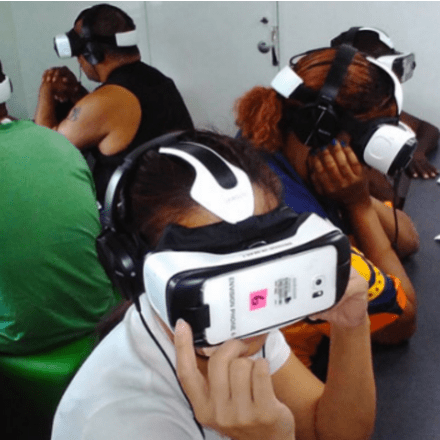
I also got to visit EnVizion in Cairns and see their training centre and their virtual reality bus. The bus has been specially built to go anywhere, and to provide inspiring and aspirational experiences through real stories of people working in different industries. The bus has visited a number of communities in Cape York and had great results helping children to see that they have a number of choices for careers and that other people who have come from similar childhoods are now working in jobs, for example in mining or agriculture.
In Cairns, as at the Broadband for the Bush Forum, I got to hear about experiences and initiatives working on growing digital literacy with indigenous people living in remote communities. There are clearly barriers, including distance, lack of broadband infrastructure, and understanding the context, however the EnVizion virtual reality bus is showing that digital can be part of the solution in overcoming some of these barriers for some people some of the time.
When I went to Longreach it was my first chance to see the outback in Australia. Brisbane to Longreach is about the same distance as London to Milan (through France and Switzerland), and I spent some time glued to the window to try to understand the landscape.
View from the plane to Longreach
The tyranny of distance is very real and it’s easier to understand being above it like this. In Longreach we were hosted by RAPAD, whose training arm have the great saying “trained in the outback, ready for the world”. At RAPAD’s office I met a number of interesting people, all supporting digitally excluded people. We talked about how essential digital literacy is for people who are in frequent contact with public services, and in particular the need for work to improve people’s skills and access to myGov and CentreLink. The idea of Learn My Way courses for people to learn how to use these critical online services was discussed, much like the work we do in the UK for people looking for work and on benefits and using UK online tools such as Universal Job Match.
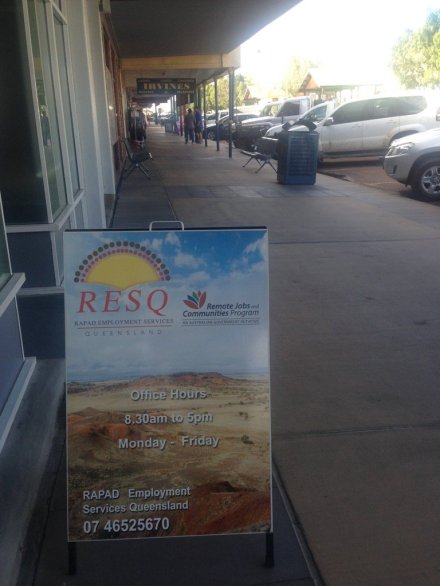
Outside the RAPAD offices in Longreach
7.00am is probably the earliest talk I’ve ever given – although it’s probably quite common in Longreach, more so in the summer when the temperatures really soar. My talk at the Business Breakfast went well, and I included a short element about our work in the UK with rural small businesses, as well as with Google and their tools for small business. One quote we have from a small business helped from one of our programmes is: “I’ve not just gained digital skills, I’ve gained control of my life back”.
The Business Breakfast
And finally I gave an interview for ABC in Longreach, talking about the need for digital literacy as well as great broadband infrastructure.
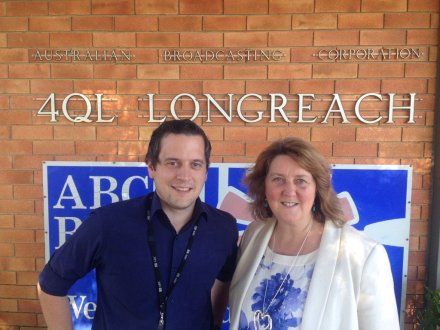
With Ash Moore, presenter for ABC Western Queensland in Longreach
Some summary thoughts
Don’t wait until you’ve got great broadband infrastructure to worry about the 1 in 5 Australians who are not functionally digitally literate. Too often I heard people saying that the digital divide in Australia is only about no or poor broadband. It’s not. Good broadband is essential to have, however it’s not ‘build it and they will come’. By volume there are already millions of people in areas in Australia with good broadband who don’t use or can’t use the internet. Don’t wait.
Local + Digital is our model at Tinder Foundation and it’s a model that will work for you too. I met many organisations around Queensland that in vision, approach and the demographics of the people they help, are identical to some of our hyperlocal partners in the UK. Building on the great organisations that are already helping people in their local areas will be a great step forward. Digital could be Learn My Way, as some people asked, or something else. But do let the technology do the scaling, data collection and consistency that it’s good at.
Leadership is key. You can have a thousand flowers blooming, but it’s better if they’re all in the same meadow and all facing in the same direction. By this I mean, let the beauty of the locally determined initiative flourish, but it will be stronger in a network with others and it will achieve more with leadership and advocacy to make sure we’re all working to the same goal: a 100% digitally included Queensland.
Thank you to the Queensland Government for inviting me over to do this tour.
I loved meeting the people of Queensland. I learned a lot.
Good luck with your next steps on your digital inclusion journey, I wish you well.
Last week I had the very great honour of attending the English My Way celebration event. It’s crazy how quickly the two years have passed since we started this programme and it’s crazy to see the huge impact it has had on people’s lives. And when I say crazy, I mean in a good way.
I’m proud to tell you that over 9000 people were supported by the UK online centres network through the programme to improve their lives and integrate more to become part of their community in the 38 areas of the highest language need across England. 70% of those learners progressed to an Entry Level 1 ESOL course.
It makes me smile that so many of the learners have improved their confidence thanks to the programme:
65% of them said they are now more confident talking to acquaintances
68% are more confident talking in shops or on public transport
61% are more confident in using their new English skills with doctors and other professionals.
I can’t imagine what it’s like to not be able to do something as simple as ask for a bus ticket to get into town, and I’m so happy that English My Way has been able to reach the people who couldn’t do this and make a real difference to their lives.
I’m a huge advocate for digital inclusion and the power digital has to eradicate social issues in society. But English My Way doesn’t just use digital to teach English language – it’s a blended learning programme. It understands what’s easier digitally and what’s better face-to-face, and uses this approach for the best and most efficient outcomes.
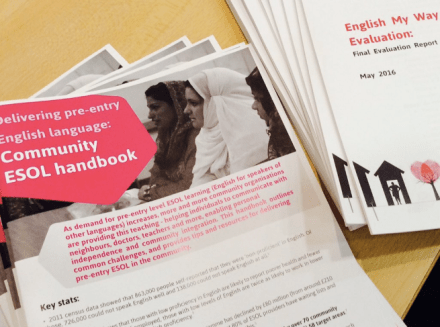
Our new ESOL handbook and the final evaluation report for English My Way
In January David Cameron announced a £20 million plan to help Muslim women learn English, to help tackle extremism, discrimination and social isolation. English language skills are of deepest importance and I believe that English My Way can help. The sustainability of English My Way and ESOL in general needs to be embedded in the skills agenda, both locally and with devolved authorities. Tinder Foundation is committed to supporting the delivery of ESOL in communities across the country and our dedication can be recognised through this programme. The evidence speaks for itself: one woman who participated in the project can now speak to her neighbours and invite them over for a cup of tea and another used her new language skills to secure her and her family’s future away from an abusive relationship – that’s just two of the people we’ve helped.
I want to thank everyone who was involved in the project, including the guys from the Tinder Foundation team. Everyone worked so hard on it and made it all possible. The day wasn’t just a celebration, it really highlighted the ongoing need for ESOL support and funding, and programmes like English My Way for everyone in communities all over the UK, not just for Muslim women.
I really hope that Tinder Foundation can be part of that support.




 Helen Milner