Exciting news: my new role in shaping Digital Democracy

Today I’m really pleased to be able to share with you news of an exciting new project I’ll be working on in 2014. I’ve been invited by the Speaker of the House of Commons, the Rt Hon John Bercow MP to sit on his new Commission on Digital Democracy. I’ll be working alongside Meg Hillier MP and Robert Halfon MP, both of whom I met yesterday and I know they are really committed to making the committee a success, and I can’t wait to get started.

And after a weekend where over a million people voted for X Factor winner Sam Bailey, and 400,000 crowned Andy Murray Sports Personality of the Year from the comfort of their own home, I think it’s the right time for the UK to take a real look at the role digital has to play in our national democracy. Now, I know politics is quite different to the X Factor final – less sequins for a start! –  but I think we can learn something from the way voting has shaped our entertainment, and apply it to something as vital as politics, giving people the opportunity to have an impact not just on their Christmas Number 1, but on how we decide on policies and shape our nation.

John Bercow said: “There is an enormous challenge out there not only for the House of Commons and Parliament as a whole but for all legislatures in the 21st century. That challenge is how we reconcile traditional concepts and institutions of representative democracy with the technological revolution which we have witnessed over the past decade or two which has created both a demand for and an opportunity to establish a digital democracy. Quietly, over past decades, a radically different world has emerged which in time will make the industrial revolution seem minor.”

“Indeed, there has not been one single overarching strategy for how we might move from where we are now to what a parliament in a digital democracy may look like, nor is there one role model from whom we can all take inspiration. (…) I am convinced that we need an innovation of our own to create such a map and a compass and to invite outside expertise in to assist us in this endeavour. That is why I am announcing today the creation of a Speaker’s Commission on Digital Democracy.” (You can read the full speech here)

Of course, as always, I’ll be using my place on the commission to make the voice of the digitally excluded heard and to ensure that the introduction of digital voting methods doesn’t exclude those who don’t have digital skills. But I’m also really interested in the link between being digitally disempowered, and feeling disempowered from the democratic processes. I’m sure that those who aren’t participating digitally are probably not voting, nor particularly interested in what government is doing, and so I’m interested to see whether we can engage them digitally and get them engaged with democracy – particularly at a local level where individuals can really have a huge impact.

On the other side of the coin, I know there are scores of young people who are very digitally skilled up, but while they might have voted for the X Factor winner this weekend, they’re not particularly interested in what Parliament does, or playing a part in democracy. I think digital could have a huge impact on getting them more engaged, and so I’m really looking forward to delving into this.

John Bercow MP said in his speech: “If we get this right, then the Speaker’s Commission would provide a blueprint for action covering, among other topics, ways to bring to the heart of our democracy the things that really matter to our citizens – how to put right grievances, how to turn law-making into something that really involves the people who will be affected – and not just a conversation between interest groups and political parties – and much more that we have yet to discover.” It’s a pretty big job, but one that is vital to shaping the democracy of our nation, empowering everyone and ensuring that everyone knows how they can have a say. I’m looking forward to getting stuck in!

I’ll keep you posted on our progress and how you can have a say.

Two great years and many more to come

December always seems to come around fast and this year is certainly no different. On the first of the month, here at Tinder Foundation we celebrated our 2nd birthday and what a whirlwind two years it’s been! We’ve achieved so much in such as short space of time and if I had to think of one word that sums up how we’ve changed, we’ve matured.

On Day One, when we started as Online Centres Foundation, we had one contract with the Skills Funding Agency and through the sheer dedication and hard work of everyone at the organisation – and of course in the UK online centres network – we now work with both the Department for Business, Innovation and Skills and the Department for Work and Pensions, and we’ve recently won a tender to work with NHS England, and a bid for English Language learning from the Department for Communities and Local Government – four big Government Departments in total. We’ve also got a decent commercial income stream, we’re working with the Corporate partners, and won a handful of smaller bids and contracts too. Diversification was the goal and we’ve done pretty well at this so far.

This blog is for me – and all of us – to reflect a bit about how much we’ve achieved, and to say a very big thank you to all of the UK online centres who work tirelessly in their communities to help anyone who walks through their door, no matter how little they know and no matter how nervous they are about learning more. And just to remind you, here are a few things we’ve got up to in the last two years:

Since 1st December 2011:

  • Together with the network, we have helped over 325,000 people to get online and learn basic online skills.

  • With great support from the Nominet Trust we’ve successfully set up the Community How To website and have had well over 20,000 unique users on the site.

  • We launched our Online Basics qualification and just under 2,000 people have completed their qualification already. With centres coming on board all the time there will be many more to come.

  • It’s hard to believe that there have been six fantastic local and national promotional campaigns

  • Learn My Way has gone from just six modules to a whopping 20 and counting. And there’s so much great work going on behind the scenes to make badging work and to co-create content, and to create links with Careers as well as Jobs.

  • We’ve launched the Digital Housing Hub and encouraged over 1,750 people to become members of it and discuss all things social housing and digital inclusion. And we won an award for it too.

  • The new UK online centres website was launched recently with a great new map showing all 5,000 centres and really good data sharing with the centres about their learners and what they’re doing on Learn My Way.

  • We’re working with the network to support over 25,000 volunteers.

  • We held our first Digital Evolution conference which was a great success – and yesterday we held our second, which might even have been better!  

  • And we’ve grown up and changed our name to Tinder Foundation.

Apologies for such a long, and not exhaustive, list – but I am proud. Each one of these actions has a very positive impact on so many people’s lives – driving a great service, or making sure the online courses grow with people’s needs, or helping our local partners train their volunteers all results in people gaining new essential 21st digital skills, many going on to get a job or have a better chance of getting a job, being healthier and happier and more involved in their local communities.

It’s been an amazing two years and I would like to say a massive well done to all the team at Tinder Foundation. And, thank you to all our partners – UK online centres locally – and all of the wonderful people who work with us on a national level.

Time to blow out the candles and look forward to many, many more great years to come.

Why mobile first might not be best for Universal Credit

I was interested to read this week’s article in ComputerWorldUK, on suggestions that the new Universal Credit system may be built “mobile first” due to the higher number of people accessing and claiming the new benefit through mobile devices (including phones and tablets) than predicted.

I’ve blogged plenty before on what mobile means for digital inclusion, and although I would definitely describe myself as a convert, I’d like to offer a word of warning to the Department for Work and Pensions.

Andy Nelson, the CIO of Department for Work and Pensions (DWP) who made this suggestion at the Public Sector ICT event earlier this week acknowledged that implementation was small scale, with around 4,000 claims made so far.

For me, the real test for Universal Credit will be when the roll-out goes wider. Those that are claiming currently are new claimants with no dependents, who don’t receive any additional benefits and who don’t own their own home. These are the less complex claimants, and they’re likely to be younger, less socially excluded and more skilled. This will mean that the 25% of people who are currently claiming using a mobile device will fall considerably once the more complex, less skilled claimants come on board.

Mobile devices are great in a lot of ways. They help me check my emails wherever I am, help keep things like Twitter fresh, and mean lots of our centres can take learning with Learn My Way out to people where they are in the community. But they’re not helping everyone. The Oxford Internet Survey (OxIS), 2013, says just 1.6% of smartphone users rely solely on this one device to get online, and Ofcom’s 2012 Consumer Market Report says 55% of those in socioeconomic group AB use a mobile phone to go online, this is just 33% for socioeconomic group DE. The same report shows that only 11% of households own a tablet, and this is likely be lower in more deprived households (in particular those claiming benefits) due to the high costs of buying them. OxIS is clear that internet access on a tablet or Smartphone is complementing not replacing going online using other devices – and they ask people if they download music, or update a social media status, with their phones or tablets, it’s not just a ‘do you use the internet’ question.

Having internet access at home is another issue that needs considering. The same Ofcom report shows only 63% of DE households have the internet at home, compared to 92% of AB households. For these people, public access to computers in UK online centres, libraries and jobcentres will be vital to them claiming Universal Credit, where they’ll often be relying on slightly less modern kit.

Andy Nelson said that the Department are working closely with Government Digital Service as they roll out Universal Credit more widely, and this gives me huge faith that the channels chosen will fit the target audience or audiences. GDS has done some great work in user testing with the least digitally skilled users, ensuring services work for those who lack not only digital skills, but other skills, including literacy and numeracy. This is the kind of work that will ensure that services really do get built with those who need them most in mind. And while this may be mobile for some (including me!), I think it will be a while before we see the death of the laptop altogether.

Local + technology + scale: English language learning for communities

You’ve probably noticed that I bang on about the “local + technology + scale” model quite a lot. This is an approach that Tinder and our community partners have developed over many years and through which we’ve supported over a million people.

The premise is this:

  • you create some high quality online content in partnership with people and organisations who know a lot about a topic, and, you host it somewhere accessible like Learn My Way

  • you enable and encourage flexible use of the content with local (even hyperlocal) places and partners in communities – like UK online centres – and support them to engage people, train them and support them to progress

  • and then you do this over and over again to reach scale.

This model has been really successful when teaching people about digital skills and we’re now extending that to other informal learning as well. Today we’re able to announce that we will be able to apply the model to a new area of learning – English for speakers of other languages (ESOL). The project is called English My Way, and it has been funded by the Department for Communities and Local Government through their English Language competition.

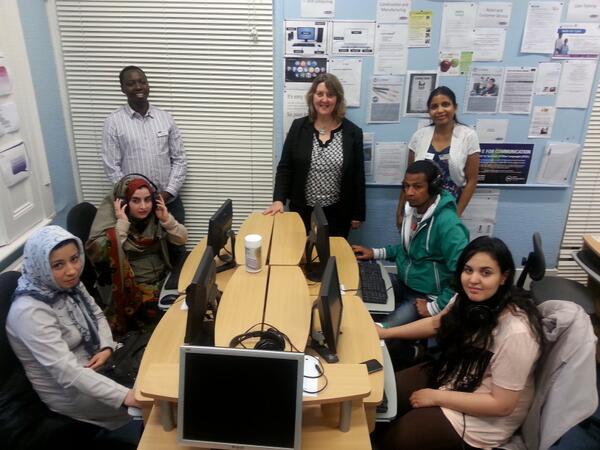
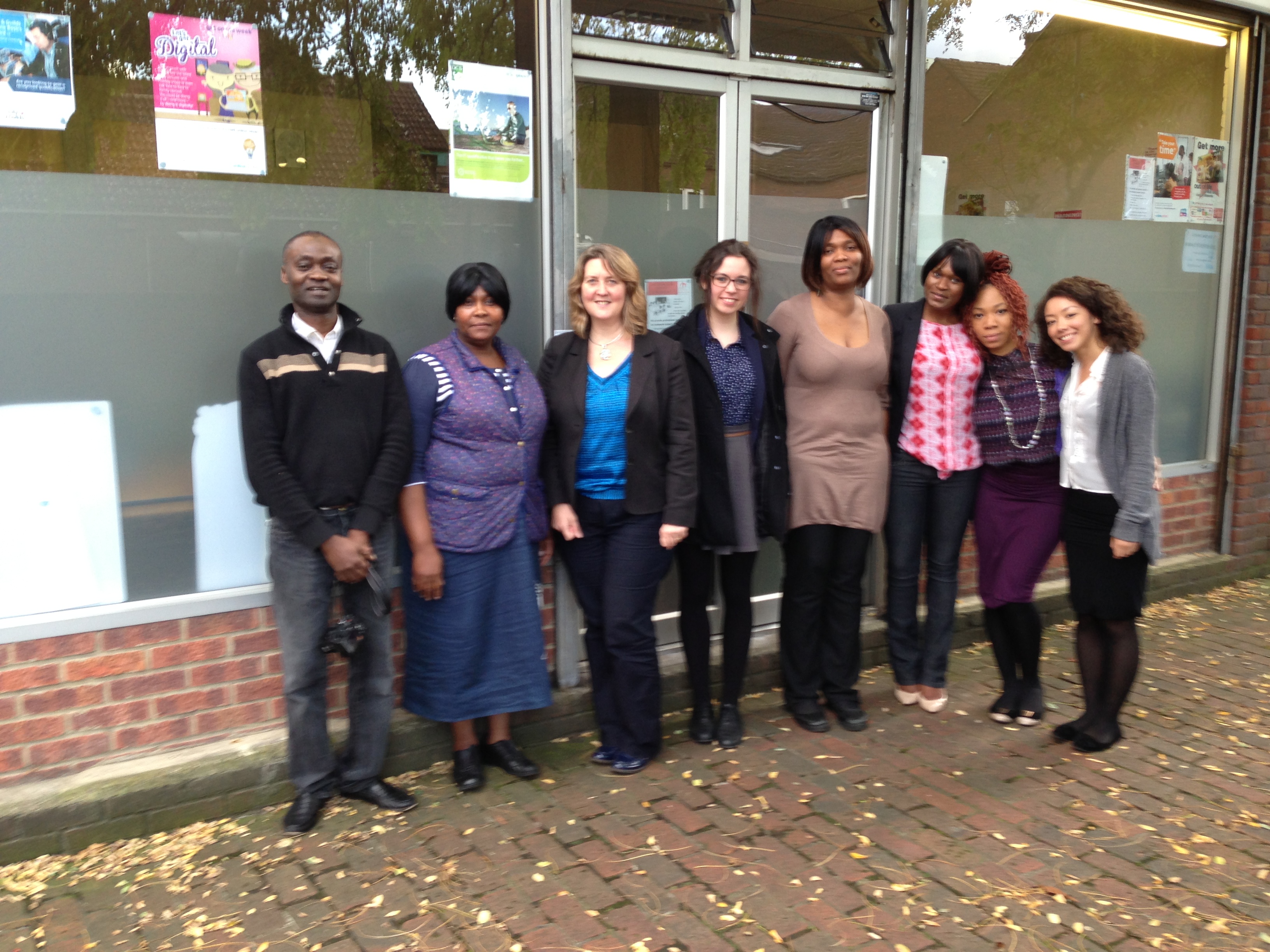
In October I visited to two UK online centres – JET in Newcastle and the Mercy Foundation in South London (pics included). In both of these centres I met people who were keen to learn how to use the internet but English wasn’t their mother language and they were new to speaking English. Language was a massive barrier for them which they had to overcome before they could really learn how to use the web.

Image

Speaking to Hilary at JET and Victoria at Mercy Foundation, and many other centres around the country, we’ve discovered that there isn’t a lot of free low level English language learning content available, and it’s clear that it’s really needed. To support our community partners and the people they work with, we’re working with two highly experienced partners – BBC Learning English and the British Council – to deliver the new English My Way project.

Image

So now we’ve heard the great news, the hard work starts! Over the next few months – together with BBC Learning English and the British Council – we’ll be developing both online (and some offline) learning content to support people to improve their English language skills using an innovative blended learning approach. We’ll also be working closely with community experts within the UK online centres network, creating within it a smaller network of English language centres who will begin delivery in April 2014.

And of course, I’ll be sharing all of the developments with you as we go along, so watch this space!

Digital nation – get the picture

Now we’re getting pretty much stuck into the 21st century, how do we make sure we’re really embracing this very digital world we live in? We have a choice to grasp the opportunity that being a digital nation can bring us or choose to remain a digitally divided nation – and I think the choice is a pretty clear one

Digital exclusion = poverty, lack of opportunity, inefficiencies, under employment, health inequalities, isolation, no-go communities, and people left behind.

Digital growth = high employment, world class skills, top notch services, prevention of poor health and crime through use of data, successful businesses, good education, well-being and happiness.

Which one would you choose?

The world of digital inclusion has been through quite a lot of iterations and I’m delighted with recent additions, such as Martha Lane Fox’s new charity and our close partner, Go ON UK, and most recently the Government Digital Service’s new Digital Inclusion Team. While we’ve achieved a huge amount, I’m not particularly interested in looking back at where we were. What I am interested in is learning from what’s worked, and in analysing who still needs support and inspiration.

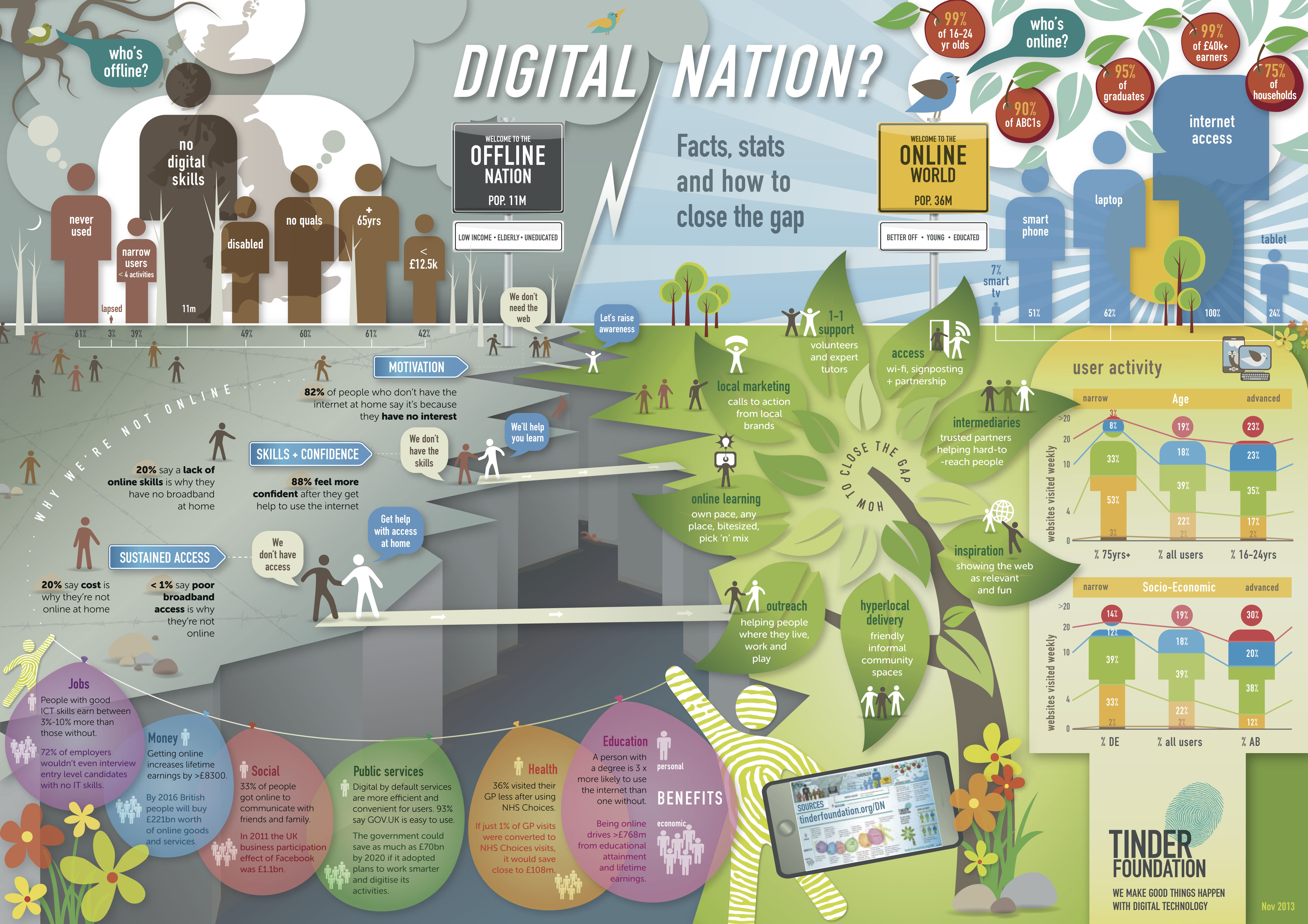
Since I live and breathe the key stats and facts about digital inclusion, I thought it would be helpful to collect them in one place. What started as a scribble in a notebook is now a beautiful infographic – so you can literally get the digital nation picture – which brings together the killer facts and stats we need to know and that clever organisations like Ofcom, ONS, Oxford Internet Institute, the BBC, and others, collect regularly.

Our new infographic tells of the divided world – the 36 million on the sunny side of the divide, as well as the 11 million still in the digital dark. We don’t just know about who lives on the two sides of this divide but also about what the digitally included do online, and what the benefits are in both personal and economic terms.

Digital Nation Infographic14

What’s really frustrating is that we do know what works. In the centre of our infographic is a tree of inspiration which has eight ‘leaves’ which cover how to do digital inclusion. They include outreach – helping people where they live work and play, hyper-local delivery in informal community spaces, local marketing, one-to-one support from volunteers and tutors, partnerships with trusted intermediaries to reach the hardest to reach, free, flexible access, and bite-sized, self-directed learning. No matter who I talk to about their programmes and schemes, these eight elements appear in some guise or another.

So having gathered these stats and facts together, and created that tree of inspiration, the next obvious question is “So what?” I’m keen that we actually use our collective knowledge to drive action, and I thought I’d give a view of what I think should happen next. Basically we don’t need more data on the who or where; we need data on the what works and how to have the biggest impact.

So let’s start here. Do we need more evidence? Yes – definitely. There are lots of isolated projects that appear to do good things, but we’re not systematically collecting the evidence about what’s working or why. To become a digital nation, do we just need to do more of the practice we already know works? On one level, I think we do. I need more. But, I also think we should get cleverer too.

It’s not just helping people to use digital, but using digital to help people. That’s about better use of data to provide personalised online learning that works for each individual. It’s about sharing data through APIs and using open source practices, embedding each other’s learning content, and working on platforms for co-creation to involve the learners in defining content and helping to produce it.

We also need to get cleverer about partnerships. We need to work together to amplify, scale and share the pockets of good practice. And to help us spread the word we need the ears of leaders in big and small businesses, local government, central government, innovative technology companies, social housing providers, further education colleges, libraries, think tanks, community organisations, Foundations and philanthropists.

More interest in a ‘cause’ doesn’t necessarily mean more action – it could just mean more talking, and that’s what we need to avoid. So let’s start here, from this evidence, from this picture. Let’s work out how we can get to be the most digital skilled nation in the world, how much that will cost, and just get on with it. Picture that.

Thank you to Alyson Rhodes at The Art Department for the inspiring design and getting it all down on paper for us.

Note: Infographic is HERE and you need the separate sheet for all of the sources for the data which is HERE

Closing the health gap using digital inclusion and data

Today in the Guardian Online, I’ve got an article arguing that the preventative care revolution depends on closing the digital divide.

Across the UK, 11 million people have poor digital skills and half those who are offline have a disability. Digital inclusion is now a matter of life and death.

Read the article in full over on The Guardian Online

Obamacare: Cash poor, health poor, digital poor. Can we help? Yes we can

A few bugs in the Obamacare website is not the real story here. It’s the fact that, according to Pew Internet, 48 million Americans don’t use the internet at all and millions more can’t do online transactions. Tinder Foundation is a UK non-profit with a proven solution to help millions to get online and use Government services. A year ago I would have said that our success wasn’t relevant to this story unfolding over the pond but now I know that it is – the stats tells the story. In the US and the UK the people who are offline are basically the same demographic and have the same barriers: 50/50 of offliners are over/under 65 years of age; around 40% live in households on very low incomes; and about 50% have a low educational attainment (no high school diploma in the US and don’t have 5 GCSEs in the UK). Lack of perceived relevance and not having the skills to use the internet are the two main barriers. If the problems are the same then the solution could be too.

The correlation between those who are the ‘digital poor’ – who don’t and can’t use the web – and poor health is huge. Just looking at life expectancy is a clear indicator: in London the average age at death ranges from 71 in Tottenham Green to 88 in Queen’s Gate and in Washington DC life expectancy for the poor is 71 years and for the education professional it’s 83 years.

The cost of healthcare is not something we have to worry about in the UK, we’re lucky to have the NHS so much so we often take it for granted. If you fall ill in the US it’s down to you to foot the bill – unless you have health care insurance. It is estimated that between 32-50 million Americans don’t have any cover and with the average visit to the emergency room costing £780/$1,265 it can be expensive. Unsurprisingly the number one reason for bankruptcy in the US is health care costs. So Obamacare is there to help people who are cash poor, and who will in all likelihood suffer health inequality, and will also suffer digital exclusion.

Tinder Foundation is lucky to be working with NHS England to tackle the ‘digital poor’ so that they can benefit in the drive for better health information, health prevention, and more conversations about health – all to be online. Our work with our 5000 hyperlocal partners in the UK online centres network will increase the web literacy for those digital poor so that both have the skills to use it and know that it can improve their and their families’ health. Tie that together with essential tools such as the free Learn My Way online courses helps people to learn as well as local partners to track that learning using the data analytics. I think this is a model that could help Americans to not just register for Obamacare but also to access online information to keep them healthy too.

We’ve helped over 1 million people at a unit cost of £30/$50, and I know our model could work for much higher numbers of people where there is a collective will to make it happen. This kind of effort, at the kind of scale that’s needed, takes time, fantastic partnership building on the ground, and persuasive and focused leadership.

It’s easy to see that the introduction of Obamacare should benefit millions of people. Stop talking about the bugs. Bugs in a website are a temporary problem and I’m sure there are hundreds of programmers busily fixing it right now. It’s the 48 million Americans who don’t use the web that is a more difficult problem to fix.

Carnegie UK Trust turns 100

Image

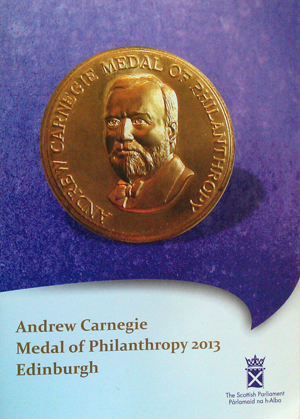
Last week the Carnegie UK Trust celebrated its 100th birthday. And boy, did it celebrate in style, with a week-long party in Edinburgh featuring some amazing exhibitions, dinners and the awarding of the Carnegie Medal of Philanthropy.

We were celebrating the amazing generosity of some extremely rich people, who obviously have lots of much more selfish choices on how they spend their money. My main take away was that giving happens in all kinds of ways, I heard that of the £10bn given to good causes each year in the UK “only” £1.5bn come from £1m++ donors which means the majority are given by sponsoring your friend’s fun run. We discussed the huge value of giving time, services in-kind, as well as giving food to the food bank and clothes to the charity shop. The challenge of course is working out how this giving makes the most positive impact on our society; it’s not about making us feel good it’s about making a change to the status quo where the status quo isn’t providing people in our country (and our world) access to their basic human needs of a safe community, a home to live in, food and water, friendship and happiness, and of course education and fulfilment.

I was already very interested in the work of Andrew Carnegie before I made the trip up to Edinburgh so to be asked to speak at the Public Libraries seminar was a real honour. Knowing how passionate Carnegie was about libraries as a result of being starved of books as a child, I wanted to ensure I made a good job of it – thinking deeply about the needs of society for a 21st century Library. You can find the transcript of my speech in my last blog post. I also enjoyed the speeches from the other speakers in the session, particularly Liz Macdonald, Senior Policy Officer at Carnegie UK Trust, who used the words of Andrew Carnegie himself to illustrate his passion for libraries; “let there be light” he quoted, or even had engraved above the door to his libraries, and he literally meant it putting huge glass atriums into the libraries to aid reading by natural light when the norm was reading by candle light. Martyn Wade asked for a move to “one Library” which deserves more time. And Louise Overgaard, from the amazing library in Aarhaus, Denmark, talked about the future of libraries and the maker movement.

The celebrations included a fascinating exhibition about the life of Andrew Carnegie. I especially enjoyed seeing the first ever known pre-nuptial agreement from 1877 to ensure his new wife supported his ambition to give away his fortune for good causes and she signed away any rights to his estate. There was also an impressive Warhol exhibition, and a bagpipe playing robot!

The Carnegie Medal of Philanthropy is a highly prestigious award which is awarded biannually to those who use their private wealth for public good, and this year – as in previous years – the recipients were all very worthy of the recognition. The 2013 recipients were Her Highness Sheikha Moza bint Nasser, Dr. James H. Simons and Marilyn H. Simons, Dmitry Borisovich Zimin and Dame Janet Wolfson de Botton on behalf of the Wolfson Family, as well as Sir Tom Hunter who rather charmingly described himself as ‘chuffed to bits’ to have received the medal. You can find out more about the great work of the winners here.

Listening to the thought provoking words by keynote speaker Pierre Omidyar at the awards ceremony, about optimism and philanthropy, I understood that the first step to making change is believing that you can make change.

Re-imagining Carnegie: Libraries for the 21st Century, Helen Milner

This is the transcript of my speech I made today (16 October 2013) as part of the Andrew Carnegie International Legacy events taking place in Edinburgh:

In order to prepare for today I literally imagined myself sitting with Andrew Carnegie talking about how he could make the greatest impact on today’s society by leveraging his billions. I’m sure I would have liked him, I too am a positivist and a modernist. But I’m pretty certain he wouldn’t want to ‘save the libraries’ – at least not save the libraries as a 20th century construct. He would agree this is time for revolution not evolution.

The fundamental problem is that most people think of libraries as being about a building with books in it. Indeed Andrew Carnegie is himself credited for inventing self service stacks – better access to books, for browsing and discovery. As a poor bobbin boy in 1849 Carnegie shamed his local library in Pennsylvania to let him use it for free as the common practice then was to charge $2 and he couldn’t afford that. And it’s this bobbin boy – or his 2013 equivalent – that I’m imagining as a user of a 21st century library.

But let’s not forget that Andrew Carnegie’s passion was the power of access to information – indeed information you can browse and discover. In 2013 is that only possible in a building with books in it?

Before you think I’m here as a hater of libraries, I’m not. When he was four I asked my son what his favourite place in Sunderland was, he said the library. When I was a teenager the library was the place that gave me free and non judgemental access to classical music, jazz, as well as Leonard Cohen and the Sex Pistols – my home was full of books but not of music. And I work with thousands of libraries in my day job.

So, what is a library? For me, it provides:

  • fulfilment

  • opportunity

  • a safe haven that doesn’t judge

  • and it’s free and universal.

Well, you’ve all got a mobile in your pocket that does that.

The internet provides fulfilment: you can read a book, write a book, write a blog, watch a film, upload your own film, research your local history or family tree, create, share, converse. Last night in the Warhol exhibition here at the Scottish Parliament, there were lots of signs that said ‘no photos’. It beggars belief that in 2013 that matters. Why do I need to take a photo? I just made a digital note of the name of a picture I liked on my phone and googled it later and posted a link of it on facebook to share it with my friends.

The internet provides opportunity:

  • access to all of the jobs in Edinburgh, in Scotland, in the UK, in Europe, in the World

  • better access to information for homework, for research

  • ease to start a business – to research need, to search for competitors, to register your company.

The internet is fulfilling, rewarding, and challenging. The internet is free and universal.

But!! Two big buts.

1. Where is my guide and my helper on the internet? Where is the person I trust to support me and point me in the right direction?

2. And, in the UK 11m people can’t use the internet. In the US that’s 69m. In the world it’s 4.6bn. 4.6bn people who can’t use the internet in the world today in 2013.

That’s my day job – to help the 11m in the England who can’t use the web – and we’re doing well so far, we’ve helped 1.16m in the past three years in England through working in partnership with 3000 public libraries and 2000 hyperlocal community centres.

Public libraries AND community centres providing free access and support to anyone and everyone. Helping them to learn basic digital skills using our free online courses and a common learning platform, with staff and volunteers there who you trust to help and guide you. Over 1m people have benefitted from this in the past three years.

The power of the internet is that it can inspire, fulfil and entertain. The internet provides people with opportunities that are different (better) to those offered, perhaps even imagined by, parents and peers. You could say that the internet is much like the library of the 19th century.

My fear is that we’re rebranding libraries not re-imagining them. We’re building amazing buildings and putting other things alongside our books, but somehow “Library” doesn’t seem to be deemed the right word anymore. At the wonderful Chattanooga Library the cool stuff is done on the “4th Floor” – “a public laboratory and educational facility with a focus on information, design, technology, and the applied arts. The 14,000 sq foot space hosts equipment, expertise, programs, events, and meetings that work within this scope.” While “traditional library spaces support the consumption of knowledge by offering access to media, the 4th floor is unique because it supports the production, connection, and sharing of knowledge by offering access to tools and instruction.”

In England 10% of the Libraries are now community run. I wondered if they are therefore a hotbed of innovation where communities are challenging the 19th and 20th century norms of what a library should be. Sadly not. Or not yet anyway.

Two great examples.

In Huddersfield, UK, the Chestnut Centre is a library and cafe by day, but “once the library closes in the evening the centre will transform into a cinema” putting “the Chestnut Centre at the heart of culture and arts in our area”. Isn’t it still the library after dark when the cinema is on?

And there’s a new “library/hack/maker space” in St Botolphs, Colchester built in the old bus station waiting room – driven by innovators – not by, but “in partnership” with Essex Libraries.

These examples are amazing, really amazing, showing how libraries can re-invent themselves. And, Louise has also spoken about her great Arhaus example. Fantastic work.

But the most exciting innovation I’ve heard in the past year is “a community library point” in Philadelphia where a community centre has a big fat fast broadband cable coming to it – from the city library – and that was called “a community library point”. It is free information and fulfilment coming to a disadvantaged community via the internet. And it is called a library. No books, just the web … in a community centre, with wonderful people to guide and support. The community centre knows the people who live in that community, so they can design and provide the services they need. They can do it better with faster and cheaper bandwidth.

Maybe the best thing about libraries is the brand.

But some libraries are not great, in fact some are quite poor. They don’t ask their communities what they need. They don’t innovate. They don’t think about how to attract the local young ‘bobbin boys’ (like the young Andrew Carnegie) to their services. They are stuck in the past.

And in some local communities it’s the local community organisation or community centre (not the library) who is the heart of local services to meet local needs, not just run for this generation’s Andrew Carnegies but by them. Why are they not worthy of being in this new movement of what we could call a Library?

If Andrew Carnegie was here and asked me if he should spend £1bn on saving the libraries and £1bn next year and the year after that. I would say No. But that’s what the UK Government is spending now, every year.

But I would say yes to the £1bn – and that’s our fear, if we say that libraries aren’t good enough then the money will be whipped away from us and not spent on fulfilment and opportunity for all.

We want the £1bn investment – but to be spent in a different way:

  • yes, to a community space where people can meet and feel free and not judged

  • yes, to access to information and entertainment in many many media

  • yes, to programmes to make sure that everyone knew that they could achieve new things beyond the knowledge of their peers

  • yes, to excitement about learning

  • yes, to people there to guide and support if needed

  • yes, to making sure the internet and internet skills are freely available for everyone in our society.

  • To quote Andrew Carnegie: Yes it should all be “free to the people.” And free to all, not just those who are library members.

Yes, most importantly, to much more, and much better partnerships between local organisations who are serving each community.

And yes to being bold about challenging ourselves more, affecting more change, working faster and harder so that everyone can achieve their potential.

Please get in touch if you’d like to continue this conversation.
Get online week – Let’s get digital!

Lets-get-digital-get-on-line-week
Today marks the start of our seventh national Get online week, and at Tinder Foundation we’ve been getting into the Let’s get digital theme, and indeed, the Let’s get digital groove! I can only apologise for my part in this film… 

Whilst this tinyslice of Get online week might make me (and unsuspecting viewers) cringe, looking back over the last seven years I’m pretty proud of the campaign.

When it all started back in 2007, no-one had ever tried a mass-marketing approach in promoting digital to the digitally excluded before. We knew that to make it work, there needed to be local events which were marketed locally to the third of the British population who weren’t online. Together with the UK online centres network, we stepped up to the plate, and Get online day was born.

The day soon became a week – and seven years on it’s still going strong – and is a key part of the digital inclusion calendar. in 2013, we’re now talking about the final sixth of the population left offline, and the campaign now caters for the more deeply excluded as well those who still aren’t making the most of digital technology. And this year we’ve got the support of the Skills Minister Matthew Hancock, who said: “The modern world and workforce is becoming increasingly dependent on the internet, yet there are still 11 million people in the UK without basic digital skills. If we are to compete in the global race then we must have an IT and digitally literate population. This is why we are supporting Get online week to help people work more effectively, communicate better and make sure that Britain stays ahead in a digital world.”

This year, another 700 centres have taken up the Get online week challenge, and over the next week will deliver thousands of events helping tens of thousands of people. They’ll be taking our ‘Let’s get digital’ message out into local communities, and using our new ‘Let’s get digital’ taster course (available on www.getonlineweek.com) to engage people.

We’re always learning more about the digital divide (as I blogged about here) but we don’t always think about is how it feels to be left out, so in preparation for Get online week this year we decided to ask that very question. New learners in UK online centres reported feeling ‘isolated’, ‘embarrassed’ and ‘frustrated’ before finding their way into a centre. Interestingly, the two biggest impacts of being offline were reported as “missing out on family news” and “not being able to access online bargains”.

This kind of insight is key in bringing digital exclusion back down to a personal level, and it’s at the core of how we’ll be starting all of our ‘Let’s get digital’ conversations. UK online centres are experts in identifying the often very personal trigger points that can switch each individual from non-use to use. And I strongly believe everyone everywhere has a trigger. It might be wanting to see pictures on Facebook, or wanting to compare car insurance prices at a glance. For Colin, one of our previous Get online week visitors, it all started with wanting to get his shopping ordered online and delivered to his door.

This week, I’m looking forward to seeing the Get online week campaign hit the digital trigger for even more people up and down the country. You can keep up with latest Get online week news with hashtag #GOLW13, or by visiting www.facebook.com/ukonlinecentres.

Happy Get online week No. 7 everyone, and the best of luck to all the centres taking part.