Six year olds and digital technology: it’s time for a grown-up conversation

I was annoyed to read today’s Guardian article “Ofcom: six-year-olds understand digital technology better than adults” and to hear a simplistic discussion on BBC Radio 4’s Today programme. It reminds me of those awful meetings where people tell me digital inclusion is not worth worrying about as all young people know everything about the internet and they’ve all got smartphones, and we just have to wait until all the older offline people die. God give me strength.

The research being quoted is part of Ofcom’s Communications Market Report – that “measures confidence and knowledge of communications technology to calculate an individual’s ‘Digital Quotient’ score, or ‘DQ’”. The research report itself is fine, it’s the trivial DQ test and the shallow way that BBC Radio 4, The Guardian and Ofcom’s press team are promoting it that is so frustrating.

Under the heading “How tech savvy are you?” you work out your DQ via a series of questions to find your score. The questions involve: how much you know about 4G, Google Glass and 3D Printers for example; how much you talk to your friends and family about new technology or new gadgets; and questions about online activities such as watching TV shows, uploading photos and videos, SMS and instant messaging. Maybe the most worrying question is “I wouldn’t know what to do without technology” (Agree/Disagree) – which I disagreed with – I love technology and my gadgets but I know what to do if I didn’t have them. As you would expect, my DQ score is 129 and above average and 16 points higher than the highest scoring age group in the DQ chart – the 14 – 15 year olds.

The “children know more about technology than their parents” simplistic rhetoric was wheeled out again this morning on BBC Radio 4’s Today programme. Although a bit of simple maths shows that the mothers of the “six year olds” (trumpeted in The Guardian) have an average age of 36. The average DQ score of a 36 year old is 103 and the DQ of an average six year old is 98 – even using the same silly metric, the parents have a higher DQ than their kids.

My main issue with this reporting is that using technology isn’t the same as knowing what it means to use it – skills aren’t the same as knowledge, digital society isn’t the same as 3D printers and Smart Watches. Being a person is about thinking, creating, communicating, building things – it’s not about clicking and gadgets. A great programmer is a great programmer because of their thinking skills and most importantly their ability to determine the outcome they want to achieve.

I have lots of respect for the work of Dr Ellen Helsper of the LSE, who has led research that shows any equation that says young people = good digital and old people = bad digital is just far too shallow to be useful in debates about the digital world we live in. Ellen says “The discourse around young people being tech savvy because they are online all the time and feel comfortable in a digital world is dangerous. It plays to the myth of young people as digital natives, as if there are no individual differences between children, it ignores the fact that research has shown over and over again that some young people require help, that even those who are confident are often digitally naïve and make rash decisions about where to go, who to talk to and what to do online. It takes away responsibility from adults (parents, educators, governments) in helping young people navigate and learn how to live in a digital world, a digital world that is our world, a world with which adults actually have a lot of experience.”

Emma Mulqueeny’s blogging about 97ers stems from her experience working with amazing young programmers through YRS, and being a parent of a 97er (someone born in 1997 or after). She says: “The 97ers are already immersed in this web of learning. ….  they are there playing, interacting, growing up, making mistakes, testing boundaries, making boundaries, exploring things they find interesting or funny and more importantly – sharing their discoveries. .. But it is not the internet that is doing this, it is the networked communities the children find online, people stripped of physical boundaries and prejudices they face daily in school and life, an open forum of communities they can opt into or out of.” Emma is talking about a digital world where young people are creating a very different community than I did when I was young – they are young people who are inquisitive and articulate, and that’s a long way from an Ofcom DQ of ‘knowing about 3D printers’ or ‘not knowing what to do without technology’.

I’m excited to know that the young people of today will be shaping the digital world that I will grow old in. They will shape that world with experiences different to mine and some of them will do brilliant, important, things with technology that none of us have even dreamed of. Some of them will be brilliant politicians, plumbers, charity leaders, entrepreneurs, teachers, chefs, nurses, programmers, data analysts, social workers, and gardeners. They will have the potential to use digital tools that make their, and other people’s, lives better and they will face new challenges and problems.

We are not robots – adults and children alike. We have different luck and different lives to one another. Ellen Helsper will be publishing research later in the summer that shows again, sadly, the massive gulf in the digital knowledge and expectations of children who do or don’t have the internet at home.

Yes, I love technology. Yes, young people have a difference digital experience that adults. Yes, we should embrace change. Yes, many adults constrain young people with out-dated constructs. Yes, digital is a tool for good and for evil.

Isn’t time we reject the shallow discourse about youth and digital, and have a grown up conversation about it?
Cracking Home Access

Motivation, skills, access: the three big barriers to people getting online to benefit from everything the internet has to offer.

Hopefully it goes without saying that Tinder Foundation – and our network of UK online centres – have made a significant impact when it comes to skills – more than one and a quarter million people have got the basic online skills they need in a UK online centre in the last four years.

When it comes to motivation, we’ve also done our part. Our eighth national Get Online Week takes place 13-19 October, and we estimate that around 50,000 people will be engaged to see what they can do online.

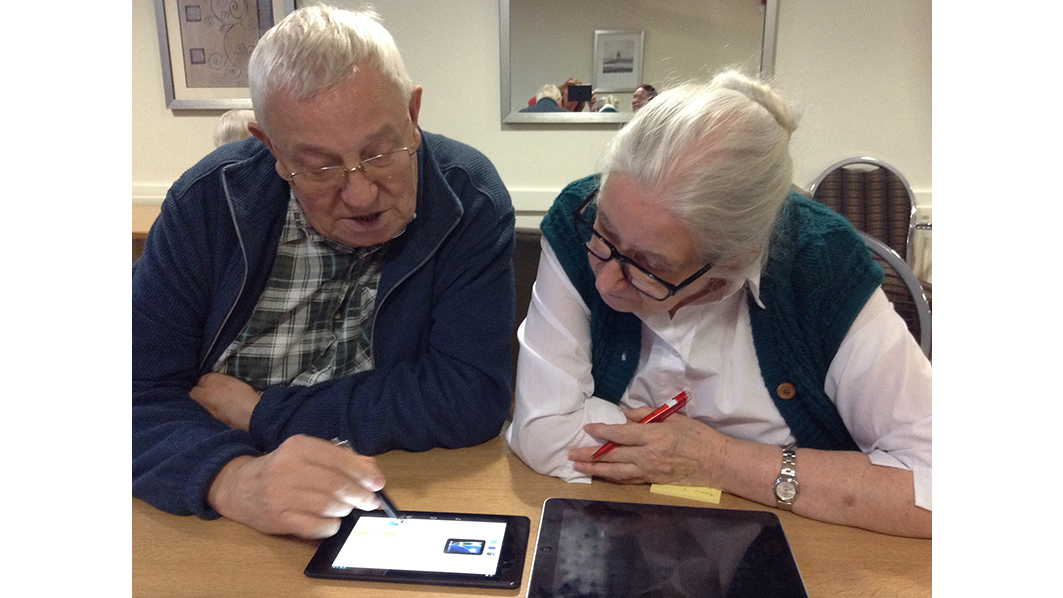
tablet2Day to day, our network does some amazing outreach work in places like schools, care homes, mosques, social clubs and community centres proving to those not convinced about the power of technology that it really can change their life.

As for access, the 5,000+ UK online centres throughout the country are an invaluable resource, but increasingly, that’s not enough. We need to get to grips with Home Access, and it’s proved a difficult – and expensive – nut to crack.

For people to really make the most of an online life, for the internet to help them feel less isolated, for it save someone money, or help them get back into work it has to be personal and that means in the home.

We know there are several key barriers to home access (both internet and devices) for many people. While the costs of devices are coming down, for those most in need of the benefits being online can bring, £100 for a tablet is still an unachievable goal.

Even for those who can afford it, the sheer variety of devices, the differences between them and what they all do can be a minefield – with many opting out of buying altogether, rather than spend their money on an inappropriate piece of kit.

Arguably the bigger problem is the cost of the connection to the internet itself. With the vast majority of broadband contracts being linked to telephone contracts, those on a fixed budgets, living with only a mobile phone they top up when they can, sustained and reliable connectivity at home is a pipe dream (no pun intended). For some, there isn’t a bank account from which to set up a direct debit. How do these people reap the rewards of getting online at home?

The team at Tinder Foundation have been trying some new approaches to see if we can bridge the gap and break down at least some of these barriers, our latest Home Access project, funded by BIS, provided UK online centres with a variety of devices, so people looking to buy a device can make sure they get something that fulfills their needs.

The Learn My Way website has also provided online tools to help people find the most affordable connection for their requirements.

The access nut is going to prove a tough one to crack but I think these sorts of pilots and trials are really going to help us figure out what people need and how best to get it to them. Indeed, the evidence is compelling, and you can read our full report here, or just meet some of the people we’ve helped try-before-they-buy, in this short video.

Funding for this kind of activity isn’t always easy to find, or maintain, but out of the three barriers I mentioned above, I think access is the one where corporate partners can have a pretty hefty impact.

Vodafone recently published an independent report – Mobile: A powerful tool for Digital Inclusion – and on the back of this, they’re working with us on a pilot research project. Together we’ll be targeting specific groups of isolated learners (providing both devices and a ‘mobile internet’ course) to try and track the impact of mobile devices on levels of both digital and social inclusion.

We are also working closely with other private sector partners on how to get the most excluded in society online at home. We’ll be announcing the details of these exciting projects in the coming weeks and months, so do keep an eye out!

Arguably, these are companies that have a vested interest in getting more people online and using their services, but I can tell you from personal experience that they’re also organisations with strong sense of social responsibility and I think it’s a big step in the right direction to helping those most in need find a way to joining those engaging with everything the web has to offer, from the comfort of their own home. (Assuming rural broadband gets sorted … ) This a big step in the right direction to getting everyone online by 2020.

A quick look at the new digital ministers

This week’s big news is obviously the reshuffle, and has left me thinking about whether the new Cabinet will be more or less supportive of digital inclusion.

It was bittersweet to see Matthew Hancock leave his role on skills, as we will miss his support, but I was very pleased that he has been promoted to join the Cabinet. He’s been been really supportive to what we do at Tinder Foundation, and was very kind to come along to our event just last week at the House of Lords to tell everyone how impressed he is with our work (you can read my blog on it here). I hope he’ll be supporting the digital inclusion agenda around the Cabinet table, and I wish him all the best in his new role.

There are few appointments which I will be keeping my eye on – obviously Nick Boles who is the new Minister for Skills Enterprise & Equality, responsible for adult skills and informal learning. I was pleased to see he’s looking forward to the new challenge in a statement he made earlier this week: “I am very excited to have a new challenge. I am determined to make sure that everybody can acquire the skills to be able to benefit from the economic recovery.”

I’ll also be following the progress of Esther McVey in employment – as about half of our annual 150,000 learners are out of work and looking for a job – Mark Harper in working with people with disabilities – half of all disabled people don’t use the internet – and Ed Vaizey who has added the responsibility for digital industries to his role at DCMS on culture and libraries.

It was also sad to see Nick Hurd leave the Cabinet Office. He has been a great champion of modernising the community sector, and supported us in our role in capacity building our 5000 hyperlocal partners. Nick Hurd was very modest on twitter saying how much he had enjoyed the role, whilst handing over that particular baton to Brooks Newmark.

I guess we won’t really know how much they support digital inclusion until the Autumn and of course next year when they publish their manifestos, so I’m looking forward to hearing more.

Celebrations at the House of Lords

There must be something auspicious about the 8th of July as last year on exactly the same date we met with colleagues, friends, partners old and new, at the House of Lords, and this year’s celebration was a big hit too. A year ago we launched our new name – Tinder Foundation – and that was just a great way to kick off a very good year.

It’s a year when we’ve helped another 150,000 people get the basic online skills they need taking our total since 2010 to 1.25 million. We completed the first year of our Widening Digital Participation programme with NHS England where we helped nearly 60,000 people use health information through the Learn My Way health portal and course (in our first nine months) and I’m pleased to say that has cemented a strong partnership with NHS England.

We’ve diversified with lots of great partners helping us to deliver impact but also it’s good to have partners who help fund our work too. So thanks go to: Vodafone, Talk Talk, BIS, NHS England, Communities and Local Government, Society of Chief Librarians, Comic Relief, Nominet Trust, DWP, Post Office, EON, BT, Argos and Asda. We couldn’t have done it without you.

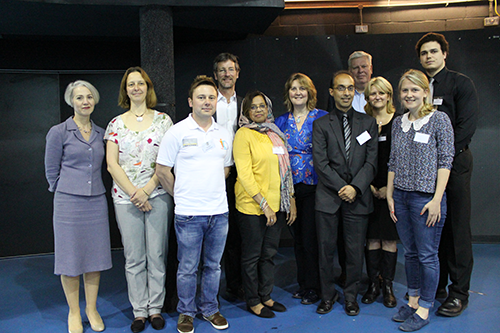
We have an amazing network of hyperlocal partners, who really do reach and engage people that other projects and initiatives don’t reach – at our event yesterday it was great to celebrate with some of the UK online centres who do all the hard work in their local communities. Nice to share the day with Anne Wallace, Baz Kanabar, Victoria Rodney, Paul Davies, Louise Barbe, Debbie Hale and Nyree Scott – thank you, and all the other UK online centres who didn’t come along, for all your hard work.

I was delighted that the Minister for Skills, Matthew Hancock MP, made time in his very busy schedule to join us yesterday. He spoke very highly of the work which we do, telling the audience that he’s proud to be associated with us and feels that we have one of the biggest impacts of education on people’s lives by bringing together the most cutting edge technology and allowing access to it for people in some of the most difficult circumstances. It was great to hear him speak so proudly of BIS’s support for Tinder Foundation and to hear him say that he sees that basic online skills are essential for both society and the economy.

Those of you who know us, will know that we never stand still, so yesterday we launched the next phase of our five year strategy. We have three strategic objectives; firstly, we will continue to focus on digital inclusion, especially the hardest to reach, and we aim to help at least one million more people to get basic online skills by 2019. Secondly, we will extend our expertise in networks and digital platforms to help adults who are not currently learning to access informal learning – such as English, Maths, ESOL, and learning for fun through digital. And for third objective we will be focusing on deep rooted societal issues – for example poor health, loneliness, debt, worklessness – and, with partners, see how digital can be part of the solution. You can access our strategy here.

I do know that there is no silver bullet, there isn’t one solution to help the last 10 million people without basic online skills. But I do know that there is loads of knowledge and expertise on models that do work: to help us to continue to extend and share our knowledge on digital inclusion, we also launched a new wiki to produce our collective wisdom on HOW we can help this final 10m. Please look at it, get involved, be tactical but be ambitious too. We’ll be discussing and publishing the output in November at our Annual Conference. You can find the wiki here.

I think everyone who attended yesterday would agree when I say that the star of the show was Roger Hamilton, a former learner of a UK online centre who was homeless and found the skills he needed to turn his life around. After developing his own skills he found the best use for the skills he had learnt, volunteering and then working at St Mungo’s homeless charity, by sharing them with others. He is truly passionate about helping people who face multiple barriers. You can hear Roger talking at the House of Lords below. A shining example of how learning digital skills can really change lives!

I already know how fantastic the Tinder team are and how wonderful our network is but it’s great to hear that it doesn’t go unrecognised. It’s events like yesterday that really brings home just how big an impact we can have on peoples lives. We’ve helped 1.25 million people get online since 2010 but there are still another 10 million who need our help, so we’re not resting and it’s great to have the support of some many friends and partners …. and the Minister too.

Do watch Roger’s film – it will be a few minutes of your life and you will be so glad you did.

“Parliament is something you do, not a place where you go”


This week I’ve had the opportunity to chair two round table events for the Speaker’s Commission on Digital Democracy. The first saw me leading a session in Chesterfield, primarily with people who had learning disabilities and/or other disabilities, and the second saw me chairing a table discussion at a meeting with the Digital Marketing sector in London.

Both groups had similar views, thoughts and feedback, and here is my summary of the week’s key themes.

1. Culture
In order to bring digital democracy practices and tools into parliament, we need to recognise that we’re really talking about a change programme and not a technology project. MPs and Peers need to be supported and empowered to understand how digital is a change for good and tools and training need to be provided so that this culture change brings an increase in efficiency, interaction and representation.

2. Process & process re-engineering
In order to help positive change happen and to ensure that digital democracy actions are successful, we need to go back to basics and look at what is important to parliamentarians and citizens, and see how digital can make that more effective. The roundtable in London suggested the Commission could host a process re-engineering workshop to help us.

3. Opaque and confusing language
Everybody I spoke to at these roundtables said that if Parliament wants to be more inclusive through the use of digital media, then the language it uses has to be modernised too. People want to hear Parliament speak the everyday language that they use in real life. In London the group said that using old-fashioned language actually disenfranchises people as it makes them feel stupid. Modern language is needed to make it easy and simple to engage with what Parliament is doing and what Parliamentarians are saying.

4. “What if Parliament was a brand?” – idea for a competition
Modern businesses and organisations know that communications in 2014 are human, personal, and interactive, where staff are trusted and empowered to converse for their employer. An idea was suggested for a competition where people – brand agencies, students, voluntary organisations, everybody – could decide what ‘Parliament as a brand’ would look like.

5. Using digital to make Parliament more accessible to everyone
In both Chesterfield and London people said to me that they think MPs and Peers should spend more time out and about meeting people and discussing what ‘normal’ people are thinking and feeling. Both videos and video conferencing could be used to help people see and hear more about Parliament, and video conferencing could be used to help MPs and Peers engage with Parliament when they are not in Westminster, and citizens when they are. All kinds of digital channels provide enormous opportunity for opening up Parliament and helping more people to discuss ideas and issues with more Parliamentarians.This was paraphrased as “Parliament is something you do, not a place where you go” – a concept I love.

6. More awareness and information
There was a plea from everyone this week that people want more information about what’s happening in Parliament, when sessions (such as Select Committees) are being held, and where people can make an impact on decisions that are being made. People also wanted to be given a decent amount of time to respond.

People were in favour of adverts on Facebook promoting opportunities to have a say in parliament, and the use of non digital media such as TV news or newspapers too. In Chesterfield people said that the voluntary and community organisations who work with disabled people could be supported (with help and grants) to gather feedback and to help people who are disengaged with Parliament to have their voices heard.

7. Don’t leave anyone behind
There are 11m people in the UK who don’t have basic online skills and those that do have skills need access to the internet if they are to engage with Parliament online. Even for people who do have access via smartphones and low-cost broadband packages, using lots of data and downloads can be very expensive. People asked that Parliament consider the digitally excluded, the cost of digital for people on low incomes, and consider improving non-digital channels at the same time.

8. Changing behaviour is hard
A phased roll-out to a change programme is a good idea. People at the London roundtable suggested that a proper plan is needed to help move ahead with digital engagement. Role models and peer (small p) support will be important to show how digital can be used to make Parliament more accessible as well as being manageable by MPs too.

Everyone I’ve met this week was interested in democracy when they came into the room, and were interested and EXCITED about being more engaged with Parliament when they left.

I’m telling the people we’re consulting that The Speaker is keen to have some pragmatic and solid actions in the report we’ll be publishing early in 2015, and after this week I know we won’t be short on ideas. Thank you to everyone who took part with such enthusiasm, thought, and creativity.

Please do get in touch with me or the Commission if you’ve got something you’d like to share with us. All the information can be found on the Digital Democracy Commission webpages here.

Reviewing the year

Today sees the launch of Tinder Foundation’s Annual Review 2013-2014.  I know I say this every year, but looking back I’m incredibly proud of how far we’ve come, and how much we’ve achieved. It’s a totally online Annual Review, interactive and whizzy, and I highly recommend you pay it a visit.

Some of our highlights:

  • The UK online centres network

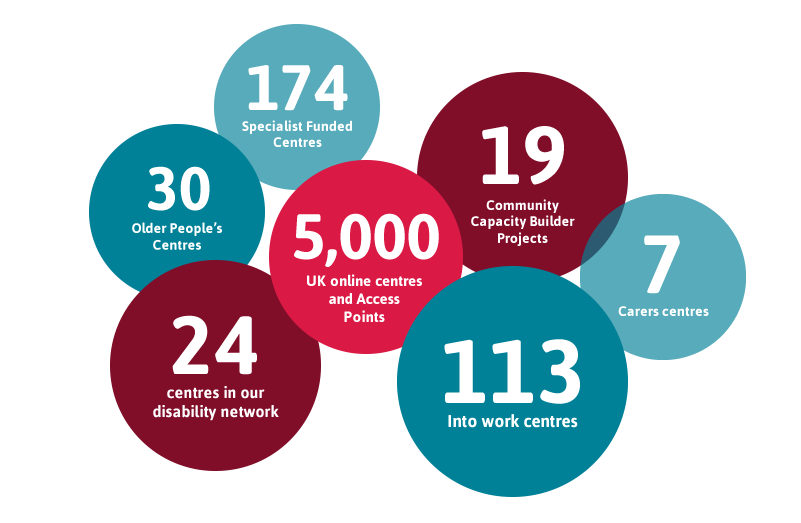
As ever, the network is top of my highlights list.  It remains Tinder’s unique selling point, allowing us to deliver learning at scale, with the flexibility to respond to very local needs.   This year, we’ve supported 180 centres with grant funding, including the large scale Community Capacity Builders, and our four specialist networks supporting Disabled people, Older People, Carers, and helping people Into Work.  It’s through these networks that we’ve sought to target those most in need of digital skills support, and used our ‘discover, seed, scale’ model to share the best practice and findings from those networks across the wider UK online centres family.  We’ve also given out around 200 small event grants, helping centres run events to engage with new audiences.

Image

  • Working with libraries

I want to mention more specifically our work with libraries, which continue to make up more than half of the UK online centres network, and remain key in helping us deliver outreach deep into urban and rural communities.  Over the last year, Tinder Foundation we’ve worked closely with the Society of Chief Librarians (SCL) to help more libraries support more people with digital skills needs, including a new workforce development training programme for the library network.  More than 50 SCL regional leads have completed the training, and have taken away materials to help disseminate what they’ve learned to branch library colleagues.

  • The Widening Digital Participation Programme

Last Summer we started our work with NHS England to create a new Digital Health Information network of 400 centres who use innovation to support people to access health information online. Between them they have reached more than 100,000 people, with  60,000 being trained to access health information online through the Learn My Way health portal and the new Staying Healthy with NHS Choices health course.  You can read the full report on Year 1 of the programme online.

  • The set-up essentials tool and Home Access network

The Home Access project, again supported by BIS, showed how important home access to IT equipment and connectivity is to overcoming barriers to digital inclusion. The diagnostic tool was launched on Learn My Way in January 2014, and by the end of March had already been used more than 4,000 times. Meanwhile, the 60 Home Access pilot centres have received specialist training for their staff and volunteers, and have given personalised face-to-face guidance sessions to more than 400 people about how to get online at home.  Read more here.

  •  Our “Digital evolution, making good things happen” conference

In December, our annual conference supported grassroots practitioners to have a bigger impact in their communities, and speakers from the US and UK, and across the public, private and voluntary sectors talked about why and how they’re supporting digital inclusion, and more importantly how centres can work with new partners and achieve more for more people. Delegates really loved the event and thanks again to BT for hosting us.  Read the full report here.

  •  Marketing campaigns that reached thousands

Our annual Get Online Week (October) and Start Something (Feb – March) community campaigns reached nearly 100,000 people and helped local centres reach out to new audience groups and new community partners. With 11m people without basic online skills these campaigns are so important to reaching new people and linking them with local partners who can help them to get the digital skills they want.

  • Learn My Way goes from strength to strength

The Learn My Way platform has gone from strength to strength this year, with new content and videos, and new courses like our popular Universal Jobmatch guide. We also added the fantastic English My Way portal – an ESOL programme developed in partnership with the British Council and the BBC as part of the Department for Communities and Local Government’s English Language competition. We’ve also piloted content co-creation – helping centres and tutors create their own Learn My Way courses – watch this space for more information on that one.

  • The Digital Deal Challenge Fund

Tinder Foundation delivered and project managed this digital inclusion Challenge Fund for the social housing sector, run as a cross-government initiative supported by the Department for Work and Pensions and Department for Communities and Local Government. The aim is to trial and spread ways of getting social housing tenants to engage with their landlords online, and it’s been a fantastic first year with 12 social landlord partners. We’ll be publishing the findings soon on our Digital Housing Hub which continues to go from strength to strength.

  • Digital nation infographic

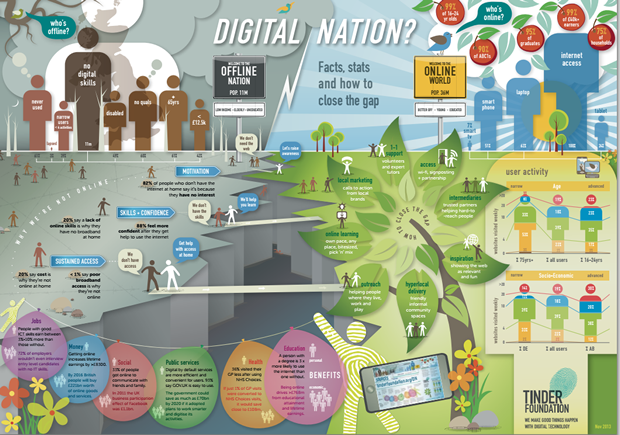
Back in November, we created our popular new infographic about the digital world, which you can download here.  It shows the 36 million people on the sunny side of the digital divide, as well as the 11 million still in the digital dark. As well as the key facts and figures it also summarises what we know works to help people cross over to the online world.  The idea was to consolidate key stats and facts from across the digital inclusion sector, and create a single ‘picture’ of the UK as a digital nation.

Image

  • A leading digital nation by 2020

In February we published this report, authored by Catherine McDonald and commissioned by Tinder Foundation and Go ON UK, set to take a look at digital inclusion from a different angle, costing out for the very first time the necessary measures to equip 100% of the adult UK population with the basic online skills needed for a sustained internet usage. It revealed that the total cost for a 100% digitally skilled nation is £875m, and split three ways between Government, the private sector, and the community and voluntary sector, this works out at approximately £50m from Government per year up to 2020. Given the £1.7bn savings from moving public services online alone – this investment seems well worth making.

  • Corporate volunteering programme, Online Basics qualifications, Community Development Award and much much more!

Our corporate volunteering programme has seen 140 EE employees and 50 TalkTalk employees trained as Digital Champions and volunteering in local UK online centres.  Meanwhile, another 3,500 people have achieved our City & Guilds accredited Online Basics Qualification, and 23 people have graduated with our Level 3 Community Development Award.  I could go on, but you might as well read the whole Annual Review for yourself!

The past year has really seen us grow, develop in new directions and build our relationship with the hyperlocal organisations who are so vital to what we do. Over the past year, we – and the UK online centres network – have continued to support some of the hardest to reach people in society, with 82% of learners coming through the network meeting one or more indicators of social exclusion. The ability of centres within the network to help those that can’t be reached by other means continues to be vital to supporting so many of those most in need. And although I also say this every year, I think the year ahead is going to be even more significant.

While digital inclusion will always be at our heart, we are continuing to diversify, growing our work in adult learning and supporting the centres in our network to have a greater impact in their communities, not just by supporting digital inclusion activity but in many other ways.

We couldn’t do any of this without the network of wonderful, hard working, and continually inspiring UK online centres.

Thank you all.


Eleven Months and Counting: Will we get the Government we deserve in 2015?

If you follow me on Twitter you will have seen a flurry of activity last Wednesday when I was at the launch of the Technology Manifesto by Policy Exchange. I think it’s a great piece and I really welcome it.

If you haven’t read it I highly recommend it, but I’ll summarise here.  There are three key goals in the manifesto:  

  • Build the most connected and digitally skilled society in the world
  • Make Britain the most attractive place outside of Silicon Valley for technology entrepreneurs to start and grow a business
  • Use technology and data to develop the smartest Government in the world.

For most of us gathered at Google Campus for the launch, it is just so obvious that digital is going to be a massive part of our future. But I believe (and the manifesto says) that it’s time for technology to be front and centre of policy making too.  

The challenge for the policy-makers working towards the 2015 elections is clearly stated: “Technology is no longer peripheral to life, and nor can it be to policymaking. From education to healthcare and from energy to transport, no policy area is immune from its influence.It is the foundation on which Britain’s economic future will depend.”

I’m so glad that the manifesto uses our report “A leading digital nation by 2020: Calculating the cost of delivering online skills for all”.  It  feels very much as if digital inclusion has grown up.  It’s not screaming in the corner for attention – it’s clearly and sensibly articulating it’s needs and perspective.  

The first recommendations fit perfectly with our work at Tinder Foundation:

Recommendation 1: Government should set a target for the UK population to have the world’s highest rate of basic digital skills by 2020. This is the most fundamental requirement for increasing internet usage; enhancing social mobility; reducing social isolation for vulnerable people; helping British businesses innovate and lead the world at e-commence; and ensuring that government can reap the benefits of moving to digital transactions. The estimated investment of £875 million thought necessary to achieve this is considerable, but would be offset by savings of around £1.7 billion/year attained by moving to digital transactions. Without this increased funding, around 6.2 million people will remain without basic online skills in 2020.

Recommendation 2. Until the whole population is online, public services delivered by post, telephone or face-to-face should – where appropriate – be replaced with quality, assisted-digital services for the 17% of UK citizens who are currently offline. Government spends around £4 billion each year providing non-digital transactions. Better targeting of assisted digital support, procured from the private and voluntary sector, could save £2.7 billion from this budget.

And I was glad to see SMEs not left behind either:

Recommendation 18: Government should provide a detailed roadmap on how it will maximise the impact of initiatives to help 1.6 million SMEs transact and sell more online. Government is right to make industry and the third sector take the lead in getting businesses online, but for their work to be effective, those organisations require a clear commitment on the extent of funding by government and a consistent team within Whitehall with which they can collaborate. For the 29% of disconnected business owners who are not confident internet users, the government should support targeted, locally-delivered, face-to-face basic training programmes around online skills for business.

With about eleven months to go before we elect a new Government, it was clear at the launch that none of the red, yellow or blue politicians representing their parties on stage thought digital was yet be central to their colleagues’ thinking or campaigning.  

But that’s 11 months to make the case for digital, and I’ve never been one to say never.  I believed Chi Onwurah, Nadhim Zahawi and Julian Huppert when they said they were all working and hoping to raise the profile of digital as a defining element of the 2015-2020 Government.

My personal assessment from the day is that Chi Onwurah and Labour seemed much more on top of this brief.  Chi stated in her short speech that she thinks the Government’s current Digital Inclusion strategy is woefully unambitious, and she spoke about the plans of the new Labour Digital Group that is active across a number of key policy strands (and on Twitter at @LabourDigital).  

Now it’s up to the Lib Dems and Conservatives to meet this same level of commitment.  Julian Huppart was obviously personally passionate about bringing digital to LibDem policies, and Nadhim Zahawi was an extremely interesting speaker on Conservative digital planning.  So let’s see what the next 11 months bring.  

Our government in 2015 (whoever it may be) should pay attention to the work and thoughts documented in the technology manifesto and ensure that our nation’s digital needs are met to make a strong and inclusive nation by 2020.  The manifesto is split into three strands: Individuals; Businesses; and Government.   My top tip for all parties is that they’d do well to read the first section particularly carefully – Individuals – because after all,  policies should really have people at the heart of them.  

One idea from Chi was that all of us – yes, all of us – should email our MPs and ask them what they think the priorities for them will be if they are re-elected next May. I’m going to give that a go – if you do too, let me know and we can compare notes.  Watch this space.  


Could digital bridge the apathy gap?

Over the last week or so I’ve been watching with interest the results of the recent elections, and the various interpretations of winners, losers, damned lies and statistics.  

Whatever your political persuasion, I think we can all agree that by far the biggest loser was democracy itself.  A whopping 65% of the electorate didn’t choose to vote at all.  

Let’s think about that in real terms for a second.  Look around you now.  In your office, at home looking down the street, on the train, the bus, in the queue at Tesco.  At least 6 out of every ten people you see didn’t cast their vote.  

If you’re in a position where it isn’t too awfully rude to stare, really look at them.  That little old lady.  That student.  That harassed father.  That businesswoman.  WHY didn’t they vote?  Perhaps for some it’s disappointment in the system – the feeling ‘they’re all the same anyway’, or that politics ‘doesn’t affect me’.  Perhaps others were abstaining in considered political protest.  Maybe they were held up at the office, or couldn’t get the kids to bed on time, or lost their postal vote form under a pile of washing.  It could be that they didn’t feel they knew enough about the policies, nuances, and local or European issues to have their say.  

And I wonder (as I do) whether technology could be a solution to all of these many and varied reasons for not voting – especially in the run up to a general election just a year away.  Could digital bridge the considerable apathy gap Britain faces?  

Just think.  What if we could use technology to revolutionise the back-office and security systems so that that harassed father could have gone and voted in the centre of town near his office, rather than trying to fit it in around the school run at his local polling station?  What if that student was following his local MEP on Twitter and actually knew about the issues being debated?  What if after a hard day of deadlines that businesswoman could have used her smartphone to find and register at a polling station on her way to the pub?  What if that little old lady was so connected to her local council she already knew exactly what she wanted and didn’t want for the next term of office?  

If they knew where and how to look for the information on policies and plans beyond the contents of party political broadcasts, I wonder how many more might have felt empowered to find out the differences and make their choice.    

I read recently that the more people now use online channels to book holidays and manage their bank accounts than any other method.  In that sort of digital world, surely we can do more with technology to improve the processes and information around something as important as democracy?    

In my mind, digital democracy has the potential to be the biggest revolution in our voting history since women were first given the vote in 1918 after the war.  It might not be a big bang.  There might not be parties in the streets.  It may not go down in history as a milestone for equality.  But it could help just as many people find and use their political voice.  

That’s why I’m so passionate about it, and so excited about my role on the Commission on Digital Democracy set up by Speaker of the House of Commons, the Rt Hon John Bercow MP, at the end of last year.  Because these are the issues we discuss, and the ideas we’re bringing to the table.  And we need your input.  What do you think?  Could it make a difference?  UK online centres – would it have made a difference to your learners?   

If you want to talk more about digital democracy, its potential and pitfalls, then please do join me to discuss it further.  I’m running a focus group for UK online centres on Tuesday 15 July 2-4pm, and I’d love to hear your thoughts.  Contact me at hello@tinderfoundation.org if you’d like to take part, or follow us on Twitter using #digitaldemocracy @digidemocracyuk


A digital health birthday

Yesterday, Tinder Foundation, NHS England, the Department of Health, the Department for Business Innovation and Skills and community delivery partners, got together to celebrate the first birthday of our Widening Participation in Digital Health programme.

nhs-eventWe’ve all been working together for the last year to address health inequalities by engaging those at increased risk of poor health in digital activities, equipping them with the knowledge and skills to manage and feel more in control of their health with online resources, and reap the wider rewards of digital inclusion at the same time.

There have been 14 flagship projects trialling new engagement approaches and partnerships across the country, a network of new Digital Health centres using new resources and our new Learn My Way course, and literally hundreds of digital health events promoting digital health literacy in local communities.

And we’re pretty proud of the results:

  • 100,000 people engaged in digital health activities
  • 82% of them socially excluded, and therefore those in most need of NHS services
  • 60,000 trained to use NHS Choices and other health websites
  • 99% user satisfaction

You can read more about the first year of the programme in our online report at nhs.tinderfoundation.org, including our video summary, or see the summary on the NHS website here.

I strongly believe that digital health literacy is key in improving the National Health Service, and even in safeguarding it for the future. Because by putting power, choice and knowledge into the hands of patients, we are both relieving pressure and independently improving health and well being through community and digital engagement. That’s certainly the consensus of those gathered at yesterday’s events, and I thought that for a change I’d ask others to add their voices to my blog…

“The widening Digital Participation programme is having a really positive effect on people’s lives through better digital health skills. Reducing isolation and loneliness is just one way technology can help and when a lot of evidence suggests that this is as great a risk to the health and wellbeing to the elderly population as obesity, it show’s how important the work is. I’m really looking forward to seeing what’s achieved in year 2.”
Bob Gann, Programme Director – Widening Digital Participation, NHS England

“We’re so pleased to have been confirmed as a flagship centre for the second year of Widening Digital Participation. Today, it’s been really inspiring to hear what other centres have achieved, especially those working with GP’s surgeries, as that’s a big part of our plan for year 2.”
Liz Whale, Southampton Libraries

“We’ve had some amazing experiences as part of the programme. I was really proud to be able to help one man with what seemed to be severe anxiety and depression issues get the support he needed, all thanks to the Moodzone assessment tool on NHS Choices. I’m really looking forward to helping even more people this year.”
Dave Edeson, Inspire Communities Hull

“I’ve been hugely impressed by what I’ve heard about the Widening Digital Participation flagships today. The breadth of impact the projects are having in their communities is really inspiring. They are clearly making a real difference to people’s health and lives.”
Rachel Neaman, Department of Health.

I was particularly pleased to have the opportunity to catch up with Rachel Neaman, currently of Dnhs-event-2epartment of Health, who this week has been announced as the new Chief Executive of Go ON UK. I’m delighted she’s going to be at the helm of the UK’s digital skills alliance, but obviously disappointed that it means she can longer be on Tinder Foundation’s board. It does, however, mean that we do get to keep working together, and that the digital inclusion sector has a brilliant and energetic new champion.

Now it’s time for us all to look towards Year 2 of Widening Digital Health Participation. This year, we want to give our funders at NHS England even more value for money, and set ourselves even bigger targets and challenges to do so.

I’ve talked often about Tinder Foundation’s Discover/Seed/Scale model, and if Year 1 was ‘discover’, it’s now time to take those lessons and findings, seed those ideas, and scale our delivery. And if the ideas and plans I heard from delivery partners yesterday is anything to go by, we’re in for another amazing year. With their help, I’m looking forward to helping even more people take control of their health, and take advantage of technology in every other area of their lives.

Watch this space for updates.

Power to you – Vodafone, mobile internet, and the digital divide

Mobile internet is often hailed as the solution to digital exclusion, and I’ve heard technologists, politicians and economists talk about how it’s smart phones and smart TVs that will reach the people and places PCs and laptops couldn’t hope to get to, and magically transform them into confident internet users.

The stats are significant. The latest Ofcom report found that the number of people using a tablet to go online almost doubled from 16% to 30% in the last year, and more than a ⅓ of smartphone users use their phone to buy things online – up from ¼ in 2012. Mobile internet has made getting online easier, quicker, and more convenient, with simple, attractive interfaces offering anytime, anywhere information, connections and transactions.

However, the fact is that there are still not that many people who are ONLY online on their tablet. The Oxford Internet Survey shows that only 1.6% of people use a tablet as their sole device for accessing the internet, showing that for the majority mobile broadband is complementary and not a means for inclusion.

The idea that the rise of mobile internet should automatically prompt a rise in internet usage by traditional non-users assumes the digital divide is far simpler an issue than it actually is. The fact is there is no silver bullet here – mobile or otherwise. Those left behind are there for myriad social, economic and personal reasons, and as the divide narrows and deepens we need to be more innovative, faster and yes – smarter.

At grassroots level, UK online centres see both the potential and the confusion of mobile internet. People come in with hand-me-down smartphones and tablets wanting support to use them, but not understanding when and how they’re online.

Working together, Vodafone UK and Tinder Foundation are going to see how we can best bridge the gap between the potential benefits of mobile internet and its use by digitally excluded audiences.

Working with the UK online centres network we will help centres people to get to grips with smartphones, tablets and MiFi (portable wifi hotspots). We’ll be distributing leaflets introducing beginners to the world of mobile broadband, and introducing a new, free course on Learn My Way. And for people living in our pilot areas, we’ll be launching a ‘hands-on mobile’ scheme where a handful of centres will be given Vodafone smartphones, tablets, and MiFis to loan out to local people.

tablet2The fact is that mobile internet does have lots of advantages for whole sub-sets of those left offline. Coinciding with the launch of our partnership, Vodafone UK is also launching a new independent report called Mobile: A powerful tool for Digital Inclusion. It looks at how mobile solutions might be made to work for those resistant to existing, pc-related inclusion programmes. It’s well worth a read.

Smartphones and tablets are in fact easier for older people to master than traditional PCs and laptops, with touch screen technology and bespoke apps often more intuitive than their computer-based counterparts. If you don’t want to be bothered with learning the keyboard, if you find mouse control difficult, this could be much more attractive way to get online and make it work to do exactly and only what you want it to do.

But not everything can be done on a mobile device. CVs, letters, job applications, long and complex benefit forms – all of these really do need a keyboard and a big screen. The good news is that mobile-internet doesn’t just mean phones and tablets. I’m keen that we help people understand the choices they’ve got, including that they can get the benefits of mobile internet via a MiFi or mobile hotspot (through their phone) to get online on a laptop but with all the flexibility of a pay-as-you-go broadband connection and/or a small top-up on a smartphone contract. For many people – for instance those who move frequently – getting a telephone landline in order to get fixed broadband and committing to a contract over a number of months is a significant factor preventing internet use.

It’s not that the mobile broadband options aren’t available, it’s that the people who need them don’t understand that these choices are there for them.

When we personalise the internet for each individual, in terms of content, cost, access, interface, usability and user-confidence, it makes a 100% digitally enabled nation a thing of reality and an ambition worth working for. Helping people to see the benefits of the web, helping them to develop basic online skills and to find a personal broadband solution that works for them – that really does give power to you.